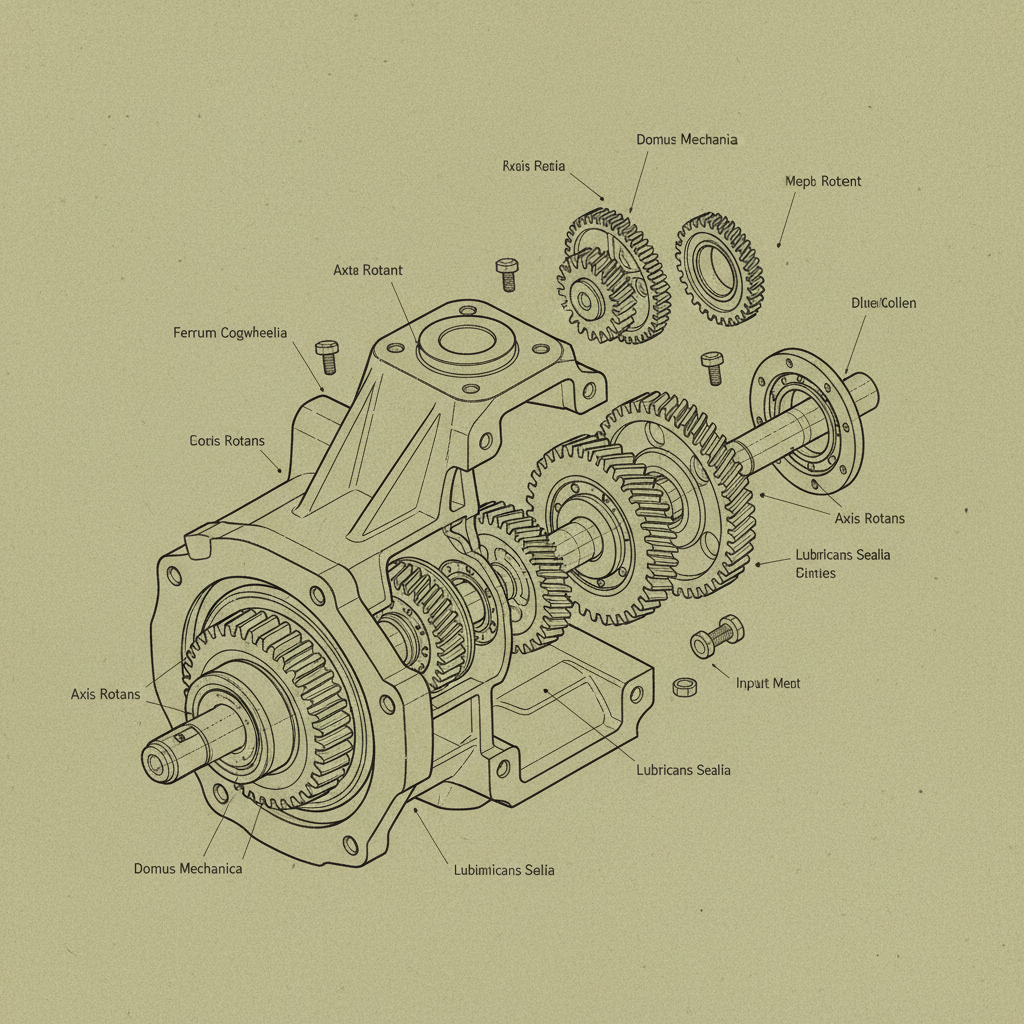
Look, I’ve been running around construction sites for fifteen years, and let me tell you, things are changing fast. Used to be, gearbox housing manufacturers was all about getting the job done, cheap and fast. Now? Everyone’s talking about efficiency, weight reduction, and… ugh… sustainability. It’s a whole new ballgame. To be honest, it's a little exhausting keeping up.
But the thing is, a lot of these “innovations” are just headaches waiting to happen. Everyone’s chasing the latest materials, the fanciest designs, but forgets the basics. I’ve seen too many well-intentioned engineers create a housing that looks great on paper, but falls apart the moment a wrench gets near it. That’s when I get the call.
And honestly, the biggest issue I see is people designing without understanding how things are actually made. You can design the most complex geometry, but if it can’t be cast efficiently, it's a non-starter. And it’s not just the design, it’s the materials too. We’re using a lot more ductile iron these days, which is good, but it’s got its quirks. It's heavier, obviously, but the damping properties are fantastic – it just feels solid. And have you noticed the smell when they’re pouring it? Kind of metallic, kinda earthy. It gets in your clothes, your hair… anyway.

Industry Trends & Design Pitfalls
So, what’s trending? Lightweighting is huge. Everything has to be lighter, more efficient. They're pushing aluminum alloys, magnesium… even composites in some cases. But here's the trap: reducing weight often means reducing strength. And when things vibrate, which they always do with gearboxes, those lightweight materials can fail surprisingly quickly. I encountered this at a wind turbine factory last time – beautiful design, all aluminum, but cracking within a year. Cost them a fortune.
Another thing is integration. Everyone wants to integrate cooling fins, mounting points, sensor housings directly into the gearbox housing manufacturers. It looks neat, but it adds complexity. And complexity equals cost, and usually, equals points of failure. Strangely, sometimes the simpler designs are the most robust.
Materials: The Feel and the Fuss
We still use a lot of cast iron – gray iron, ductile iron, compacted graphite iron. Each has its place. Gray iron is cheap and easy to machine, but brittle. Ductile iron is tougher, better for shock loads. Compacted graphite iron is a nice compromise, but harder to cast. And don't even get me started on steel! It's strong, sure, but prone to corrosion if you don't treat it right. You have to understand the material characteristics, the casting process, the potential for stress concentration…it's a lot.
Then there’s polymer concrete. I know, sounds weird. But it’s surprisingly good for vibration damping and corrosion resistance. Feels…plasticky, obviously, but it can handle a beating. The smell during machining is something else, though. Like burning plastic, but…different.
We're seeing more demand for materials with improved thermal conductivity too. Gearboxes generate a lot of heat, and getting rid of it efficiently is crucial. Aluminum is good, but it's expensive. Some are experimenting with graphite additives to iron, which is interesting.
Real-World Testing: Beyond the Lab
Lab tests are fine, but they don’t tell the whole story. You need to see how these housings hold up in the real world. We do a lot of field testing. Mount a gearbox on a machine, run it 24/7, monitor the temperature, vibration, stress levels. It’s messy, it’s time-consuming, but it's the only way to be sure. I once saw a housing pass all the lab tests, then crack within a week on a textile machine. Turned out the vibrations were different – more harmonic, more intense.
We also do drop tests, impact tests, corrosion tests. We’ll dunk them in salt water, expose them to harsh chemicals, even bury them in the ground. Okay, maybe not bury them. But we simulate that.
And don’t underestimate the importance of visual inspection. A trained eye can spot a stress concentration, a casting defect, a sign of fatigue. It's an art, honestly.
How Users Actually Use It
This is where things get interesting. Engineers design for a specific application, but users often adapt things. They’ll weld brackets onto the housing, drill holes for sensors, modify the mounting points. They'll overload it, they'll neglect maintenance... it's inevitable. You have to design for that. You have to anticipate the unexpected.
I’ve seen people use gearbox housing manufacturers as makeshift steps, as platforms for tools, even as hammer stands. Seriously. You can’t design for that, obviously, but you can make the housing robust enough to withstand a bit of abuse.
Gearbox Housing Manufacturers Performance Metrics
Advantages and Disadvantages
Okay, so what’s good about these things? Well, a well-designed gearbox housing manufacturers protects the delicate guts inside, reduces noise, dissipates heat. It's a critical component. And they're surprisingly good at isolating vibrations. Keeps everything running smoothly.
But they're also heavy, expensive to manufacture, and can be a pain to maintain. Accessing the gearbox for repairs can be tricky, especially if it’s a complex design. And let's be real, they're often the first thing to fail in a harsh environment.
Customization: A Shenzhen Story
Customization is huge. Everyone wants something tailored to their specific needs. We get requests for different mounting configurations, different port sizes, different materials. It's a challenge, but we can usually make it happen.
Last month, that small boss in Shenzhen who makes smart home devices insisted on changing the interface to . Said it was "more modern." I told him it was a terrible idea - too fragile for a gearbox housing manufacturers, too much vibration. He wouldn't listen. So, we built it his way. Guess what? It broke within a week. He called me, sheepish. "Maybe you were right," he said. Anyway, I think sometimes customers just want to feel like they have a say, even if it's a bad idea.
We can do a lot with finite element analysis to optimize the design for specific loads and stresses. It's not always necessary, but it can save a lot of headaches down the road.
A Worker's Verdict
We can talk about materials, design, and testing all day long. We can run simulations and analyze stress distributions. But at the end of the day, it all comes down to the guy on the factory floor tightening the bolts.
He’s the one who feels the weight, who sees the finish, who notices the little things we miss. He’s the one who’ll tell you if it feels right or not. And you know what? He’s usually right.
Ultimately, whether this thing works or not, the worker will know the moment he tightens the screw.

Summary of Gearbox Housing Manufacturers Quality Parameters
| Material Quality |
Casting Precision |
Surface Finish |
Dimensional Accuracy |
| Grade of Iron Used |
Tolerance of Casting |
Roughness Measurement (Ra) |
Deviation from Design Specs |
| Chemical Composition Analysis |
Presence of Porosity |
Coating Quality & Uniformity |
Roundness of Circular Features |
| Tensile Strength |
Wall Thickness Consistency |
Paint Adhesion |
Parallelism of Surfaces |
| Hardness (Brinell) |
Core Sand Removal |
Resistance to Corrosion |
Angle of Draft |
| Elongation at Break |
Gate & Runner Design |
Surface Defects (Scratches, Dents) |
Position of Mounting Holes |
| Impact Resistance |
Shrinkage Rate |
Galvanization Thickness |
Overall Shape & Form |
FAQS
Lead times vary quite a bit. Simple modifications, a couple of weeks. A completely new design, with tooling changes? Figure 8-12 weeks, maybe longer if there are supply chain issues. It really depends on the complexity and the foundry’s workload. We’ve seen times get stretched due to material shortages, especially with specialized alloys. Best to over-communicate and plan ahead.
That’s a big one. We focus on several things. First, material selection – ductile iron is your friend. Second, ribbing and gussets to increase stiffness. Third, careful design of the wall thicknesses to avoid resonance frequencies. And finally, thorough vibration testing. We’ll mount a prototype on a shaker table and see how it holds up. It's not pretty, but it works.
Oh, where do I start? Poor material quality, inadequate wall thickness, stress concentrations around mounting points, corrosion, improper lubrication… the list goes on. Sometimes it's just fatigue – metal gets tired after a long time. But often, it's a design flaw or a manufacturing defect. Proper inspection is key, but even then, things can slip through. And let’s not forget user error!
Absolutely. We can cast cooling fins directly into the housing, or we can machine channels for coolant circulation. It's becoming increasingly common, especially for high-power applications. The challenge is ensuring the cooling passages don't compromise the structural integrity of the housing. It’s a balancing act. We also look at using materials with high thermal conductivity.
Tolerance depends on the casting process and the material. For larger housings, you’re typically looking at +/- 0.5mm. For smaller, more critical dimensions, we can get down to +/- 0.2mm, but that comes at a cost. The key is to specify your requirements clearly up front. And remember, casting isn’t precision machining. You’ll likely need to do some machining to achieve tight tolerances.
We do. We can apply a variety of coatings, including paint, epoxy, and galvanization. For harsh environments, we recommend a multi-layer coating system. We also use corrosion-resistant alloys like stainless steel or ductile iron with special coatings. The best option depends on the specific application and the corrosive agents involved. And don’t forget proper surface preparation – that’s critical for coating adhesion.
Conclusion
So, there you have it. gearbox housing manufacturers are more than just boxes to hold gears. They’re critical components that impact efficiency, reliability, and cost. The industry is changing, demanding lighter, stronger, and more sustainable designs. But at the end of the day, it’s about understanding the fundamentals – materials, manufacturing processes, and real-world applications.
Look, don't chase every shiny new technology. Focus on the basics, listen to the guys on the shop floor, and don't be afraid to ask questions. Because ultimately, whether this thing works or not, the worker will know the moment he tightens the screw.