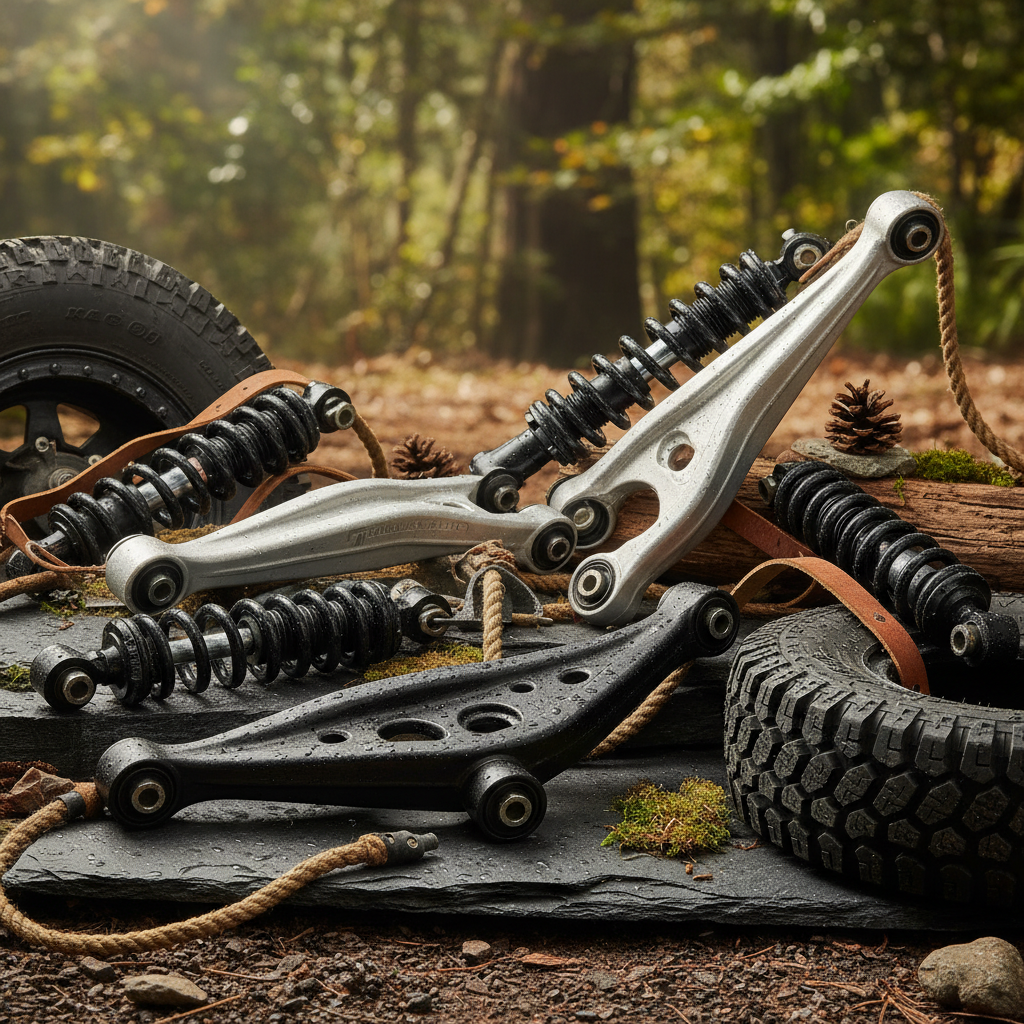
Finding automotive parts cheap without sacrificing structural integrity is a primary challenge for fleet managers and vehicle technicians. In the context of suspension systems, the axle thrust rod seat acts as a critical reinforced mounting point that secures the thrust rod or watt's link to the axle housing, ensuring that longitudinal forces are managed effectively during vehicle operation.
The automotive industry, specifically the manufacturing of transmission and axle components, demands high-grade materials to prevent catastrophic suspension failure. When procurement teams seek cost-effective solutions, they must balance the initial purchase price against the long-term costs of vibration damping, alignment maintenance, and the eventual replacement cycle of heavy-duty components.
This technical analysis explores the design, material requirements, and selection criteria for axle thrust rod seats. By understanding the relationship between casting quality and operational safety, buyers can identify high-value automotive parts cheap that meet OEM specifications while reducing overall maintenance expenditure.

1Understanding the Axle Thrust Rod Seat Function

The axle thrust rod seat, often referred to as a thrust rod bracket or radius arm mount, is a specialized component designed to anchor the thrust rod to the vehicle's axle housing. Its primary responsibility is force transmission, transferring longitudinal stresses generated during acceleration and braking between the axle and the chassis to maintain stability.
Beyond simple mounting, these seats are engineered for vibration damping, absorbing road-induced shocks before they reach the vehicle frame. This not only protects the chassis from fatigue but also reduces driver fatigue in commercial trucking and agricultural applications.
From a structural perspective, the seat reinforces the axle housing at high-stress points. Without a precision-engineered seat, the constant oscillation of the suspension could lead to hairline fractures in the axle housing, potentially resulting in a total suspension collapse.
2Core Design Features and Technical Specifications
Premium thrust rod seats are characterized by their material composition and machining precision. Most high-performance versions utilize high-grade steel, such as ASTM A572 or equivalent, to provide the necessary tensile strength and load-bearing capacity for specific Gross Vehicle Weight Ratings (GVWR).
Precision casting is employed to achieve complex shapes that optimize weight without sacrificing strength. Critical stress points often receive reinforced welding and subsequent heat treatment, such as stress-relieving, to prevent warping and ensure long-term dimensional stability.
Furthermore, the compatibility with various bushing types—ranging from rubber and polyurethane to spherical bearings—is essential. A proper interference fit for secure retention ensures that the bushing does not migrate under extreme dynamic loads.
3Industrial Application Scenarios and Use Cases
The application of axle thrust rod seats varies significantly across different sectors. In commercial trucking, specifically semi-tractors and dump trucks, these components must handle constant heavy loads and long-distance vibrations, making corrosion protection (like galvanization) mandatory.
In the construction sector, equipment such as concrete pumpers and off-road haulers operate in abrasive environments. Here, heavy-duty reinforced seats with additional gusseting are used to withstand the extreme torque and impact loads typical of mining sites.
Agricultural machinery, such as liquid fertilizer applicators and harvest transporters, often requires adjustable alignment seats. These allow operators to fine-tune thrust rod angles to compensate for varied terrain and loading conditions.
4Performance Evaluation: Casting Quality vs. Durability
The durability of a thrust rod seat is directly linked to the quality of the casting process. Porosity in the metal can lead to premature fatigue cracking, while inadequate heat treatment can cause the component to deform under peak loads.
By comparing standard components with precision-engineered alternatives, it becomes evident that higher material purity and tighter machining tolerances lead to a significant increase in the mean time between failures (MTBF).
automotive parts cheap Performance Metrics
As shown in the performance metrics, optimizing for material grade and alignment stability reduces the frequency of unplanned maintenance. This efficiency makes the pursuit of automotive parts cheap a strategic move, provided the "cheap" aspect refers to the total cost of ownership rather than just the initial price.
5Installation Best Practices and Maintenance
Proper installation is as critical as the component quality. Technicians must ensure that mounting surfaces are completely free of rust and debris before installation. Using laser alignment tools is highly recommended to verify that the thrust rod angle is within the specified OEM range.
Routine maintenance should include monthly visual inspections for signs of metal fatigue or cracking. Quarterly assessments of the bushing condition are necessary to identify deformation or rubber degradation before it impacts vehicle handling.
Annual verification of fastener torque and the application of corrosion treatment are essential for components operating in harsh environments, such as coastal areas or regions where road salt is used during winter.
6Common Failure Modes and Troubleshooting
The most common issue reported by operators is excessive vibration. This is typically caused by worn bushings or loose mounts. The primary solution involves a complete bushing replacement and a verification of the fastener torque across the entire suspension assembly.
Uneven tire wear is another indicator of a failing thrust rod seat. If the seat has deformed or the rod angle has shifted, the wheel alignment is compromised, leading to accelerated tire degradation on the inner or outer edges.
In extreme cases, visible cracking or metal fatigue may appear on the seat's surface. Once structural integrity is compromised, the only safe solution is a full component replacement to prevent a catastrophic failure of the suspension system.
7Procurement Guide: Selecting High-Value Components
When sourcing automotive parts cheap, procurement officers should prioritize technical compliance over the lowest bid. Key selection criteria include vehicle compatibility (make/model/year matching) and verification of GVWR load requirements.
The following table compares different types of thrust rod seats to assist in selecting the right component based on the operational environment and required performance levels.
| Seat Type | Primary Advantage | Typical Application | Maintenance Level |
|---|---|---|---|
| Precise Factory Match | General Transport | Moderate | |
| Maximum Load Capacity | Mining & Construction | Low (High Durability) | |
| Custom Alignment | Specialized Agri-Machinery | High (Requires Tuning) | |
| Noise Reduction | Municipal/City Vehicles | Moderate | |
| Enhanced Handling | Modified Suspensions | Moderate | |
| Cost-Efficiency | Commercial Fleets | Low to Moderate |
For those seeking a reliable partner in the casting industry, Tang County Kaihua Metal Products Co., Ltd. offers extensive experience since 2010, specializing in high-quality ductile iron and steel components. Their adherence to IATF16949 and ISO9001 standards ensures that cost-effective parts maintain rigorous safety and quality benchmarks.
Frequently Asked Questions
Conclusion
The axle thrust rod seat may be a relatively small component, but it is an unsung hero of the suspension system. By ensuring stable axle alignment and managing tremendous longitudinal forces, it directly impacts vehicle safety, tire longevity, and driver comfort. Prioritizing high-grade materials and precision casting allows operators to find automotive parts cheap that provide genuine value through reduced maintenance and enhanced durability.
For procurement teams and fleet owners evaluating high-performance suspension solutions, reviewing the production capabilities and certifications of your supplier is essential. Detailed product specifications and available options can be explored at www.kaihuacasting.com to ensure the chosen components meet the rigorous demands of your specific industry application.