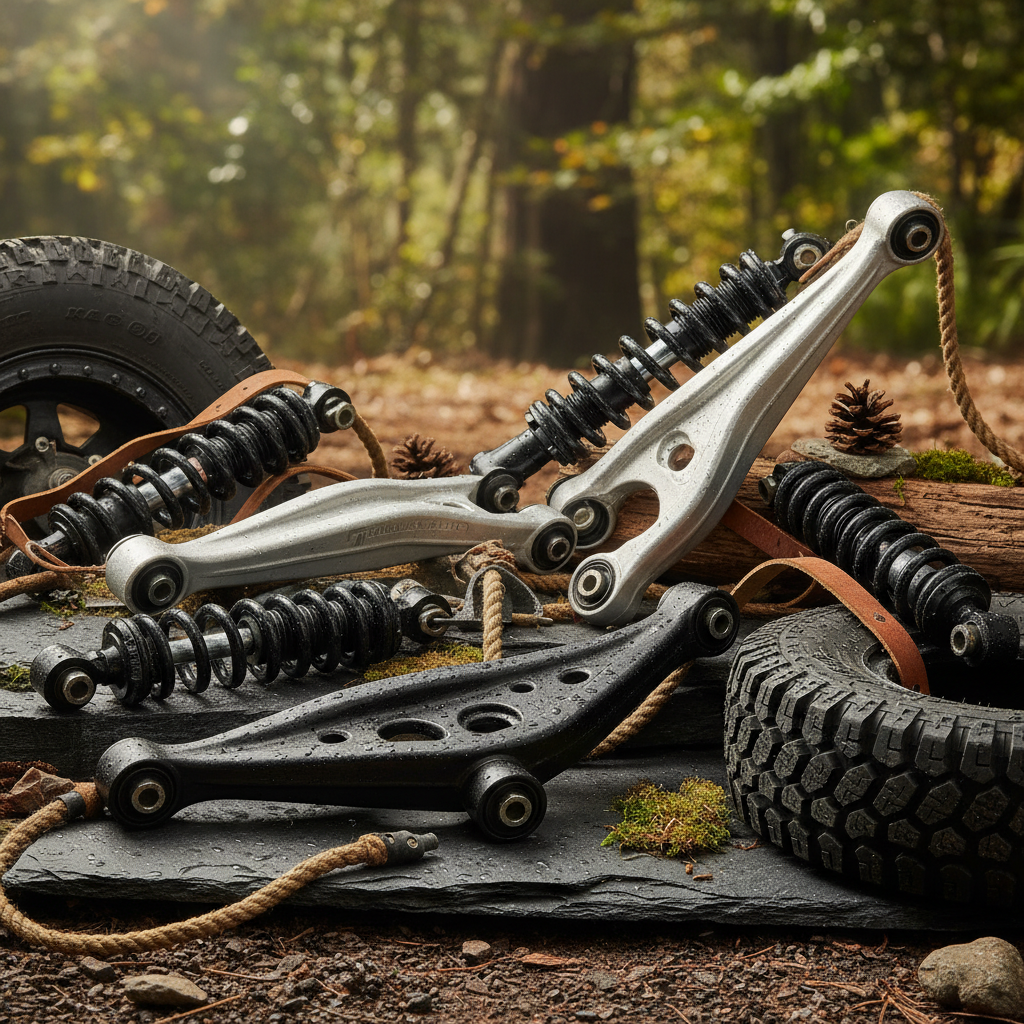
Ensuring the structural integrity of a heavy-duty suspension system often comes down to a single, reinforced mounting point: the axle thrust rod seat. These components are essential for managing longitudinal forces, yet they are frequently overlooked until a failure occurs, leading to costly downtime and safety risks.
For fleet operators and engineers, sourcing advanced automotive parts means balancing material strength with precision geometry. The ability of a thrust rod seat to maintain axle alignment during extreme braking or acceleration directly impacts tire wear and overall vehicle stability.
This technical analysis examines the critical role of thrust rod brackets in commercial and agricultural machinery, exploring how precision casting and high-grade steel alloys prevent catastrophic suspension failure in high-stress environments.

The Engineering Purpose of Axle Thrust Rod Seats

An axle thrust rod seat, also known as a radius arm mount, serves as the primary reinforced junction between the vehicle's axle housing and the chassis's thrust rod. Its primary function is the transmission of longitudinal forces, ensuring that the axle does not shift forward or backward during dynamic movement.
Beyond simple force transmission, these components are vital for alignment maintenance. By securing the thrust rod's position, the seat prevents suspension geometry drift, which would otherwise lead to rapid tire scrubbing and unpredictable handling characteristics in heavy-load scenarios.
Furthermore, quality seats incorporate vibration damping properties, absorbing road shocks before they propagate through the frame. This reduces driver fatigue and prevents structural fatigue in the axle housing, particularly at high-stress points where the seat is welded or bolted.
Critical Material Selection and Manufacturing Processes
The durability of a thrust rod seat depends on the synergy between material grade and the casting process. High-grade steels, such as ASTM A572, are commonly utilized for their balance of yield strength and weldability, ensuring the component can withstand sudden impact loads without cracking.
Precision casting is preferred over stamped steel for complex shapes, as it allows for integrated reinforcement gussets and consistent material density. This reduces the likelihood of internal voids that could lead to fatigue failure under cyclic loading.
To combat environmental degradation, these components undergo rigorous surface treatments. Powder coating or galvanization is applied to prevent corrosion, which is especially critical for vehicles operating in municipal waste collection or agricultural settings where exposure to chemicals and moisture is constant.
Application Dynamics Across Heavy-Duty Industrial Sectors
Different operational environments demand specialized thrust rod seat designs. In commercial trucking, such as semi-tractors and dump trucks, the focus is on maintaining high-speed stability and managing varying gross vehicle weight ratings (GVWR).
Construction and mining equipment, including concrete pumpers and off-road haulers, require heavy-duty reinforced seats. These versions feature thicker gauge steel and additional gusseting to handle the extreme torque and uneven terrain typical of job sites.
Agricultural machinery, such as grain carts and liquid fertilizer applicators, requires seats that can withstand corrosive soil environments and heavy static loads. Similarly, municipal vehicles like fire apparatus must maintain precise axle alignment to ensure stability during emergency maneuvers.
Comparing Performance Metrics of Casting Grade Materials
Evaluating the efficiency of advanced automotive parts requires looking at how material upgrades impact the overall lifespan of the suspension system. Standard stamped components often succumb to metal fatigue far earlier than precision-cast ductile iron or high-strength steel alternatives.
The following data illustrates the relative performance improvement in load-bearing capacity and vibration absorption when transitioning from standard OEM replacements to reinforced, precision-cast seats.
advanced automotive parts Performance Metrics
As shown, the use of precision casting and reinforced welding significantly increases the fatigue limit and load capacity, while rubber-isolated seats markedly reduce the noise and vibration transmitted to the vehicle chassis.
Installation Best Practices for Long-Term Stability
Proper installation is as critical as the quality of the part itself. The process must begin with the complete removal of rust and debris from the mounting surfaces to ensure a flush fit, which prevents localized stress concentrations that lead to cracking.
Technicians should utilize laser alignment tools to verify the thrust rod angle before final tightening. This ensures that the suspension geometry is correct and that the bushings are not pre-loaded, which would drastically shorten their operational lifespan.
Post-installation, a regimen of monthly visual checks for deformation and quarterly bushing assessments is recommended. Ensuring that fasteners are re-torqued after the initial 500 miles of operation is a critical step in preventing catastrophic failure.
Future Directions in Suspension Reinforcement Technology
The evolution of suspension components is likely to move toward smarter materials and integrated sensing. We may see the introduction of self-lubricating bushings and alloys that offer higher strength-to-weight ratios without sacrificing weldability.
Automation in casting, such as the use of fully automatic static pressure molding lines, is expected to further reduce material waste and increase the precision of critical mounting holes, reducing the need for extensive secondary machining.
As vehicles transition toward heavier electric drivetrains, the demand for reinforced thrust rod seats will likely increase. New designs will need to account for higher static axle loads while maintaining the vibration damping necessary for passenger comfort.
Selection Criteria for Commercial Suspension Components
Choosing the right thrust rod seat requires a detailed analysis of the vehicle's GVWR, the typical terrain of operation, and the desired maintenance interval. A "one size fits all" approach often leads to premature failure in specialized applications.
The following table provides a framework for selecting the appropriate seat type based on specific operational requirements and technical priorities.
| Seat Type | Primary Use Case | Material Approach | Maintenance Priority |
|---|---|---|---|
| Standard OEM | Highway Transport | Stamped Steel | Regular Inspection |
| Heavy-Duty | Mining/Construction | Reinforced Casting | Structural Integrity |
| Adjustable | Modified Suspensions | Slotted High-Grade Steel | Alignment Tuning |
| Rubber-Isolated | Passenger/Municipal | Cast with Elastomers | Bushing Replacement |
| Performance | Off-Road/Racing | Forged Alloy | Lubrication/Greasing |
| Agricultural | Farm Machinery | Corrosion-Resistant Cast | Surface Coating Care |
Ultimately, the selection should prioritize the specific stresses of the environment; for instance, a municipal waste truck requires a combination of corrosion resistance and high load capacity, whereas a long-haul tractor prioritizes alignment stability and vibration damping.
Frequently Asked Questions
Conclusion
The axle thrust rod seat may be a relatively small component, but its impact on vehicle safety and operational cost is substantial. By ensuring precise force transmission and alignment, high-quality seats protect the entire suspension system from premature wear and catastrophic failure.
For those seeking reliable, precision-engineered suspension components, reviewing the technical capabilities and product range at www.kaihuacasting.com can provide the necessary guidance for optimizing fleet durability and safety.