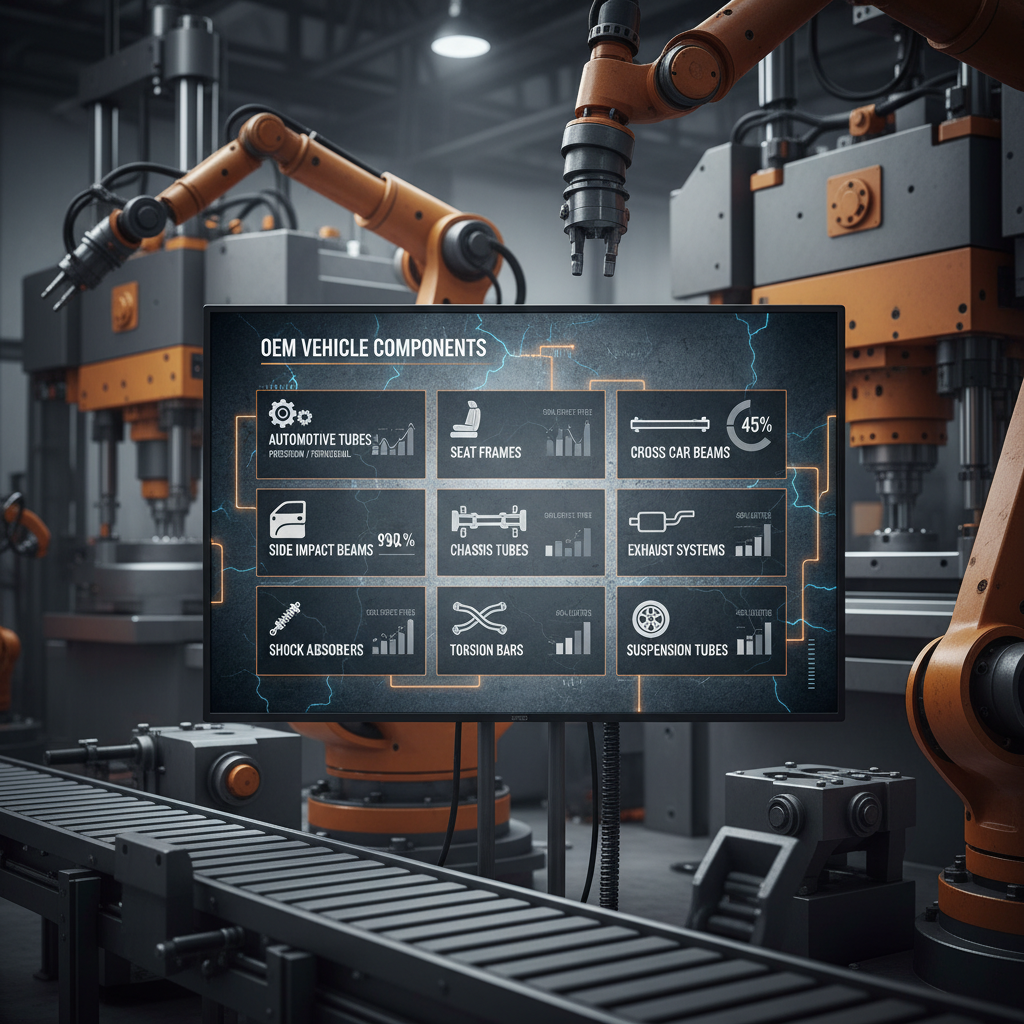
The global automotive industry relies heavily on a complex network of suppliers, and at the heart of this network lies the concept of auto parts OEM (Original Equipment Manufacturer). Understanding auto parts OEM is crucial for businesses involved in vehicle manufacturing, aftermarket supply, and maintenance, as it dictates quality standards, supply chain dynamics, and ultimately, vehicle performance and safety. This understanding extends beyond simple part sourcing; it encompasses strategic partnerships, technological advancements, and the ability to adapt to evolving industry demands.
The relevance of auto parts OEM extends globally, impacting economies and transportation systems worldwide. According to the UN Comtrade database, the trade in automotive parts exceeds hundreds of billions of dollars annually, demonstrating the scale of this industry. ISO standards play a vital role in ensuring consistency and quality across different OEM suppliers. A significant challenge arises from the increasing complexity of vehicle systems—electric vehicles (EVs), advanced driver-assistance systems (ADAS)—requiring highly specialized and reliable OEM components. Ensuring a robust and dependable supply chain for auto parts oem is therefore paramount to global mobility.
Auto parts OEM refers to companies that manufacture parts used by vehicle manufacturers to build their cars and trucks. These parts aren’t aftermarket replacements; they are specifically designed and produced for a particular vehicle make and model, meeting the rigorous specifications set by the vehicle manufacturer. This is a cornerstone of modern industry, driving innovation in materials science, manufacturing processes, and quality control, essential for delivering safe and efficient transportation. The connection extends to humanitarian needs, as reliable vehicle components, sourced through OEM channels, are vital for emergency services and aid organizations.
The Importance of Auto Parts OEM
The auto parts OEM sector serves as the backbone for vehicle production, guaranteeing the compatibility, quality, and reliability of every component. A robust auto parts oem supply chain is essential for enabling efficient vehicle assembly and maintaining consumer confidence. Without the specialized expertise and stringent quality control provided by OEMs, the automotive industry would face significant challenges in meeting safety standards and technological advancements.
The significance of auto parts oem extends beyond simply providing parts. It’s about fostering collaborative relationships between vehicle manufacturers and specialized suppliers, driving innovation in materials, engineering, and manufacturing. This collaboration allows for the development of lighter, stronger, and more efficient components, ultimately leading to improved vehicle performance, fuel economy, and safety features.
Defining Auto Parts OEM
At its core, auto parts OEM encompasses the design, development, and manufacture of components specifically intended for installation directly into a vehicle during its original assembly. This differs significantly from the aftermarket, which supplies replacement parts after a vehicle has left the factory. OEM parts are produced to the exact specifications of the vehicle manufacturer, ensuring a perfect fit and optimal performance. This stringent adherence to standards is a defining characteristic.
The definition goes further than just physical parts. It extends to software, electronic control units (ECUs), and even entire sub-assemblies, such as complete braking systems or engine control modules. OEM suppliers often invest heavily in research and development, working closely with automakers to create cutting-edge technologies and solutions for the next generation of vehicles. This makes auto parts oem a key driver of innovation.
This specialization is critical in the automotive industry, where precision and reliability are non-negotiable. The relationship between vehicle manufacturers and their OEM suppliers is built on long-term partnerships and trust, fostering continuous improvement and a commitment to quality that benefits both the industry and the end consumer.
Core Components of Successful Auto Parts OEM
One crucial aspect of successful auto parts oem is Durability. Components must withstand harsh operating conditions, temperature extremes, and prolonged use without failure. This requires careful material selection, rigorous testing, and robust design principles. Manufacturers are increasingly focusing on using high-strength alloys, advanced polymers, and coatings to enhance the lifespan of their products.
Another critical factor is Scalability. OEMs need to be able to ramp up production quickly and efficiently to meet fluctuating demand from vehicle manufacturers. This requires significant investment in manufacturing capacity, flexible production lines, and a robust supply chain management system. Without scalability, OEMs risk delaying vehicle production and losing valuable contracts.
Cost Efficiency is also paramount. OEMs operate in a highly competitive market, and they must continuously strive to reduce costs without compromising quality. This involves optimizing manufacturing processes, streamlining supply chains, and leveraging economies of scale. Increasingly, OEMs are adopting lean manufacturing principles and automation technologies to improve cost-effectiveness.
Technological Innovation is vital for staying ahead of the curve. Developing and integrating cutting-edge technologies into automotive components is essential for meeting the evolving demands of the industry, particularly with the rise of electric vehicles and autonomous driving systems. Quality Control is non-negotiable, implementing rigorous testing and inspection processes to ensure components meet stringent standards. Supply Chain Resilience – the ability to withstand disruptions (natural disasters, geopolitical events) and maintain a consistent flow of materials is increasingly important.
Global Applications and Industry Impact
Auto parts OEM impacts virtually every corner of the automotive world. In North America, OEMs supply components to major manufacturers like Ford, GM, and Stellantis. In Europe, companies like Bosch and Continental are key OEM players, supporting brands such as Volkswagen, BMW, and Mercedes-Benz. Asia, particularly Japan and China, has emerged as a global hub for auto parts oem, with companies like Denso and Toyota Boshoku supplying parts to manufacturers worldwide.
The influence of auto parts oem is also felt in emerging markets. In Brazil, for example, local OEMs are gaining prominence, contributing to the growth of the domestic automotive industry. In India, a rapidly expanding automotive sector is driving demand for high-quality OEM components. The benefits extend beyond direct manufacturing. Effective auto parts oem supports numerous ancillary industries, including logistics, tooling, and testing services.
Consider the post-disaster relief scenario: Durable, reliable auto parts sourced through robust OEM channels are critical for maintaining emergency vehicle fleets. Similarly, in remote industrial zones, where access to replacement parts is limited, the long-term reliability of OEM components minimizes downtime and maximizes operational efficiency.
Auto Parts OEM Performance Metrics
Advantages and Long-Term Value of Auto Parts OEM
The primary advantage of relying on auto parts oem lies in the guaranteed compatibility and reliability of components. This reduces the risk of malfunctions, improves vehicle safety, and minimizes costly repairs. This tangible benefit translates directly into lower total cost of ownership for vehicle owners, and increased brand reputation for vehicle manufacturers.
Beyond the technical aspects, auto parts oem fosters a sense of trust between automakers and suppliers, resulting in long-term partnerships and collaborative innovation. This collaborative spirit allows for the development of more advanced and sustainable automotive technologies. The emphasis on quality and precision also contributes to increased safety, protecting drivers and passengers. The sustainability aspect is increasingly significant, with OEMs adopting environmentally responsible manufacturing practices and developing components designed for recyclability.
Future Trends in Auto Parts OEM
The future of auto parts oem is inextricably linked to the broader trends shaping the automotive industry, particularly the rise of electric vehicles and autonomous driving. We can expect to see a growing demand for specialized components like high-voltage batteries, electric motors, and advanced sensors. The increasing complexity of these systems will necessitate even closer collaboration between OEMs and vehicle manufacturers.
Digital transformation will also play a pivotal role, with OEMs leveraging technologies like artificial intelligence, machine learning, and the Internet of Things (IoT) to optimize manufacturing processes, improve quality control, and enhance supply chain visibility. Predictive maintenance – using data analytics to anticipate component failures – will become increasingly common, reducing downtime and improving vehicle reliability.
Challenges and Solutions in the Auto Parts OEM Landscape
One of the biggest challenges facing auto parts oem is the increasing complexity of supply chains, exacerbated by geopolitical instability and disruptions like the COVID-19 pandemic. Building resilient supply chains requires diversification of sourcing, strategic inventory management, and the adoption of advanced supply chain planning tools.
Another challenge is the rapid pace of technological change, requiring OEMs to continuously invest in research and development to stay ahead of the curve. This demands a skilled workforce and a commitment to innovation. Addressing the skills gap requires investing in training programs and fostering collaboration between industry and academia. Finally, managing the cost pressures associated with electric vehicles and advanced technologies is crucial for maintaining profitability and competitiveness.
A potential solution involves embracing circular economy principles, focusing on remanufacturing, reuse, and recycling of automotive components. This not only reduces waste and environmental impact but also creates new business opportunities for OEMs.
Summary of Key Challenges and Solutions in Auto Parts OEM
| Challenge |
Impact on Auto Parts OEM |
Proposed Solution |
Implementation Difficulty (1-10) |
| Supply Chain Disruptions |
Production delays, increased costs |
Diversify sourcing, strategic inventory |
7 |
| Technological Advancement |
Requires continuous R&D investment |
Invest in R&D, talent development |
8 |
| Cost Pressures |
Reduced profitability, competitive disadvantage |
Lean manufacturing, automation |
6 |
| Sustainability Demands |
Increased scrutiny, regulatory pressure |
Circular economy principles, eco-design |
5 |
| Skilled Labor Shortage |
Limits innovation, hampers productivity |
Invest in training programs, collaboration |
9 |
| Cybersecurity Threats |
Risk of data breaches, disruption of operations |
Implement robust cybersecurity measures |
7 |
FAQS
The key difference lies in the point of origin. OEM parts are designed and manufactured specifically for a vehicle during its original production run, adhering to the automaker’s exact specifications. Aftermarket parts, conversely, are made by independent companies for replacement purposes and might not always meet the same rigorous standards. OEM parts guarantee fit and performance, while aftermarket options offer a wider range of price points and sometimes, enhanced features, but potentially at the cost of perfect compatibility. This distinction is crucial for maintaining vehicle warranty and ensuring optimal safety.
Auto parts OEMs implement stringent quality control measures throughout the entire manufacturing process. This includes rigorous material testing, advanced inspection techniques, and adherence to internationally recognized standards like ISO 9001 and IATF 16949. They also employ statistical process control to monitor and optimize production, minimizing defects. Furthermore, many OEMs conduct extensive simulations and real-world testing to validate the performance and durability of their components before they are shipped to vehicle manufacturers.
Technology is transforming auto parts OEM in several ways. AI-powered design tools enable faster and more efficient development of new components. Advanced robotics and automation streamline manufacturing processes, increasing productivity and reducing errors. IoT sensors monitor equipment performance and predict maintenance needs. Data analytics provides insights into supply chain optimization and quality control. Digital twins are used to simulate and test component behavior in virtual environments before physical prototyping.
Auto parts OEMs are investing heavily in the development and production of components specifically for EVs, such as high-voltage batteries, electric motors, power electronics, and thermal management systems. They are also focusing on lightweight materials and advanced manufacturing techniques to improve EV efficiency and range. Many OEMs are forging strategic partnerships with battery manufacturers and EV technology companies to accelerate innovation. This adaptation requires significant investment and a shift in expertise.
Several challenges loom. The complexity of supply chains will likely continue to be a major concern, requiring proactive risk management and diversification. Rapid technological changes, particularly in areas like autonomous driving and connected vehicles, will demand continuous innovation. Increasingly stringent environmental regulations will necessitate the adoption of sustainable manufacturing practices. And managing cost pressures while maintaining quality will remain a constant challenge.
Thorough due diligence is essential. Look for suppliers with established certifications like IATF 16949 and ISO 9001. Assess their financial stability, production capacity, and quality control systems. Request samples and conduct rigorous testing. Check their track record and seek references from other customers. And consider visiting their facilities to evaluate their manufacturing processes firsthand. A long-term partnership built on trust and transparency is key.
Conclusion
In conclusion, auto parts OEM forms the vital core of the automotive industry, driving innovation, ensuring quality, and fostering reliability in the vehicles we rely on daily. Understanding its intricacies, from the core components of success to the emerging trends and challenges, is crucial for all stakeholders – manufacturers, suppliers, and consumers alike. The industry's continued growth and evolution depend on a commitment to technological advancement, sustainable practices, and robust supply chain management.
Looking ahead, embracing circular economy principles, investing in skilled labor, and proactively addressing cybersecurity threats will be critical for navigating the complexities of the future. By prioritizing these areas, auto parts OEM can continue to deliver value, enhance safety, and contribute to a more sustainable and efficient transportation system. For further exploration of auto parts oem solutions, visit our website: www.kaihuacasting.com.