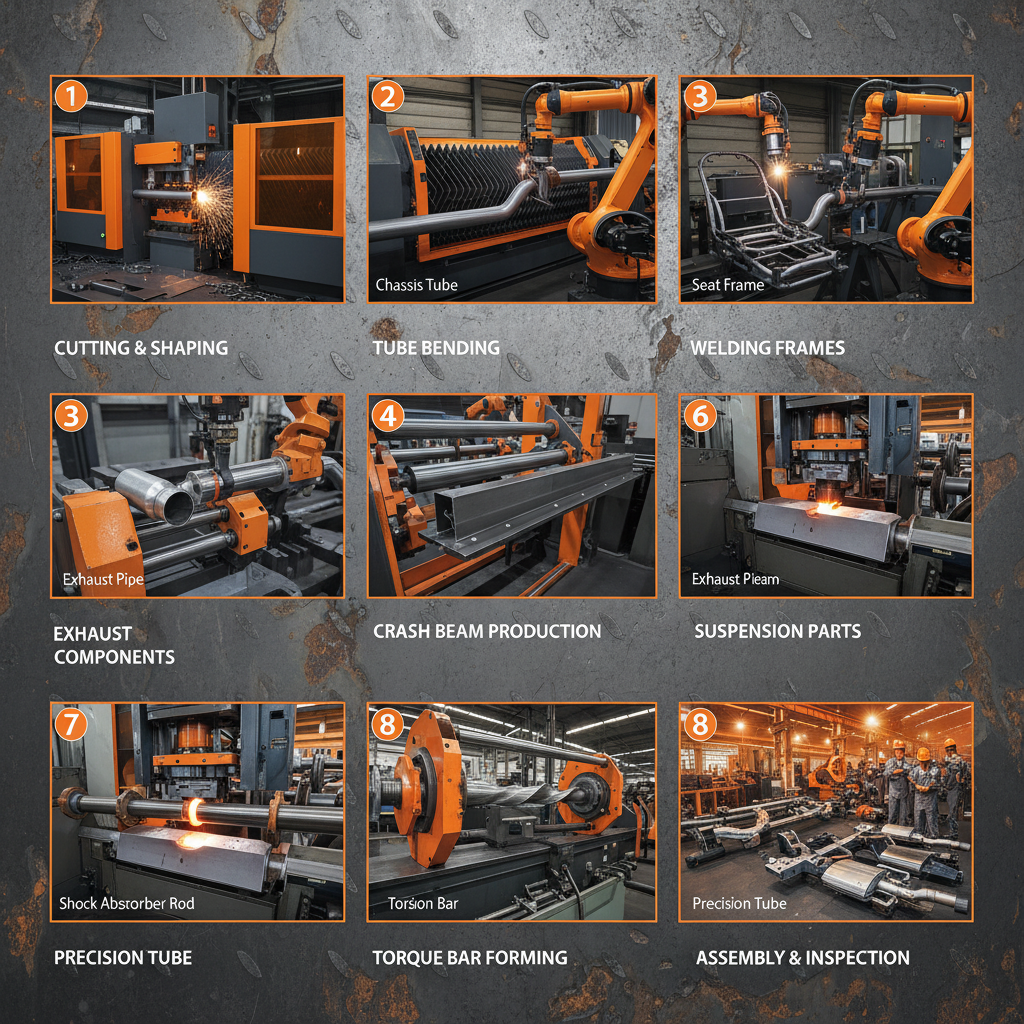
Auto car parts are integral components of the global automotive industry, facilitating the safe and efficient operation of vehicles worldwide. From the smallest fasteners to complex engine components, these parts underpin the functionality of every automobile, influencing everything from performance and fuel economy to safety and driver comfort. Understanding the intricacies of auto car parts is crucial for manufacturers, suppliers, mechanics, and ultimately, consumers who rely on their vehicles daily.
The demand for high-quality auto car parts is driven by several factors including increasing vehicle production, growing vehicle parc (the total number of vehicles in operation), and the rising trend of vehicle maintenance and repair. Globally, the automotive sector represents a significant portion of manufacturing output and economic activity, with auto car parts forming a substantial segment of this market. This sector is continuously evolving, demanding innovation in materials, manufacturing processes, and supply chain management.
The availability of reliable and affordable auto car parts is essential for maintaining the mobility of individuals and businesses. Effective supply chains, coupled with stringent quality control, ensure that vehicles remain operational, contributing to economic productivity and personal convenience. This underlines the significance of a robust auto car parts industry, impacting a wide range of stakeholders across the globe.
The Importance of Auto Car Parts in Modern Transportation
Auto car parts are not merely components; they are the foundation upon which modern transportation systems are built. Their quality, reliability, and compatibility directly impact vehicle safety, performance, and longevity. From the engine and transmission to the braking system and suspension, each part plays a vital role in ensuring a smooth and secure driving experience. The demand for auto car parts is steadily increasing, reflecting the expanding global vehicle fleet and the growing emphasis on vehicle maintenance.
The efficient functioning of these parts is critical for maintaining economic productivity and facilitating personal mobility. A breakdown in a key auto car part can lead to costly repairs, vehicle downtime, and even safety hazards. Therefore, investing in high-quality auto car parts and adhering to rigorous maintenance schedules is paramount for both individual vehicle owners and fleet operators alike.
Defining Auto Car Parts: A Comprehensive Overview
Auto car parts encompass a vast range of components used in the manufacturing, repair, and maintenance of automobiles. These parts can be broadly categorized into several groups: engine parts (pistons, crankshafts, cylinder heads), transmission parts (gears, clutches, torque converters), braking system parts (brake pads, rotors, calipers), suspension parts (shock absorbers, struts, springs), and body parts (bumpers, fenders, doors). The complexity of these parts varies considerably, ranging from simple fasteners to intricate electronic control units.
Essentially, auto car parts are the building blocks of a vehicle, and their proper function is critical to its overall operation. The quality and precision of these parts directly influence vehicle performance, fuel efficiency, and safety. Sourcing reliable auto car parts from reputable manufacturers is therefore of utmost importance.
Modern auto car parts are increasingly incorporating advanced materials and technologies, such as lightweight alloys, composite materials, and sophisticated sensors. This ongoing innovation is driven by the need to improve vehicle performance, reduce emissions, and enhance safety features.
Key Characteristics of High-Quality Auto Car Parts
Several key characteristics define high-quality auto car parts. Firstly, durability is paramount. Parts must withstand the stresses and strains of regular use, resisting wear and tear over extended periods. Secondly, precision engineering is vital, ensuring accurate fitment and optimal performance. This often requires adherence to strict manufacturing tolerances and quality control procedures.
Thirdly, material quality significantly impacts a part’s lifespan and reliability. Using high-grade materials, such as forged steel, cast iron, or advanced polymers, ensures superior strength and resistance to corrosion. Fourthly, compatibility is crucial; auto car parts must be designed to work seamlessly with the specific vehicle model and other components. Finally, consistent performance is essential, delivering reliable operation throughout the part’s intended lifecycle.
These characteristics are not merely desirable; they are essential for ensuring vehicle safety and preventing costly repairs. Investing in high-quality auto car parts ultimately provides long-term value and peace of mind for vehicle owners and operators.
Global Applications of Auto Car Parts Across Industries
The application of auto car parts extends far beyond the passenger vehicle market. Commercial vehicles, including trucks, buses, and vans, rely heavily on durable and reliable auto car parts to ensure efficient operation and minimize downtime. Similarly, agricultural machinery utilizes many of the same components – engines, transmissions, brakes – adapted for the demands of off-road work.
Construction equipment, such as excavators, bulldozers, and cranes, also depends on robust auto car parts to withstand harsh operating conditions. In fact, many manufacturers of construction and agricultural machinery source components from the same suppliers as automotive manufacturers. Furthermore, the demand for auto car parts extends to the automotive aftermarket, encompassing repair shops, auto parts retailers, and online marketplaces, serving vehicle owners globally.
Auto Car Parts Demand by Application Sector
Advantages and Long-Term Value of Reliable Auto Car Parts
Investing in reliable auto car parts yields numerous advantages. Firstly, reduced maintenance costs are a significant benefit, as higher-quality parts are less prone to failure and require less frequent replacement. Secondly, enhanced vehicle safety is paramount; dependable parts contribute to the vehicle’s ability to perform safely under various driving conditions.
Furthermore, improved fuel efficiency can be achieved with precision-engineered parts, optimizing engine performance and minimizing energy loss. This translates into lower operating costs and reduced environmental impact. From a long-term perspective, utilizing quality auto car parts enhances the vehicle’s resale value and contributes to a more sustainable automotive ecosystem.
Future Trends Shaping the Auto Car Parts Industry
The auto car parts industry is undergoing a rapid transformation driven by several key trends. The rise of electric vehicles (EVs) is creating demand for new types of parts, such as battery components, electric motors, and power electronics. Simultaneously, the increasing adoption of autonomous driving technology necessitates advanced sensors, control systems, and safety features.
Digitalization and data analytics are also playing a crucial role, enabling predictive maintenance, optimized supply chain management, and personalized auto car parts recommendations. Moreover, the growing emphasis on sustainability is driving the development of lightweight materials, recyclable components, and eco-friendly manufacturing processes.
These trends are shaping the future of the auto car parts industry, fostering innovation and creating new opportunities for manufacturers and suppliers.
Challenges in Auto Car Parts Manufacturing and Potential Solutions
The auto car parts manufacturing sector faces several challenges. Maintaining stringent quality control across complex supply chains is a constant concern. Rising raw material costs and fluctuating exchange rates can impact profitability. Furthermore, adapting to rapidly changing vehicle technologies and customer demands requires significant investment in research and development.
Potential solutions include implementing robust quality management systems, diversifying sourcing strategies, embracing automation and digitalization, and fostering collaboration between manufacturers, suppliers, and research institutions. Investing in workforce training and upskilling is also essential to ensure that the industry has the skilled personnel needed to meet the challenges of the future.
Addressing these challenges proactively will be crucial for maintaining the competitiveness and sustainability of the auto car parts industry.
Summary of Key Challenges and Solutions in Auto Car Parts Manufacturing
| Challenge |
Impact on Auto Car Parts |
Potential Solution |
Implementation Difficulty (1-5, 5=High) |
| Supply Chain Disruptions |
Delays in production, increased costs |
Diversify sourcing, build strategic partnerships |
3 |
| Raw Material Price Volatility |
Increased manufacturing costs, reduced margins |
Long-term contracts, hedging strategies |
4 |
| Quality Control Issues |
Product recalls, damage to brand reputation |
Implement robust quality management systems |
2 |
| Technological Advancements |
Need for new skills, investment in R&D |
Continuous learning, collaboration with research institutions |
5 |
| Labor Shortages |
Reduced production capacity, increased labor costs |
Automation, workforce training programs |
3 |
| Sustainability Requirements |
Need for eco-friendly materials, responsible manufacturing |
Invest in sustainable materials, reduce waste |
4 |
FAQS
The lifespan of auto car parts varies significantly depending on the component, operating conditions, and maintenance practices. Generally, items like brake pads and filters require replacement every 20,000-50,000 miles, while engine components like pistons and crankshafts can last for over 100,000 miles with proper care. Regular inspections and adherence to manufacturer’s recommendations are crucial for maximizing the lifespan of auto car parts.
Identifying genuine auto car parts is essential to ensure quality and compatibility. Look for original packaging with the manufacturer’s logo and part number. Inspect the part for any signs of damage or defects. Purchase from authorized dealers or reputable retailers. Always compare the part number with your vehicle’s specifications to confirm compatibility. Counterfeit auto car parts can compromise safety and vehicle performance.
Using the correct auto car parts is paramount for ensuring optimal vehicle performance, safety, and reliability. Incorrect parts may not fit properly, causing damage to other components. They can also compromise safety features, such as brakes and steering. Always refer to your vehicle’s owner’s manual or consult with a qualified mechanic to determine the correct parts for your specific make and model.
The frequency of replacing common auto car parts depends on driving habits and conditions. Air filters should be replaced every 12,000-15,000 miles, oil filters every 3,000-5,000 miles, and spark plugs every 30,000-60,000 miles. Brake pads should be inspected regularly and replaced when worn to the minimum thickness. Following the manufacturer’s recommended maintenance schedule is essential for preserving vehicle health.
The reliability of aftermarket auto car parts varies depending on the manufacturer and quality standards. While some aftermarket parts meet or exceed OEM specifications, others may be of lower quality. It's crucial to choose reputable brands and look for certifications like ISO 9001. OEM parts are generally considered the gold standard, but high-quality aftermarket parts can offer a cost-effective alternative.
Several signs indicate the need for auto car part replacement. Unusual noises, such as squealing brakes or rattling suspension, are often warning signals. Decreased engine performance, such as reduced fuel efficiency or loss of power, can also point to component failure. Dashboard warning lights, like the check engine light, should be addressed promptly. Regular vehicle inspections can help identify potential issues before they escalate.
Conclusion
In conclusion, auto car parts are the lifeblood of the automotive industry, underpinning the functionality, safety, and reliability of vehicles worldwide. From their critical role in maintaining transportation systems to their impact on economic activity and environmental sustainability, these components are integral to modern life. Understanding the characteristics of high-quality auto car parts, staying abreast of industry trends, and proactively addressing manufacturing challenges are crucial for ensuring a robust and innovative future.
As the automotive landscape evolves with the rise of EVs and autonomous driving, the demand for advanced auto car parts will continue to grow. Investing in research and development, embracing sustainable manufacturing practices, and prioritizing quality control will be essential for manufacturers and suppliers to thrive in this dynamic environment. Visit our website at auto car parts to learn more about our comprehensive range of automotive components and solutions.