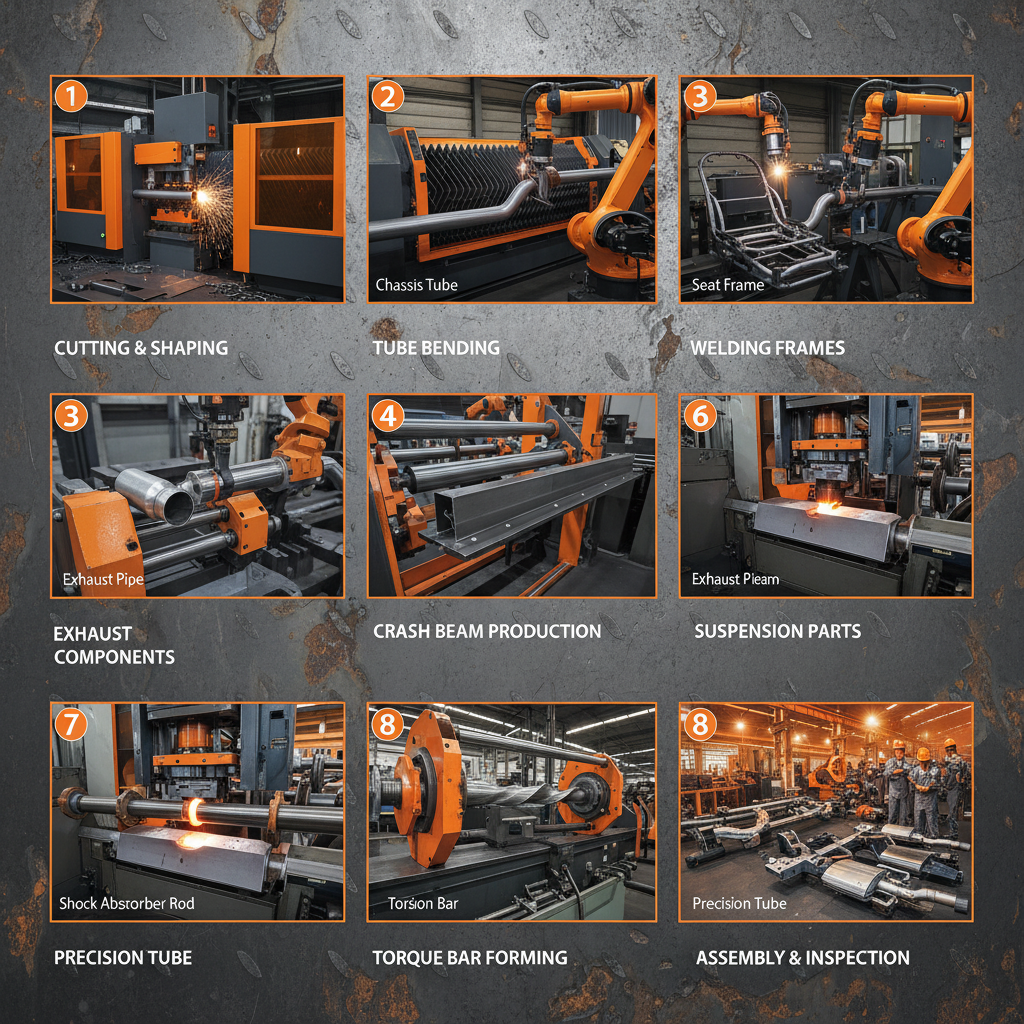
The world of car body parts is a global one, impacting everything from personal transportation to national economies. It's not just about sheet metal and paint; it's a complex network of design, engineering, manufacturing, and supply chains that touches nearly every corner of the planet. The automotive industry is a massive engine of growth, and the demand for high-quality, durable, and increasingly sustainable car body parts fuels that engine. We’re talking billions of dollars in trade, millions of jobs, and a constant push for innovation. It’s a field that's evolving rapidly, driven by safety regulations, fuel efficiency standards, and the rise of electric vehicles. Understanding this landscape is crucial for manufacturers, suppliers, and anyone involved in the automotive ecosystem.
I've spent years walking factory floors, talking to welders, and inspecting stamped steel. What strikes you is the sheer scale and precision. It’s not just about building a shell; it's about creating a safety cage, a crumple zone, a platform for innovation. The entire automotive world relies on the integrity of these parts. A slight defect, a miscalculation, can have catastrophic consequences. That’s why quality control isn't just a process, it’s a mindset, ingrained in every step of production.
And it’s changing rapidly. We’re seeing a shift towards lighter materials – aluminum, composites – to improve fuel efficiency and reduce emissions. The push for electric vehicles is driving demand for parts that can accommodate battery packs and electric motors, requiring completely new design approaches. It’s a dynamic field that demands constant adaptation and a relentless focus on improvement. car body parts are the foundation of everything.
The Global Significance of Car Body Parts
The automotive industry is a cornerstone of the global economy, and car body parts form its very foundation. According to the United Nations Commodity Trade Statistics Database, the trade in vehicle parts and accessories amounts to hundreds of billions of dollars annually. This figure is consistently growing, driven by increased vehicle production and the expanding global middle class. The impact extends beyond simple economics; the availability of safe and reliable car body parts directly impacts road safety and public health.
One of the biggest challenges we face is maintaining consistent quality across diverse global supply chains. We're talking about components sourced from dozens of countries, each with its own regulatory environment and manufacturing standards. Meeting stringent ISO standards and ensuring compliance with regional safety regulations is paramount. It’s not just about building parts; it’s about building trust and ensuring the safety of drivers and passengers worldwide.
Defining Car Body Parts: A Core Component
Simply put, car body parts encompass all the non-mechanical components that form the exterior structure of a vehicle. This includes everything from the chassis and panels to the doors, hoods, fenders, and bumpers. These parts aren't merely cosmetic; they provide structural support, protect passengers in the event of a collision, and contribute significantly to the vehicle's overall performance and fuel efficiency.
In the modern context, defining car body parts extends beyond traditional metal fabrication. We’re now seeing a proliferation of composite materials, plastics, and advanced alloys designed to reduce weight and improve safety. These materials often require specialized manufacturing processes and quality control measures. The trend towards lightweighting is critical for meeting increasingly strict emissions standards and improving fuel economy.
Think of it this way: the engine provides the power, but the body is what protects the people using that power. It's the critical interface between the vehicle and the real world, and its design and construction have a direct impact on everything from crashworthiness to aerodynamic efficiency.
Key Factors in Car Body Part Manufacturing
Durability is arguably the most critical factor. Car body parts are subjected to a wide range of environmental stresses – temperature fluctuations, corrosion, impact, and fatigue. We’re constantly testing materials and finishes to ensure they can withstand these conditions for the lifespan of the vehicle. That means choosing the right steel alloys, applying effective corrosion inhibitors, and employing robust manufacturing processes.
Cost efficiency is another key consideration. Automakers operate on tight margins, and every dollar saved on materials and manufacturing translates directly to the bottom line. However, cost-cutting cannot come at the expense of quality or safety. Finding the right balance between price, performance, and reliability is a constant challenge. We’re always exploring new manufacturing techniques and materials to optimize costs without compromising quality.
Scalability is vital. Automakers need to be able to rapidly scale up production to meet fluctuating demand. This requires flexible manufacturing processes and a reliable supply chain. We work closely with our suppliers to ensure they can meet our volume requirements without sacrificing quality or lead times. A sudden surge in demand can quickly expose weaknesses in the supply chain, so proactive planning is essential.
Global Applications and Industry Impact
The applications of car body parts are, naturally, global. Every vehicle produced worldwide relies on these components. Major automotive manufacturing hubs like China, Germany, Japan, and the United States are significant consumers, but the demand extends to emerging markets in India, Brazil, and Southeast Asia. These regions are experiencing rapid economic growth and a corresponding increase in vehicle ownership.
Beyond the direct automotive industry, car body parts manufacturing impacts a wide range of supporting industries, including steel production, plastics manufacturing, surface finishing, and logistics. The industry provides employment for millions of people worldwide. In post-disaster relief operations, the repurposing of vehicle bodies and parts for emergency shelters and mobile medical facilities is also a growing field.
I’ve seen firsthand the impact of a reliable supply of car body parts in remote industrial zones. Keeping fleets of trucks and heavy machinery operational is crucial for resource extraction and infrastructure development. Without readily available parts, these operations can grind to a halt, hindering economic progress.
Car Body Parts Manufacturing Efficiency
Advantages and Long-Term Value Proposition
The advantages of investing in high-quality car body parts are multifaceted. From a cost perspective, durable parts reduce the need for frequent replacements, lowering the total cost of ownership. Sustainability is increasingly important, and using lightweight materials and efficient manufacturing processes minimizes environmental impact.
But beyond the tangible benefits, there’s a significant social impact. Safer vehicles protect lives and reduce the severity of injuries in accidents. Trust is also paramount. Consumers want to know they’re driving vehicles built with reliable components. Innovation drives this, pushing the boundaries of materials science and engineering to create better, safer, and more efficient vehicles.
Future Trends and Innovation in Car Body Parts
We’re on the cusp of a revolution in car body part design and manufacturing. Additive manufacturing (3D printing) is poised to disrupt the industry, allowing for the creation of complex geometries and customized parts on demand. Advanced materials, like carbon fiber reinforced polymers, are becoming more affordable and are increasingly being used in high-performance vehicles.
The integration of digital technologies, such as artificial intelligence and machine learning, is also transforming the manufacturing process. AI-powered quality control systems can detect defects with greater accuracy and speed than traditional methods. Digital twins – virtual replicas of physical parts – allow engineers to simulate performance and identify potential issues before production even begins.
Challenges and Potential Solutions
One of the biggest challenges is the increasing complexity of supply chains. Global events, like geopolitical instability and natural disasters, can disrupt the flow of materials and components. Diversifying sourcing and building resilient supply chains is crucial. Another challenge is the shortage of skilled workers in the manufacturing sector. Investing in training and education programs is essential to address this gap.
We also need to address the environmental impact of car body part manufacturing. Reducing waste, conserving energy, and using sustainable materials are all critical priorities. Developing closed-loop recycling systems, where materials are recovered and reused, is a key step towards a more sustainable future.
Ultimately, overcoming these challenges requires collaboration across the entire automotive ecosystem – from automakers and suppliers to researchers and policymakers. It’s about working together to create a safer, more efficient, and more sustainable future for the automotive industry.
Core Analysis of Challenges and Solutions for Car Body Parts
| Challenge Area |
Severity (1-5) |
Potential Solution |
Implementation Cost (1-5) |
| Supply Chain Disruptions |
4 |
Diversified Sourcing & Regional Hubs |
3 |
| Skilled Labor Shortage |
5 |
Invest in Vocational Training & Automation |
4 |
| Material Cost Volatility |
3 |
Long-Term Contracts & Material Substitution |
2 |
| Environmental Impact |
4 |
Closed-Loop Recycling & Sustainable Materials |
5 |
| Quality Control Consistency |
3 |
AI-Powered Inspection Systems & Standardized Processes |
3 |
| Increasing Material Complexity |
2 |
Advanced Simulation & Digital Twin Technology |
4 |
FAQS
Steel remains the most common material due to its strength and cost-effectiveness, but it's heavier. Aluminum offers a significant weight reduction, improving fuel efficiency, but is more expensive and can be challenging to weld. Composites, like carbon fiber, provide exceptional strength-to-weight ratios but are currently the most expensive option and require specialized manufacturing processes. The choice depends on the vehicle's performance requirements and budget.
Corrosion is a major threat to the durability of car body parts. Coatings like electrocoating (e-coat), primer, and clear coat create a protective barrier against moisture, salt, and other corrosive elements. These coatings prevent rust formation, which can weaken the structure and compromise safety. Regular maintenance, such as washing and waxing, helps maintain the integrity of these coatings.
3D printing, or additive manufacturing, has the potential to revolutionize car body part production. It allows for the creation of complex geometries and customized parts on demand, reducing waste and lead times. While currently limited to prototyping and low-volume production, advancements in materials and printing technologies are making it increasingly viable for mass production.
Crash safety is a paramount concern in car body part design. Engineers use advanced computer simulations and physical testing to ensure that parts can absorb and dissipate energy during a collision. Key features include reinforced structures, crumple zones, and energy-absorbing materials. These designs are rigorously tested to meet or exceed regulatory safety standards.
Car body part manufacturing can have significant environmental impacts, including energy consumption, waste generation, and emissions. Mitigating these impacts involves using sustainable materials, optimizing manufacturing processes, and implementing closed-loop recycling systems. Manufacturers are also investing in renewable energy sources and reducing water consumption.
Using lightweight materials like aluminum and composites significantly reduces vehicle weight, leading to improved fuel efficiency and reduced emissions. Lighter vehicles also exhibit better handling and acceleration. While these materials often come at a higher cost, the long-term benefits in terms of fuel savings and performance can outweigh the initial investment.
Conclusion
In conclusion, car body parts are far more than just the shell of a vehicle. They are a critical component of a global industry, impacting safety, sustainability, and economic growth. From the materials used to the manufacturing processes employed, every aspect of car body part production is evolving to meet the challenges of a changing world. Understanding these complexities is crucial for anyone involved in the automotive ecosystem, and a commitment to innovation is essential for staying ahead of the curve.
Looking ahead, the future of car body parts will be shaped by advancements in materials science, digital technologies, and sustainable manufacturing practices. Investing in research and development, fostering collaboration across the supply chain, and prioritizing safety and environmental responsibility will be key to unlocking the full potential of this vital industry. Visit our website at www.kaihuacasting.com to learn more about our commitment to quality and innovation in car body part manufacturing.