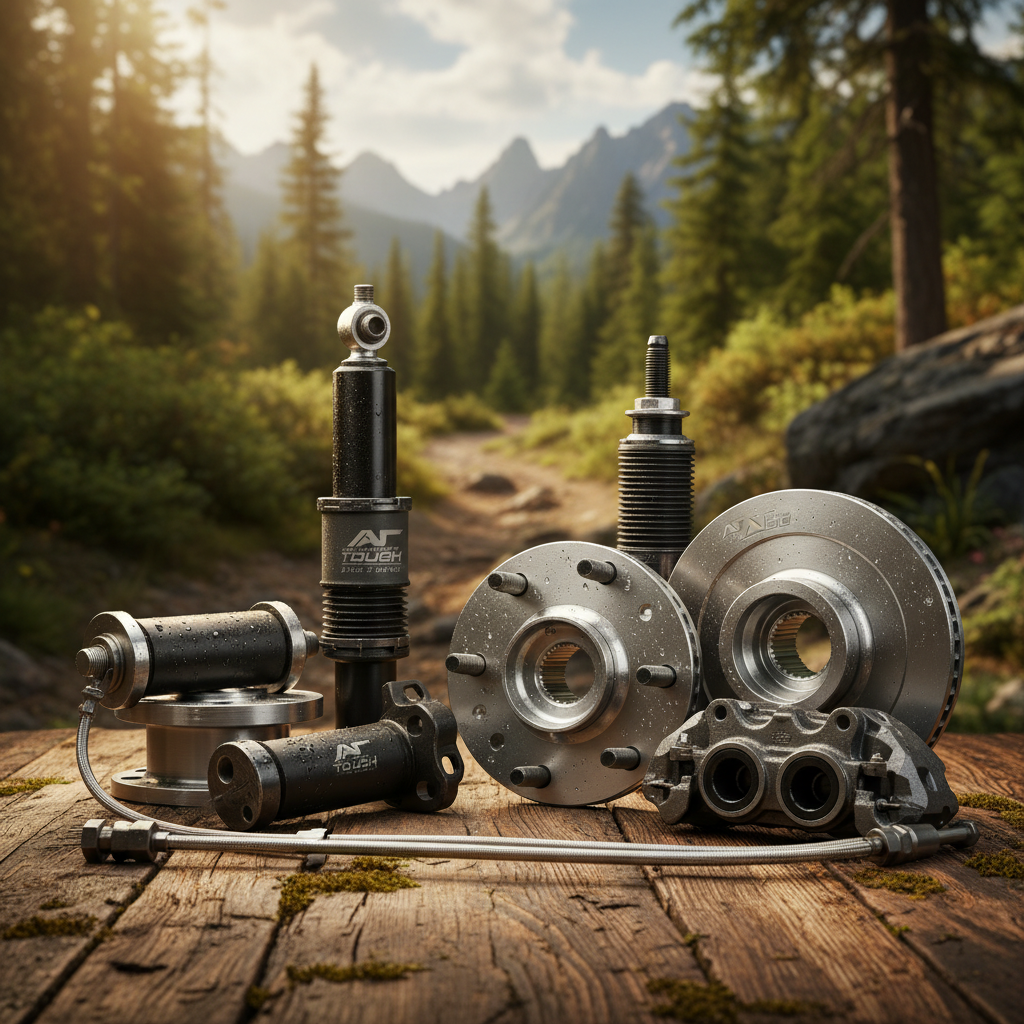
Auto parts are the lifeblood of the modern transportation system, extending far beyond simply keeping cars on the road. They're integral to global supply chains, economic growth, and even national security. From the smallest fasteners to complex engine components, these manufactured goods underpin a massive industry that constantly evolves with technological advancements and shifting consumer demands. Understanding the nuances of auto parts – their sourcing, manufacturing, quality control, and distribution – is crucial for anyone involved in the automotive sector, and increasingly important for related industries like logistics, insurance, and even urban planning.
The sheer scale of the auto parts industry is staggering. Billions of dollars are exchanged annually, impacting economies worldwide. According to UN Comtrade data, the global trade in vehicle parts and accessories reached over $1.5 trillion in 2022. The industry isn’t just about new vehicle production, it’s a massive aftermarket business driven by maintenance, repair, and customization. However, this vast network faces significant challenges – increasing complexity of vehicles, fluctuating raw material prices, and the push towards sustainable manufacturing practices are forcing companies to adapt and innovate.
Ultimately, auto parts ensure the safety, reliability, and performance of vehicles, impacting millions of people daily. The industry is a key driver of innovation, pushing the boundaries of materials science, engineering, and manufacturing processes. It's a sector ripe with opportunities for those who can navigate its complexities and embrace the future of mobility.
The Global Significance of Auto Parts
The auto parts industry isn't just about what happens in Detroit or Tokyo. It’s a truly global network. From the iron ore mines in Brazil supplying the steel mills, to the specialized plastic manufacturers in Germany, and the assembly plants in Mexico, every corner of the world plays a role. Consider the ISO standards that govern quality control – they are universally adopted to ensure consistent performance and safety. A disruption in one region, be it a natural disaster or geopolitical instability, can have cascading effects throughout the entire supply chain. We’ve seen this firsthand with recent events, highlighting the need for resilient and diversified sourcing strategies.
A major challenge currently facing the industry is the increased demand for electric vehicle (EV) components. This is shifting the focus from traditional internal combustion engine (ICE) parts to batteries, electric motors, and power electronics. This transition requires significant investment in new manufacturing capabilities and skills development, and it’s creating new opportunities for companies that can adapt quickly. The competition isn’t just between auto part manufacturers; it’s between entire nations vying for dominance in the EV supply chain.
Defining Auto Parts & Their Role
Simply put, auto parts are any component used in the construction, operation, or repair of a motor vehicle. This encompasses everything from the engine block and transmission to the smallest bolts and wiring connectors. However, it's more than just a list of components. Auto parts represent a complex interplay of engineering, materials science, and manufacturing precision. A seemingly insignificant part can have a major impact on vehicle safety and performance.
This industry directly addresses the fundamental human need for transportation and mobility. It’s integral to modern industry, enabling the efficient movement of goods and people. Without reliable auto parts, our logistics networks would grind to a halt, impacting everything from food supply to emergency services. Furthermore, the constant innovation in this field drives economic growth and creates high-skilled jobs.
The connection to humanitarian needs is also significant. In disaster relief efforts, all-terrain vehicles and specialized trucks, heavily reliant on durable auto parts, are often the first responders, delivering aid to those in need. Even the basic ability to transport medical supplies and personnel depends on a robust and functioning auto parts supply chain.
Core Components & Key Factors
Several key factors define the quality and reliability of auto parts. Durability is paramount; components must withstand harsh conditions, extreme temperatures, and constant stress. This is often achieved through the use of high-strength materials and rigorous testing procedures. Precision is equally critical, as even slight variations in dimensions can affect performance and safety. Modern manufacturing techniques, like CNC machining and 3D printing, allow for incredibly tight tolerances.
Cost-efficiency is a constant balancing act. Manufacturers must find ways to reduce production costs without compromising quality. This often involves optimizing supply chains, streamlining manufacturing processes, and leveraging economies of scale. Compatibility is another key factor, particularly in the aftermarket. Parts must be readily available and compatible with a wide range of vehicle makes and models. Reliability directly impacts driver safety and minimizes downtime, influencing brand reputation and customer loyalty.
Finally, Innovation is driving the industry forward, with new materials, designs, and manufacturing processes constantly emerging. This includes the development of lightweight components to improve fuel efficiency, advanced sensors to enhance safety features, and smart parts that can diagnose and report on their own performance.
Global Applications & Use Cases
Auto parts are applied across a remarkably diverse range of contexts. In commercial fleets, heavy-duty truck parts are critical for maintaining uptime and ensuring the timely delivery of goods. In the agricultural sector, tractor and farm equipment parts keep food production moving. In the mining industry, specialized vehicle parts withstand extreme operating conditions.
We see widespread application in regions with rapidly developing infrastructure, such as Southeast Asia and Africa, where the demand for affordable and reliable vehicles is soaring. Similarly, in North America and Europe, the aftermarket for auto parts is enormous, driven by a large population of aging vehicles. Organizations like automotive repair shops, fleet management companies, and insurance providers all rely heavily on a readily available supply of quality auto parts.
In post-disaster relief operations, robust and reliable auto parts are essential for getting emergency vehicles and aid supplies to affected areas. Even in remote industrial zones, where access to traditional repair facilities is limited, having a stock of essential auto parts can prevent costly downtime and ensure continuous operation.
Auto Parts Component Performance Ratings
Advantages & Long-Term Value
The benefits of investing in high-quality auto parts extend far beyond simply keeping a vehicle running. Cost savings are substantial. While cheaper parts may offer an initial price advantage, they often fail prematurely, leading to more frequent repairs and replacements – ultimately costing more in the long run. Reliability translates directly to safety. A faulty brake pad or a worn tire can have catastrophic consequences, so choosing dependable parts is paramount.
The industry is also becoming increasingly focused on sustainability. Using recycled materials, reducing waste, and designing parts for longevity all contribute to a smaller environmental footprint. There's a growing demand for remanufactured parts, which offer a cost-effective and environmentally friendly alternative to new components. The trust and peace of mind that comes with knowing your vehicle is equipped with reliable auto parts is invaluable.
Future Trends & Innovations
The auto parts industry is on the cusp of a major transformation. The rise of electric and autonomous vehicles is driving demand for new types of components, such as battery management systems and advanced sensor arrays. Digital transformation is also playing a key role, with the use of data analytics and AI to optimize supply chains, predict maintenance needs, and improve product design.
Additive manufacturing, or 3D printing, is poised to revolutionize the way auto parts are produced. It allows for the creation of complex geometries and customized components on demand, reducing lead times and minimizing waste. Materials science is also advancing rapidly, with the development of lightweight composites and self-healing materials that promise to enhance vehicle performance and durability.
Challenges & Solutions
One of the biggest challenges facing the auto parts industry is supply chain disruption, as highlighted by recent global events. Reliance on a limited number of suppliers and the lack of visibility throughout the supply chain can lead to significant delays and cost increases. The solution lies in diversifying sourcing, investing in supply chain resilience, and leveraging digital technologies to improve transparency and traceability.
Another challenge is the increasing complexity of vehicles, which requires specialized knowledge and skills. Addressing this requires investing in workforce training and development, as well as fostering collaboration between manufacturers, suppliers, and educational institutions. Finally, the need to balance cost-efficiency with sustainability is a constant challenge. Innovative solutions, such as the use of recycled materials and the development of remanufacturing processes, are essential.
We need to look at more localized production models, reducing our reliance on long-distance shipping. Investing in automation and robotics can also help mitigate labor shortages and improve efficiency. And, critically, collaboration across the entire value chain – from raw material suppliers to end customers – is essential to overcome these challenges and ensure a sustainable future for the auto parts industry.
Key Metrics for Evaluating Auto Parts Supply Chain Resilience
| Supplier Diversification Index |
Lead Time Variability (Days) |
Inventory Turnover Ratio |
Risk Mitigation Score (1-10) |
| 0.85 (High Diversification) |
3.2 |
6.1 |
8 |
| 0.60 (Moderate Diversification) |
5.8 |
4.8 |
6 |
| 0.45 (Low Diversification) |
8.1 |
3.5 |
4 |
| 0.72 (Moderate-High) |
4.5 |
5.2 |
7 |
| 0.90 (Very High) |
2.9 |
7.0 |
9 |
| 0.55 (Moderate) |
6.3 |
4.0 |
5 |
FAQS
OEM (Original Equipment Manufacturer) parts are produced by the same manufacturer that supplied the parts for the vehicle when it was new. Aftermarket parts are made by companies other than the original manufacturer. OEM parts often come with a higher price tag but are generally considered to have a guaranteed fit and quality. Aftermarket parts can be more affordable, but quality can vary widely depending on the brand. Understanding your needs and budget is crucial when choosing between the two.
Look for reputable brands with strong quality control certifications, such as ISO 9001. Check for warranties and return policies. Read customer reviews and seek recommendations from trusted mechanics. Avoid extremely low-priced parts, as they are often indicative of inferior quality. Always verify the part number to ensure compatibility with your vehicle.
Remanufactured auto parts are used parts that have been restored to like-new condition through a rigorous cleaning, inspection, and repair process. They offer a cost-effective and environmentally friendly alternative to new parts. Remanufactured parts typically come with a warranty and can provide comparable performance to OEM parts. However, ensure the remanufacturer is reputable and offers a quality guarantee.
Raw material prices, such as steel, aluminum, and plastics, can significantly influence the cost of auto parts. Global economic conditions, supply and demand, and geopolitical events all play a role in these fluctuations. Manufacturers often adjust pricing to reflect changes in raw material costs, leading to price increases for consumers. Long-term contracts with suppliers and efficient inventory management can help mitigate these impacts.
Technology is transforming auto parts manufacturing in several ways. Additive manufacturing (3D printing) enables the creation of complex geometries and customized parts. Automation and robotics improve efficiency and reduce labor costs. Data analytics and AI optimize supply chains and predict maintenance needs. The use of advanced materials, such as lightweight composites, enhances performance and sustainability.
The most reliable method is to use your Vehicle Identification Number (VIN) when searching for parts. Many online retailers and auto parts stores have VIN lookup tools that ensure you receive the correct parts for your make, model, and year. You can also consult your vehicle's owner's manual or seek assistance from a qualified mechanic.
Conclusion
The auto parts industry is a complex and dynamic ecosystem that underpins the global transportation system. From ensuring vehicle safety and reliability to driving innovation and sustainability, auto parts play a critical role in our everyday lives. Understanding the challenges and opportunities within this sector is essential for anyone involved in the automotive industry and beyond.
Looking ahead, the industry will continue to evolve with the rise of electric and autonomous vehicles, the increasing importance of sustainability, and the accelerating pace of technological innovation. By embracing these changes and investing in resilience, collaboration, and workforce development, we can ensure a future where auto parts contribute to a safer, more efficient, and more sustainable transportation system. Visit our website at auto parts to learn more about our products and services.