


Air Chamber Bracket - Heavy-Duty, OEM Fit & Rustproof
Air Chamber Bracket (Middle Bridge): field notes from the shop floor
The Air Chamber Bracket (Middle Bridge) is one of those unsung parts you don’t notice—until it fails. Built in Tang County Economic Development Zone, Chang Gu Cheng Industrial Park (Ba Qie), Hebei Province, China, this bracket provides structural support, positional stability, and real-world vibration damping in pneumatic assemblies, HVAC equipment, heavy machinery, and yes, quite a few automotive platforms. People in maintenance tell me it’s the quiet hero that keeps housings aligned and resonance under control.
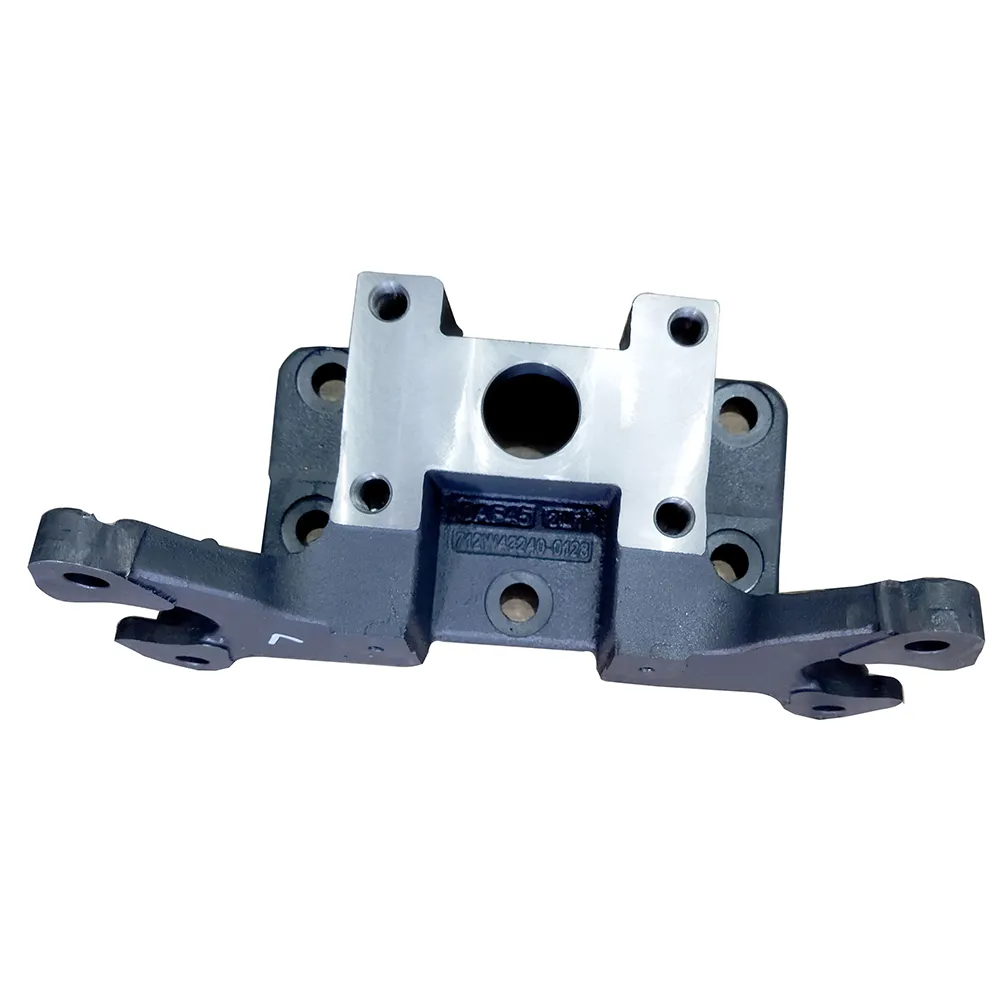
Why the Air Chamber Bracket matters right now
Three converging trends are pushing specifiers to rethink brackets: lighter chassis targets, tighter NVH limits, and tougher corrosion cycles. Honestly, the procurement checklists have grown longer—customers are asking for verified salt-spray hours, fatigue data, and documented dimensional control, not just a drawing and a promise.
- Automotive and off-highway: mounting air chambers/actuators near heat and shock zones.
- HVAC and compressors: bracketed housings where vibration isolation is a big deal.
- Pneumatics/industrial skids: predictable alignment under cycling loads.
Technical snapshot
| Parameter | Spec (≈ real-world) |
|---|---|
| Base materials | Ductile iron QT450-10 or A356-T6 aluminum (weight-sensitive builds) |
| Process | Precision sand casting + CNC; optional die-cast for Al; deburr + shot blast |
| Mechanical | σt: ≈450 MPa (ductile iron) / ≈250 MPa (Al); HB: 140–190 (iron) / 75–95 (Al) |
| Dimensional control | ISO 8062 CT7–CT8 casting; machined features ±0.05 mm typical |
| Surface protection | Epoxy powder 60–80 μm or Zn-Ni 12–15 μm; RoHS/REACH compliant |
| Environment | -40 to 180 °C; salt spray ≥480 h (ASTM B117) |
| NVH & fatigue | System η (with bushings) ≈0.03–0.06; fatigue ≥2×10⁶ cycles @ 3 g |
From drawing to dock: process flow
- DFM + FEA: wall transitions, fillets, and stress risers checked; GD&T per ASME Y14.5.
- Tooling: pattern and core boxes; gating tuned for fill and porosity control.
- Casting & heat treat: controlled cooling; T6 for Al as required.
- CNC machining: datums locked; critical bores and pads validated with SPC.
- Coating: pre-treatment, coating, and cure windows recorded; thickness checks.
- Testing: dimensional CMM, hardness, dye penetrant (as needed), salt spray, vibration/fatigue.
- Packaging & traceability: lot IDs, material certs, inspection reports.
Vendor snapshot (what buyers compare, to be honest)
| Vendor | Certs | Tolerances | Lead time | Customization |
|---|---|---|---|---|
| Kaihua Casting (Hebei) | ISO 9001, IATF 16949 | CT7–CT8; machined ±0.05 mm | ≈20–35 days | Material, coating, NVH tuning |
| Regional OEM B | ISO 9001 | CT8–CT9; ±0.10 mm | ≈30–50 days | Limited menu |
| Trading House C | Varies | CT9; ±0.15 mm | ≈45–60 days | Depends on sub-supplier |
Customization, advantages, and what users say
- Custom bosses, slot patterns, and bushing kits for the Air Chamber Bracket.
- Coating stacks tuned to coastal or de-icing salt: up to 720 h B117 on request.
- Lightweight Al versions where mass matters; iron for rugged damping.
Feedback’s candid: “Installed-and-forgotten” is a phrase I hear. Some maintenance leads noted fewer retorque events after switching to the Air Chamber Bracket with upgraded bushings—small thing, big productivity win.
Quick case study
An HVAC OEM reported bracket-related vibration at 42–48 Hz causing premature fastener loosening. Swapping to a ductile-iron Air Chamber Bracket with revised fillets and a 70 μm epoxy topcoat cut peak acceleration by ≈28% and passed 2.5×10⁶ cycles on a 3 g rig. Salt spray cleared 500 h without red rust; warranty claims dropped the next quarter. Not flashy, just solid engineering.
Testing & compliance (the fine print we actually check)
CMM reports against GD&T; hardness sampling each lot; ASTM B117 salt spray; dye penetrant for critical zones; balance verification per ISO 1940-1 when rotating assemblies are involved; and quality system audits under ISO 9001/IATF 16949. Service life targets are validated in-house with vibration/fatigue rigs—your mileage, of course, depends on installation and load spectra.
References
- ASTM B117: Standard Practice for Operating Salt Spray (Fog) Apparatus.
- ISO 8062-3: Geometrical product specifications (GPS) — Casting tolerances.
- ASME Y14.5: Dimensioning and Tolerancing.
- ISO 9001: Quality Management Systems — Requirements.
- IATF 16949: Automotive QMS Requirements.
- ISO 1940-1: Mechanical vibration — Balance quality requirements for rotors.