


Air Chamber Bracket | Heavy-Duty, Corrosion-Resistant OEM
What Fleet Managers Should Know About the air chamber bracket (Rear Axle)
If you run heavy trucks, trailers, or buses, you know that brake uptime is everything. The rear-axle air chamber bracket is not glamorous, but it quietly holds your air brake chamber in alignment while soaking up vibration and road shock. When it fails, it’s never at a good time—usually on a slope, in the rain, with a delivery window closing. I’ve heard that story more than once.
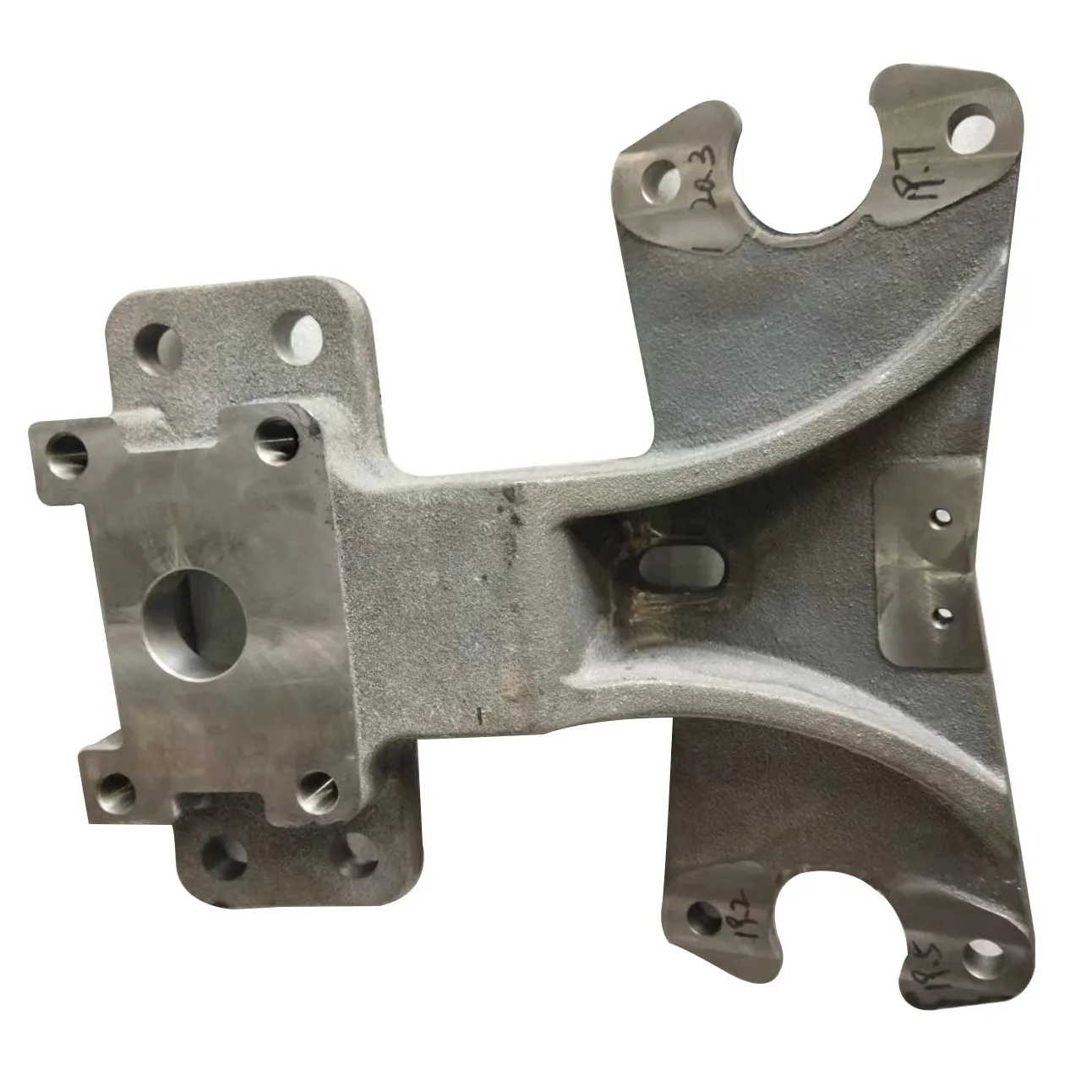
This specific bracket is cast and machined in Tang County Economic Development Zone, Chang Gu Cheng Industrial Park (Ba Qie), Hebei Province, China. The factory’s been doubling down on process control—more on that below—and, to be honest, that’s what separates a reliable air chamber bracket from the sort of part that keeps your maintenance team up at 2 a.m.
Quick Spec Sheet (Rear Axle Bracket)
| Material options | High-strength ductile iron (e.g., ASTM A536 65-45-12) or forged steel, chosen per axle/chamber load |
| Manufacturing | Precision casting → shot-blast → CNC machining → deburr → heat treatment (normalize) → coating |
| Surface finish | E-coat + powder topcoat, ≈ 60–90 μm total (real-world use may vary) |
| Tensile strength | ≈ 450–600 MPa depending on grade |
| Corrosion test | ASTM B117 salt spray ≥ 480 h target |
| Fatigue life | > 1,000,000 load cycles (bench tested, around 10–15 kN range) |
| Temperature range | −40 °C to +120 °C typical service |
| Compliance | Supports systems designed for FMVSS 121 / ECE R13 brakes |
Where It’s Used and Why It Matters
- Heavy-duty on-road: Class 7–8 tractors, long-haul trailers, city buses.
- Vocational/off-highway: refuse, logging, mining support vehicles.
- Harsh climates: coastal fleets battling salt, freeze–thaw cycles, washdowns.
The bracket’s job is simple but unforgiving: maintain chamber alignment under axle flex, torque events, and shocks. A robust air chamber bracket reduces vibration-induced diaphragm wear and keeps pushrod geometry correct—small details that show up as longer brake hardware life and better pedal feel.
Process Flow, Testing, and Service Life
Materials are spectro-verified, cast in controlled molds, then CNC-machined so bolt holes stay true (I’ve seen “oval” holes on budget parts—no thanks). Heat treatment stabilizes microstructure; coatings get cross-hatch adhesion checks. Typical validations include:
- Vibration per SAE J1456 profiles, resonance scan, and dwell.
- Torque retention on fasteners, re-torque after thermal cycling.
- Salt spray per ASTM B117; chip resistance; gravel bombardment tests.
- Dimensional audits (CMM), PPAP for OEM programs; ISO 9001 / IATF 16949 QMS.
Expected service life? Around 5–10 years in line-haul; shorter in severe-service fleets. As always, inspection intervals and torque checks move the needle.
Customization Options
Hole patterns, gusset thickness, coating systems (zinc-rich primer, duplex), and chamber size compatibility can be tuned. For fleets, matched left/right air chamber bracket sets with serialized traceability help maintenance tracking.
Vendor Snapshot (What Buyers Compare)
| Vendor | Material consistency | Standards & PPAP | Customization lead time | Total cost |
|---|---|---|---|---|
| Kaihua Casting (Hebei) | Stable chem, batch certs | ISO 9001 / IATF 16949; PPAP available | ≈ 3–6 weeks | Competitive over lifecycle |
| Generic Importer | Varies by lot | Limited documentation | ≈ 6–10 weeks | Lower upfront, higher risk |
| Local Fabricator | Good for small runs | Shop-level QA | ≈ 1–3 weeks | Higher unit cost |
Field Notes and Feedback
One regional carrier swapped 60 units after repeated weld crack issues on legacy brackets. With the new air chamber bracket, vibration dropped (measured with a simple axle accelerometer, ≈ 12–18% reduction). They report fewer chamber replacements and “no drama” torquing during PMs. Another customer told me, “The coating actually holds up through winter washdowns—surprisingly decent.”
Industry Trends
- More finite element analysis upfront; less trial-and-error on rigs.
- Shift to duplex coatings for coastal fleets.
- Traceable, serialized brackets tied into digital maintenance logs.
Bottom line: a well-made air chamber bracket is quiet insurance for your brake system—money you notice only when it’s missing.
Citations
- FMVSS 121 — Air Brake Systems: https://www.ecfr.gov/current/title-49/subtitle-B/chapter-V/part-571/section-571.121
- ECE R13 — Braking of Vehicles of Categories M, N and O: https://unece.org/transport/standards/transport/vehicle-regulations-wp29/ece-regulations
- SAE J1456 — Vibration Testing of Vehicle Components: https://www.sae.org/
- ASTM B117 — Salt Spray (Fog) Testing: https://www.astm.org/b117-19.html
- IATF 16949 — Automotive Quality Management: https://www.iatfglobaloversight.org/