


Air Chamber Bracket—Heavy-Duty, OEM-Fit—Why Choose It?
Air Chamber Bracket (Middle Bridge): what’s changing, what matters, and what to check before you buy
If you work around pneumatic modules or heavy assemblies, you’ve probably handled an air chamber bracket more times than you can count. This Middle Bridge variant—manufactured in Tang County Economic Development Zone, Chang Gu Cheng Industrial Park (Ba Qie), Hebei, China—shows up in places where stability, alignment, and vibration control must quietly do their job, day after day.
Industry trend, in one line: tougher environments, tighter tolerances, and faster delivery. Electrified platforms and smarter pneumatics mean brackets are carrying more responsibility for NVH (noise, vibration, harshness) and reliability. Honestly, that’s why so many engineers are asking about fatigue data and salt-spray results first, paint color second.
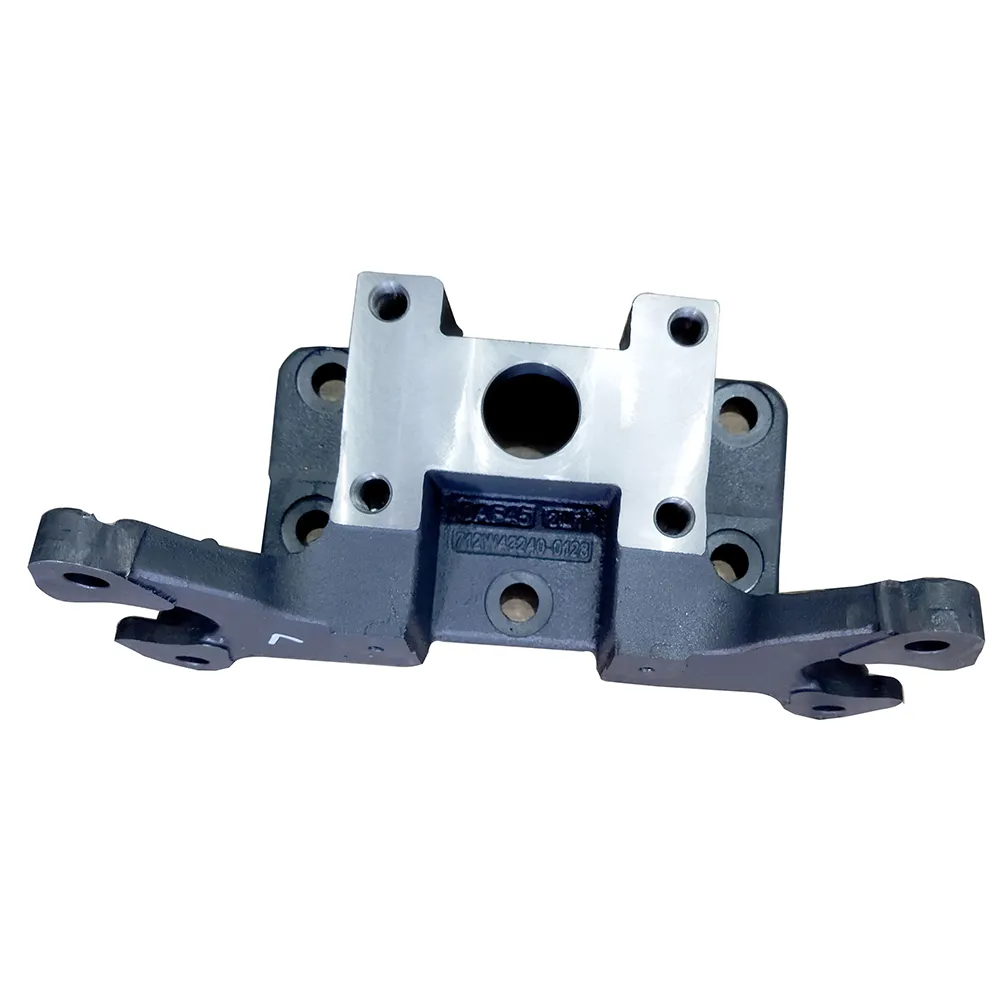
Where a air chamber bracket makes the difference
Typical deployments: pneumatic actuator frames, automotive sub-assemblies (the “middle bridge” support), HVAC blower mounts, and heavy machinery air reservoirs. Users tell me the wins are straightforward—clean alignment, reduced resonance peaks, and fewer bolt-retorque events over the service life.
Product specifications (typical, can be customized)
| Material options | Ductile iron EN-GJS-500-7 / ASTM A536 65-45-12; Cast steel (≈A216 WCB); optional aluminum for weight-sensitive builds |
| Process | Precision sand casting → heat treatment → CNC machining → shot blast → coating |
| Dimensional tolerance | ISO 8062-3 CT6–CT8 (≈ real-world holes to H11–H9 after machining) |
| Surface finish | Ra ≈ 3.2–6.3 μm machined; e-coat or powder coat, 60–90 μm |
| Mechanical properties | UTS ≈ 450–600 MPa; HB 160–210 (ductile iron) after heat treat |
| Corrosion | ISO 9227 NSS ≥ 480 h without red rust (typical) |
| Service life | Fatigue tested to ≥ 107 cycles under rated load; 5–10 years field use (varies) |
Process flow and testing
Pattern build → optimized gating/risers (simulation-backed) → melt chemistry control → pour and cool → heat treatment (to stabilize microstructure) → CNC machining with fixture traceability → coating → 100% visual and dimensional checks. Testing often includes CMM, tensile and hardness checks, microstructure review, UT/MT on critical zones, salt-spray per ISO 9227, and vibration/fatigue (sine sweep 5–500 Hz; random profiles; real loads). To be honest, the boring paperwork—PPAP/FAIR, material certs, RoHS/REACH—saves headaches later.
Vendor snapshot: what buyers compare
| Vendor | Certs | MOQ | Lead time | Customization | Notes |
|---|---|---|---|---|---|
| Kaihua Casting (Hebei) | ISO 9001; automotive APQP/PPAP-ready | ≈ 100–300 | 4–6 weeks after tooling | High—material, coating, bushings, labeling | Strong engineering feedback; stable metallurgy |
| Regional Fab Shop | ISO 9001 (varies) | Low | 2–8 weeks | Medium | Convenient for spares; mixed casting depth |
| Import Aggregator | Varies | High | 8–12 weeks | Low–Medium | Price-focused; less process visibility |
Customization notes
For a air chamber bracket, specify mounting-hole class (H9/H11), bushing type (rubber isolators Shore A 60–80 or PTFE-lined bearings), coating stack (e-coat + powder for seaside), and target duty cycle. Many customers say adding datum features for fixtures pays off in assembly speed.
Field results (quick stories)
- HVAC OEM cut blower resonance by ≈ 18% after bracket geometry tweak + elastomer insert; no fastener loosening across 1,000h endurance.
- Quarry vehicle line switched to coated ductile iron; ISO 9227 480 h passed, zero red rust at 420 h check, and torque audits stabilized.
Bottom line: pick a air chamber bracket with honest fatigue data, documented chemistry control, and coatings proven in salt spray. The rest, as they say, is paint.
Authoritative references
- ASTM A536 – Standard Specification for Ductile Iron Castings [1].
- ISO 9227:2017 – Corrosion tests in artificial atmospheres — Salt spray tests [2].
- ISO 8062-3:2007 – Dimensional and geometrical tolerances for castings [3].
- ASHRAE Guidelines on vibration isolation and equipment mounting (selected chapters) [4].
[1] astm.org | [2] iso.org | [3] iso.org | [4] ashrae.org