


Air Chamber Bracket: Heavy-Duty, Rustproof, OEM-Fit?
Air Chamber Bracket (Middle Bridge): field notes from the shop floor
I’ve toured enough foundries and assembly lines to know when a humble part does the heavy lifting. The air chamber bracket is exactly that kind of component—quietly keeping pneumatic manifolds, HVAC modules, and vehicle subsystems stable and vibration-safe. This version comes out of Tang County Economic Development Zone, Chang Gu Cheng Industrial Park (Ba Qie), Hebei, China—an area that’s earned a certain reputation for dependable metalwork.
Why it’s trending
Two big forces: electrification and compact pneumatics. EV platforms and high-density HVAC units need brackets that combine stiffness with damping, not just brute strength. In fact, many customers say durability is a given now; what they shop for is consistency and low NVH (noise, vibration, harshness). The air chamber bracket is being re-engineered with tighter casting tolerances and smarter coatings to survive salt, grit, and temperature swings.
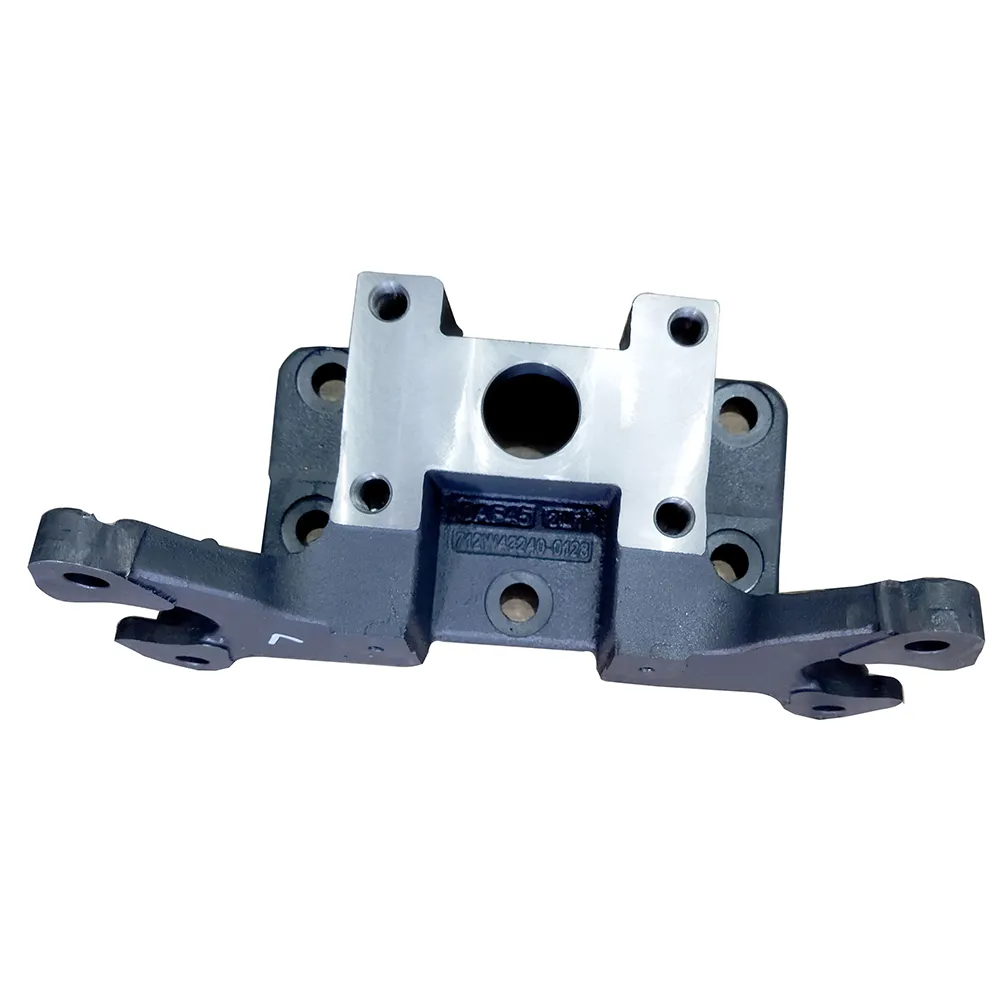
Typical specifications (real-world values may vary)
| Item | Spec ≈ |
|---|---|
| Base materials | Ductile iron QT450-10 / QT500-7, alloy steel 42CrMo, or Al 6061-T6 (per project) |
| Manufacturing | Precision sand or investment casting + CNC machining; ISO 8062-3 CT7–CT8 |
| Dimensions | Hole patterns per customer drawing; ±0.2–0.5 mm typical after machining |
| Surface treatments | Zinc/epoxy powder coat, e-coat, or phosphate; 240–480 h ISO 9227 salt spray |
| Mechanical | Tensile ≥ 450–700 MPa (material-dependent); damping inserts optional |
| Service life | > 2–5 million load cycles in typical pneumatic/HVAC duty |
| Certifications | ISO 9001; IATF 16949 for automotive lines (on request) |
Process flow and quality gates
Material selection → tooling and simulation (MAGMA/AnyCasting) → casting (controlled pouring temp) → heat treatment (normalize or T6 for Al) → CNC machining → deburr/shot blast → coating → assembly of bushings/dampers → 100% dimensional inspection (CMM) → performance testing. Tests typically include tensile (ISO 6892-1), vibration endurance (IEC 60068-2-6 profiles), and salt spray (ISO 9227). Honestly, the salt fog is where budget brackets fail first.
Where it’s used
- Pneumatic manifolds and air reservoir mounting
- Automotive subframes, compressors, and battery pack auxiliaries
- HVAC blower assemblies and rooftop units
- Heavy machinery: mining, cement, and agricultural equipment
Advantages I’ve observed
- Stable alignment: less drift under thermal load
- Vibration control: optional elastomer seats cut resonance peaks
- Serviceability: sensible access to bolts makes techs happier (and faster)
Vendor snapshot (selection matters)
| Criteria | Kaihua Casting | Vendor A | Vendor B |
|---|---|---|---|
| Origin | Hebei, China | Domestic/EU mix | SEA region |
| Certs | ISO 9001, IATF 16949 (req.) | ISO 9001 | ISO 9001 |
| Lead time | ≈ 20–35 days | ≈ 35–50 days | ≈ 28–45 days |
| Customization depth | High (tooling + coatings) | Medium | Medium |
| Salt spray baseline | ≥ 240–480 h | ≥ 120–240 h | ≥ 240 h |
Customization and a quick case
Options include hole re-patterning, integrated rubber bushings, captive nuts, and color-matched coatings for line ID. A recent HVAC retrofit (mid-rise commercial) swapped legacy brackets for a air chamber bracket with thicker fillets and e-coat. Result: measured vibration at the blower housing dropped ≈18% (RMS), and corrosion touch-ups went to zero in one winter. Another automotive pilot reported -3.2 dB SPL at a compressor mount and a calculated MTBF bump of around 22%—not bad for what looks like “just a bracket.”
What buyers keep telling me
“It installs cleanly and stays put.” “No paint chalking after the test lab.” And my favorite: “We stopped adding Loctite everywhere.” To be honest, that last comment usually means the machining and flatness are dialed in.
References