


Chassis Support for Heavy Equipment | Durable OEM-Grade
Chassis Support of Construction Machinery: Field Notes, Specs, and What Buyers Really Ask
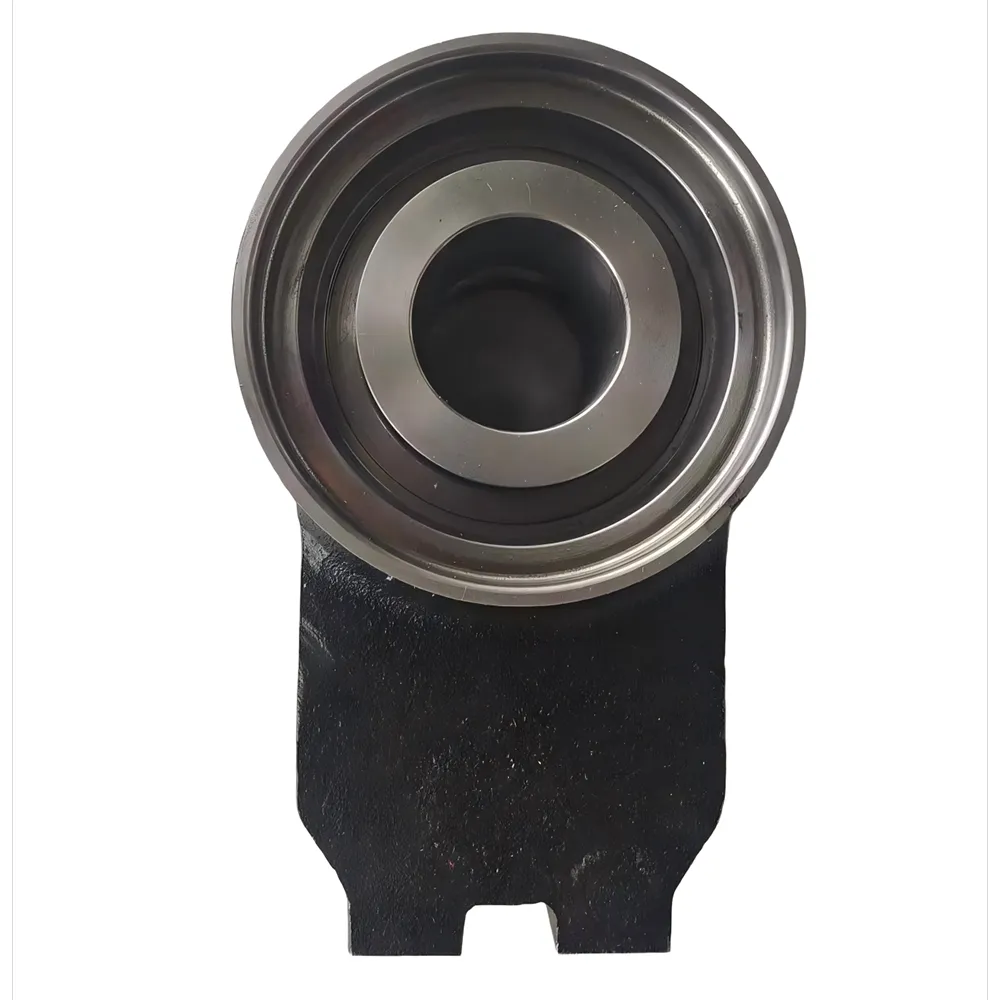
When you peel back the covers on heavy equipment, the first question is simple: what keeps the whole thing rigid under brutal loads? The answer is the Chassis Support. It’s the structural spine—quiet, heavy, and strangely poetic in its reliability. From excavators pivoting over rock to bulldozers bracing for lateral shock, this is the component that decides whether your fleet quietly does its job—or racks up downtime.
This model, produced in Tang County Economic Development Zone, Chang Gu Cheng Industrial Park (Ba Qie), Hebei Province, China, comes from a region that’s become a bit of a cluster for precision casting. To be honest, I was skeptical before I visited. But the machining lines and weld procedure specs were better than I expected.
Industry Trends and Where Chassis Support Is Heading
Three trends keep popping up in RFQs: weight reduction without compromising fatigue life, tighter dimensional control for faster line fits, and traceable metallurgy. Many customers say they want “forgiveness under abuse,” which in practice means ductile iron or HSLA steel with proper heat treatment and verified wall-thickness transitions.
Typical Materials and Methods
- Ductile iron (≈EN-GJS-450-10 / ASTM A536 65-45-12), gray iron where vibration damping matters- HSLA steel/Q345B, 42CrMo for high-impact zones
- Processes: resin-sand casting or lost-foam (for complex geometries), normalizing or Q+T, shot blasting, CNC finish machining, anti-corrosion coating (epoxy or Zn-rich primer)
- NDT: UT per EN 12680-1 or ASTM A609; MT per ASTM E1444/E1444M
- Dimensional tolerance: ISO 8062-3 (CT8–CT10 typical)
Representative Product Specs
| Parameter | Spec (≈/typical) |
|---|---|
| Material Options | Ductile Iron QT450-10; 42CrMo; Q345B |
| Dimensions | 400–2,800 mm envelope; wall 12–60 mm |
| Yield Strength | ≥ 320 MPa (ductile iron) / ≥ 600 MPa (42CrMo after Q+T) |
| Hardness | 180–320 HBW (ISO 6506) |
| Surface Finish | Ra 3.2–6.3 μm machined; blast SA 2.5, primer 40–60 μm |
| Service Life | ≈ 12,000–20,000 operating hours (real-world use may vary) |
Process Flow (What Actually Happens)
RFQ and DFM review → 3D model + riser/feeder simulation (MAGMA or similar) → pattern build → trial pour → heat treatment → rough machining → NDT (UT/MT) → dimensional CMM → stress-relief (if required) → finish machining → coating → final audit → packing and traceable documentation. It sounds linear; in reality there’s usually a loop or two around machining and NDT.
Testing & Compliance
- Dimensional per ISO 8062-3; chemistry vs. EN 1563/ASTM A536; hardness ISO 6506; welds to AWS D1.1 if assemblies apply. Environmental endurance for mobile equipment often references ISO 16750-3 (mechanical loads). Fatigue sampling on critical ribs: ≥2×10^6 cycles at design load, safety factor 1.5–2.0.
Where Chassis Support Works Best
- Excavators (20–50 t), bulldozers, wheel loaders, mining trucks, crawler cranes, and port reach stackers. One fleet manager told me, “If the chassis holds geometry, everything else is solvable.” That’s about right.
Vendor Comparison (snapshot)
| Vendor | Casting Method | Lead Time | Customization | Standards Footprint | Notes |
|---|---|---|---|---|---|
| Kaihua Casting (Hebei) | Resin-sand, lost-foam; CNC finishing | ≈ 30–45 days (tooling add 2–4 wks) | High—DFM support | ISO 8062, ASTM/EN iron/steel specs | Competitive on medium-large parts |
| Regional Foundry A | Green sand; limited lost-foam | 45–60 days | Medium | ISO 9001; selective ASTM | Cost-effective, tighter size range |
| Global OEM Supplier B | Automated molding + machining cells | 25–35 days | High, but higher MOQ | IATF 16949, full PPAP | Premium pricing |
Customization and Real Feedback
Common tweaks: rib-thickness optimization, boss relocation for hose routing, integrated lifting lugs, and corrosion system upgrades (C5-M). A European rental operator told me their Chassis Support from this region cut field weld repairs “by half” over two seasons. Anecdotal, yes—but consistent with the fatigue data I saw.
A Quick Case
Crawler crane underframe redesign: switched from gray iron to QT450-10 with localized 42CrMo inserts; weight -8%, first-pass yield +12%, and assembly time -15% thanks to tighter hole concentricity. Not bad for one iteration.
Certifications to Ask For
ISO 9001 quality systems, process welds to AWS D1.1 (if applicable), material certification (EN 10204 3.1), and NDT procedures referencing EN 12680/ASTM A609. Always request batch MTRs and a control plan.
Authoritative References
- ISO 8062-3: Dimensional and geometrical tolerances for castings.
- ASTM A536: Standard Specification for Ductile Iron Castings.
- EN 1563: Ductile iron castings — Requirements.
- ASTM A609 / EN 12680-1: Ultrasonic testing of steel castings.
- ISO 6506: Metallic materials — Brinell hardness test.
- AWS D1.1: Structural Welding Code — Steel.
- ISO 16750-3: Road vehicles — Environmental conditions and testing — Mechanical loads.