


Chassis Support for Heavy Equipment | OEM-Grade & Fast Ship
Chassis Support of Construction Machinery: What Matters Now
When people ask what really keeps a 40-ton excavator calm under shock loads, I point them to the chassis support—the quiet backbone. It’s not glamorous, but it decides whether an OEM hits uptime targets or spends nights fielding angry service calls. And yes, the market is evolving fast.
Industry trends (and what buyers whisper about)
Actually, three trends stand out: lighter-but-stronger metallurgy (ductile iron grades and cast steel hybrids), tighter dimensional control driven by autonomy-ready frames, and traceability from foundry sand to final paint. Many customers say they’re also re-shoring or “China+1” sourcing, but—surprisingly—specialized Chinese foundries are winning on quality certifications and short lead times.
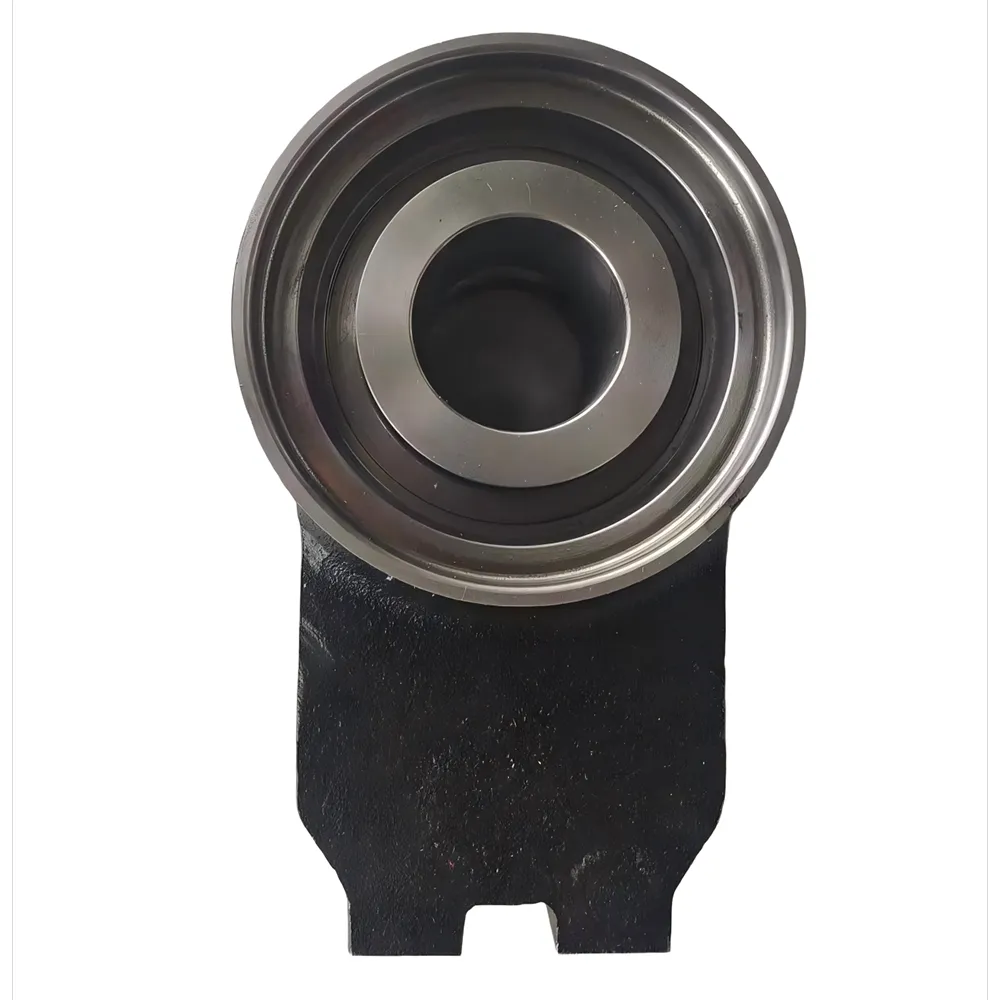
What the component actually does
A chassis support manages torsional rigidity, distributes dynamic loads from boom/undercarriage, and protects powertrain alignment. In the real world, it absorbs shock from ripper hits, misaligned lifts, and those not-in-the-manual impacts. The piece comes alive on graders, dozers, cranes, and mining trucks.
Typical materials and spec snapshot
| Parameter | Typical Value (≈ / real-world may vary) |
|---|---|
| Material options | Ductile iron QT450-10 (ASTM A536 65-45-12), Cast steel ZG270-500 (equiv. ASTM A27/A148) |
| Tensile / Yield | 450–700 MPa / 300–450 MPa (grade-dependent) |
| Hardness | 170–230 HBW (ISO 6506-1) |
| Casting weight range | 30–1,200 kg |
| Dimensional tolerance | ISO 8062-3 CT8–CT10; critical features ≤0.3 mm/100 mm with CMM |
| NDT | UT per ASTM E1030; MT per ASTM E1444; typical acceptance Level 2 |
| Finish / Coating | Shot-blast Sa 2.5; epoxy ≤80–120 μm DFT; salt-spray tested 240 h |
| Service life | >12,000 h typical; >20,000 h with preventive maintenance |
Process flow (how it’s really built)
Pattern design → Resin sand molding → Pour (chemistry logged) → Heat treatment (normalize or Q+T) → Rough machining → Shot blasting → CMM inspection → NDT (UT/MT) → Stress relief → Finish machining → Coating → Final fit-up gauges → Pack/crate. Testing includes tensile (ASTM A370), hardness (ISO 6506-1), dimensional reports, and fatigue checks on coupons (ASTM E466).
Where it works best
-
- Excavators (20–60 t) needing improved swing bearing alignment
- Dozers and graders seeking torsional stiffness on uneven subgrades
- Lattice-boom cranes aiming for weight-optimized chassis support nodes
- Articulated dump trucks in mining with high cycle fatigue
Vendor landscape (quick comparison)
| Vendor | Strengths | Lead Time ≈ | Certifications |
|---|---|---|---|
| Kaihua Casting (Tang County, Hebei) | Strong NDT discipline, flexible MOQ, OEM co-design | 4–7 weeks after tooling | ISO 9001, ISO 14001, ISO 45001; ISO 3834 welding support |
| Regional Foundry A | Low cost at volume; basic QA | 6–10 weeks | ISO 9001 |
| Importer B | Multi-country sourcing; buffer stock | 8–12 weeks | Varies by plant |
Customization notes
-
- CAD/FEA collaboration to tune chassis support ribs and fillets for fatigue hotspots
- Material swaps (QT500-7 or high-toughness cast steel) for cold-climate work
- Weld-on bosses, machining datum changes, and paint systems based on salt/sun exposure
Field data and feedback
Mining truck trial, Inner Mongolia: 2.1× static overload test, no UT indications above Level 2; after 3,000 h, bolt-hole ovality ≤0.05 mm. Crane OEM, SE Asia: reported 7% weight reduction after rib redesign; “install-fit was clean, no rework.” To be honest, that last one surprised me.
Why source from Tang County, Hebei
Origin matters: Tang County Economic Development Zone, Chang Gu Cheng Industrial Park (Ba Qie), Hebei, China. It’s an ecosystem—pattern shops, heat treaters, and coating lines within an hour. That keeps PPAP-like documentation flowing and trims dead time.
Compliance and standards in play
-
- Casting tolerances: ISO 8062-3
- Mechanical/Hardness tests: ASTM A370, ISO 6506-1
- NDT: ASTM E1030 (UT), ASTM E1444 (MT)
- Quality systems: ISO 9001; welding quality: ISO 3834
Citations: