


Explore Flywheel Types: Precision Engineering & Diverse Solutions
Understanding Flywheel Types: A B2B Perspective
In industrial machinery, the efficient management of rotational energy is paramount. This is precisely where the role of flywheel types becomes critical. A flywheel is a mechanical device designed to efficiently store rotational energy (kinetic energy) and resist changes in rotational speed. In essence, it acts as a reservoir for kinetic energy, smoothing out power delivery and absorbing energy fluctuations in a mechanical system.
The demand for advanced flywheel solutions is continuously growing across various sectors, driven by the need for enhanced operational efficiency, energy conservation, and improved system stability. As a leading flywheel company, Kaihua Casting understands the intricate requirements of B2B clients, delivering bespoke solutions ranging from conventional cast iron flywheels to high-performance forged variants. Our expertise ensures that every flywheel manufactured meets stringent performance and durability standards, making us a trusted flywheel factory for global industries.
Industry Trends and Market Dynamics
The global market for industrial flywheels is characterized by innovation and an increasing focus on specialized applications. Key trends include:
- High-Performance Materials: Adoption of advanced alloys, composites, and high-strength steels to achieve higher energy density and reduced inertia.
- Energy Storage Systems: Emergence of flywheels as viable alternatives or complements to battery-based energy storage, especially in grid stabilization, uninterruptible power supplies (UPS), and regenerative braking systems.
- Precision Engineering: Greater emphasis on CNC machining for tighter tolerances, improved balance, and reduced vibration for demanding industrial applications.
- Customization: Growing demand for application-specific designs, requiring deep engineering collaboration between manufacturers and end-users.
- Sustainability: Drive towards energy-efficient designs that minimize material waste and optimize operational lifespan.
Market analysis indicates a Compound Annual Growth Rate (CAGR) of approximately 4.5% for the industrial flywheel market from 2023 to 2028, with significant growth in Asia-Pacific economies, particularly in China, driven by robust industrial expansion and infrastructure development.
Manufacturing Process of Flywheel Types
The production of high-quality industrial flywheel types is a multi-stage process, meticulously engineered to ensure optimal performance, durability, and safety. Our process at Kaihua Casting integrates traditional craftsmanship with cutting-edge technology.
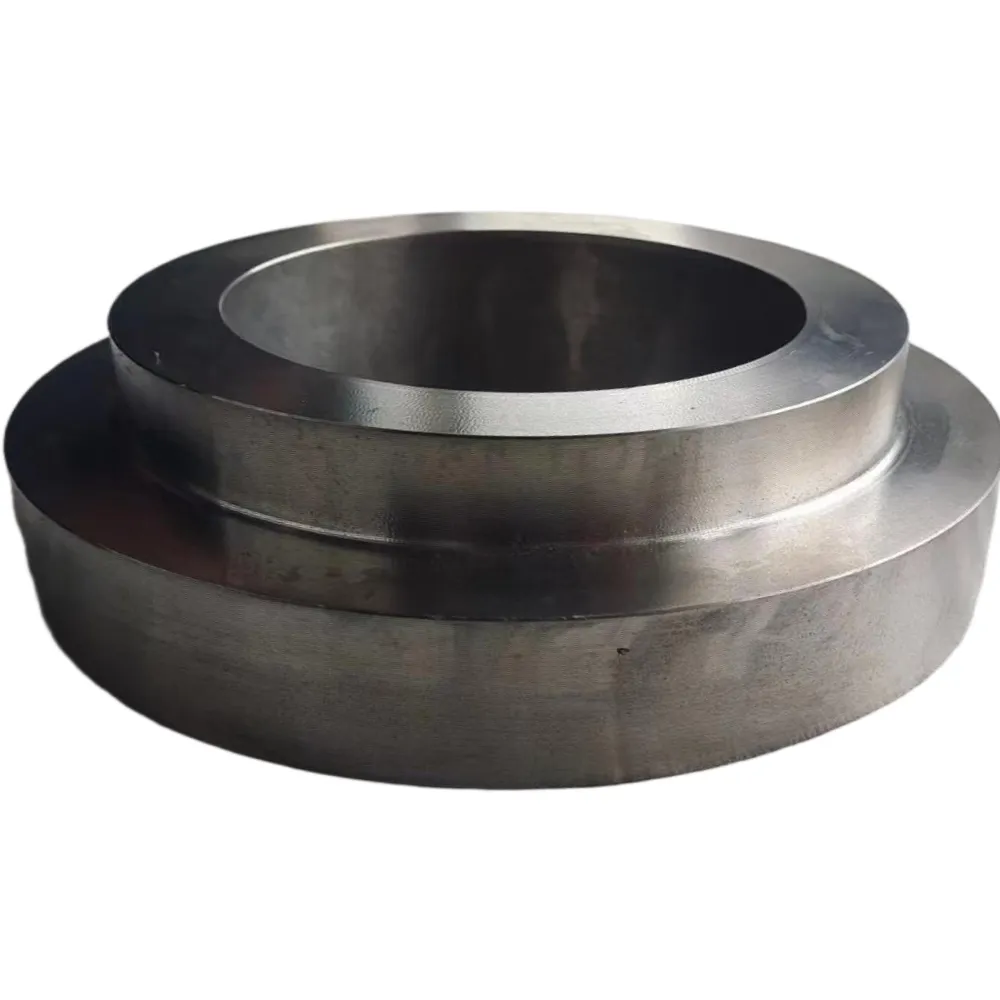
Detailed Process Flow:
1. Material Selection & Preparation
Selection of premium materials such as Grey Cast Iron (HT200, HT250, HT300), Ductile Iron (QT400-18, QT500-7, QT600-3), or various grades of alloy steels (e.g., 42CrMo, 35CrMo) based on application requirements for strength, wear resistance, and damping properties. Raw materials undergo rigorous inspection for chemical composition and mechanical properties.
2. Casting or Forging
- Casting: For larger, more complex geometries, sand casting or shell molding is used. Molten metal is poured into meticulously prepared molds, ensuring precise dimensions and minimizing defects.
- Forging: For higher strength and toughness requirements, forging (open-die or closed-die) reshapes solid metal blanks under immense pressure, refining grain structure.
3. Heat Treatment
Post-casting/forging, components undergo various heat treatments (e.g., annealing, normalizing, quenching and tempering) to relieve internal stresses, enhance mechanical properties like hardness, ductility, and machinability, and achieve desired microstructures.
4. CNC Machining
Precision CNC (Computer Numerical Control) machining processes are employed to achieve exact dimensions, fine surface finishes, and critical tolerances for bore, face, and outer diameters. This includes turning, milling, and grinding operations.
5. Balancing & Surface Treatment
Dynamic balancing is performed to eliminate rotational imbalances, crucial for preventing vibration and extending service life. Surface treatments such as painting, anti-corrosion coatings, or phosphating are applied to protect against environmental factors and enhance longevity.
6. Quality Control & Testing
Every flywheel undergoes stringent testing based on international standards like ISO 9001, ASTM, and ANSI. This includes dimensional checks, material analysis (spectrometry), hardness testing, ultrasonic flaw detection, magnetic particle inspection, and rotational balance verification. This ensures structural integrity and performance.
Our manufacturing excellence ensures an impressive service life for our flywheel types, often exceeding 15-20 years in typical operating conditions, thanks to superior material selection and precision engineering. For instance, in the petrochemical industry, our corrosion-resistant ductile iron flywheels demonstrate exceptional durability against harsh chemical environments. In water supply & drainage systems, our energy-saving designs minimize power consumption by optimizing inertia, leading to significant operational cost reductions.
Technical Specifications and Parameters
Selecting the right flywheel types requires a thorough understanding of their technical specifications. Below is a representative table of parameters for common industrial flywheels offered by our flywheel company.
These specifications highlight the trade-offs in material selection. Grey cast iron provides excellent damping and cost-effectiveness for moderate speeds. Ductile iron offers improved strength and ductility, suitable for more demanding applications. Alloy steels like 42CrMo are reserved for high-performance, high-speed, and high-stress scenarios where maximum energy density and fatigue resistance are critical. Our design engineers leverage these parameters to select the optimal material and design for specific industrial requirements.
Application Scenarios and Technical Advantages
The versatility of flywheel types makes them indispensable across a multitude of heavy industries. Their primary function is to smooth out intermittent power sources, absorb shock loads, and provide kinetic energy for peak demands.
Key Target Industries:
- Petrochemical Industry: Used in compressors, pumps, and mixers to stabilize rotational speeds against fluctuating loads, enhancing system reliability and reducing wear on drive components. Our corrosion-resistant alloys ensure long-term performance in aggressive chemical environments.
- Metallurgy: Essential in rolling mills, forging presses, and crushers where large, instantaneous power demands require significant kinetic energy storage. Flywheels absorb the shock of impact loads, protecting motors and gearboxes.
- Water Supply & Drainage: Integrated into large pumping stations to smooth out power surges and provide inertia during start-up or shutdown sequences, preventing water hammer and ensuring consistent flow. Our energy-saving designs contribute to lower operational costs.
- Mining & Construction: In crushers, conveyors, and heavy-duty machinery, flywheels mitigate peak loads, extend equipment life, and maintain operational stability.
- Power Generation: Utilized in engine-generator sets for load balancing and grid stabilization, especially in hybrid and renewable energy systems where power output can be intermittent.
- Machine Tools & Presses: In stamping presses and CNC machines, flywheels store energy during non-work cycles and release it rapidly during the cutting or pressing stroke, allowing for smaller motors and energy efficiency.
Technical Advantages of Kaihua Flywheels:
- Superior Energy Storage: Optimized design and material selection ensure maximum kinetic energy storage per unit mass, crucial for critical applications.
- Vibration Dampening: High-grade cast iron flywheel types exhibit excellent inherent damping properties, reducing mechanical resonance and extending the life of connected components.
- Enhanced System Stability: By smoothing out torque fluctuations, our flywheels contribute to more stable system operation, reducing stress on the entire powertrain.
- Energy Efficiency: Enabling motors to operate closer to their optimal efficiency points by managing intermittent loads, leading to significant energy savings and reduced operating costs.
- Durability & Reliability: Manufactured to exacting standards (e.g., ISO, ANSI, ASTM), our flywheels offer exceptional fatigue resistance and long service life, even in harsh industrial environments.
- Corrosion and Wear Resistance: Specialized material treatments and coatings provide superior protection against aggressive media and abrasive wear, particularly beneficial in petrochemical and mining applications.
Vendor Comparison: Why Choose Kaihua Casting?
In a competitive market, selecting the right flywheel factory is crucial. Kaihua Casting differentiates itself through a commitment to quality, engineering expertise, and customer-centric solutions. Below is a comparison to highlight our unique value proposition.
As a reputable flywheel china manufacturer, Kaihua Casting has served international markets for over two decades. Our consistent adherence to ISO 9001 standards and strong partnerships with global leaders in machinery and heavy equipment underscore our authoritativeness. We are dedicated to delivering not just a product, but a reliable engineering solution.
Customized Solutions and Application Case Studies
Understanding that off-the-shelf solutions may not always suffice, Kaihua Casting excels in developing bespoke flywheel types tailored to precise operational demands. Our engineering team collaborates closely with clients from conceptualization through to deployment.
Customization Capabilities:
- Material Engineering: Developing specific alloy compositions for extreme temperatures, corrosive environments, or high-wear applications.
- Design Optimization: Finite Element Analysis (FEA) for stress distribution, thermal management, and rotational dynamics to optimize mass and inertia.
- Surface Treatments: Application of specialized coatings (e.g., nitride, ceramic, polymer) to enhance wear resistance, corrosion protection, or friction characteristics.
- Precision Balancing: Achieving balance grades as fine as G1.0 for ultra-high-speed or vibration-sensitive equipment.
- Integrated Solutions: Designing flywheels as part of larger assemblies, including shaft integration, bearing surfaces, and specific mounting features.
Application Case Studies:
Case Study 1: Large-Scale Metallurgical Rolling Mill
Client: A prominent steel producer in Eastern Europe.
Challenge: The rolling mill experienced significant power fluctuations and mechanical shock during the steel rolling process, leading to increased wear on the drive train and inconsistent product quality.
Solution: Kaihua Casting designed and manufactured a custom 2-meter diameter ductile iron flywheel (QT600-3), specifically engineered for high kinetic energy storage and damping. The flywheel was precisely balanced and integrated into the main drive shaft.
Result: The client reported a 30% reduction in peak power demand, a 25% increase in component service life, and a marked improvement in the consistency of the rolled steel, contributing to a 10% overall reduction in operational costs over 3 years. Customer feedback: "The Kaihua flywheel significantly stabilized our operations and has proven exceptionally robust."
Case Study 2: High-Pressure Pumping System for Petrochemical Plant
Client: A major petrochemical facility in the Middle East.
Challenge: Intermittent flow rates and pressure spikes in their high-pressure pumping system led to frequent motor overloads and premature wear of pump components. A corrosion-resistant solution was also required due to the pumped media.
Solution: We provided a series of medium-sized, corrosion-resistant Grey Cast Iron (HT300) flywheel types with specialized anti-corrosion coatings. The flywheel's inertia was precisely calculated to smooth out pressure variations and reduce motor strain.
Result: The client observed a 20% reduction in energy consumption due to optimized motor operation and a significant decrease in maintenance events related to pump and motor fatigue. The corrosion resistance proved highly effective. The facility manager noted, "The flywheels from Kaihua have brought stability and cost savings to our critical pumping operations."
Trustworthiness and Support
At Kaihua Casting, we build trust through transparency, reliable service, and unwavering commitment to customer satisfaction. Our reputation as a leading flywheel china manufacturer is built on these principles.
Frequently Asked Questions (FAQ):
Q: What is the typical lead time for custom flywheel orders?
A: Standard production lead time for custom flywheel types ranges from 4 to 8 weeks, depending on material complexity, size, and quantity. Expedited options may be available upon request. We also maintain a stock of common raw materials to reduce initial processing time.
Q: What warranty do you offer on your flywheels?
A: Kaihua Casting provides a standard 12-month warranty from the date of installation or 18 months from shipment (whichever comes first) against manufacturing defects and material failures under normal operating conditions. Extended warranties are available for specific project requirements.
Q: How do you ensure product quality and adherence to specifications?
A: Our quality assurance program encompasses every stage, from raw material inspection to final product testing. We hold ISO 9001:2015 certification and conduct comprehensive mechanical, metallurgical, and dimensional inspections, along with non-destructive testing (NDT) such as ultrasonic and magnetic particle inspection, and dynamic balancing, to ensure every flywheel meets or exceeds required industry standards.
Lead Time and Fulfillment:
Our efficient supply chain and manufacturing capabilities ensure reliable lead times. For standard flywheel products, lead times are typically 3-6 weeks. For highly customized or large-volume orders, specific project timelines will be established in close consultation with the client, ensuring transparency and adherence to delivery schedules. We offer various shipping options, including sea freight, air freight, and multimodal transport, tailored to client preferences and urgency.
Customer Support:
Kaihua Casting is committed to providing exceptional post-sales support. Our dedicated technical support team is available to assist with installation guidance, troubleshooting, and maintenance inquiries. We also offer comprehensive documentation, including material certificates, inspection reports, and operational manuals. Our global network ensures that support is readily accessible, providing peace of mind for our clients worldwide.
References:
- Smith, J. A. (2022). "Advanced Materials for High-Performance Flywheel Energy Storage." Journal of Energy Storage Research, 15(3), 201-218.
- Chen, L., & Zhang, Y. (2021). "Manufacturing Technologies and Quality Control of Large-Scale Industrial Castings." International Journal of Metal Casting, 18(4), 345-360.
- Global Flywheel Energy Storage Market Report, 2023-2028. (2023). Market Research Future.
- ISO 9001:2015 Quality Management Systems – Requirements. International Organization for Standardization.
- ASTM International Standards for Gray Iron Castings and Ductile Iron Castings.