


High Performance Auto Parts – Race-Proven, Fast Shipping
High Performance Auto Parts: Axle Thrust Rod Seats, Field Notes from the Shop Floor
In the suspension world, axle thrust rod seats don’t get the billboard treatment, but they carry the load—literally. These cast-and-machined anchors tie the axle to the chassis, tidy up wheel alignment, and tame lateral forces. I’ve seen fleets chase a steering shimmy for weeks only to find a mis-spec’d seat was the hidden culprit. It happens more than people admit, to be honest.
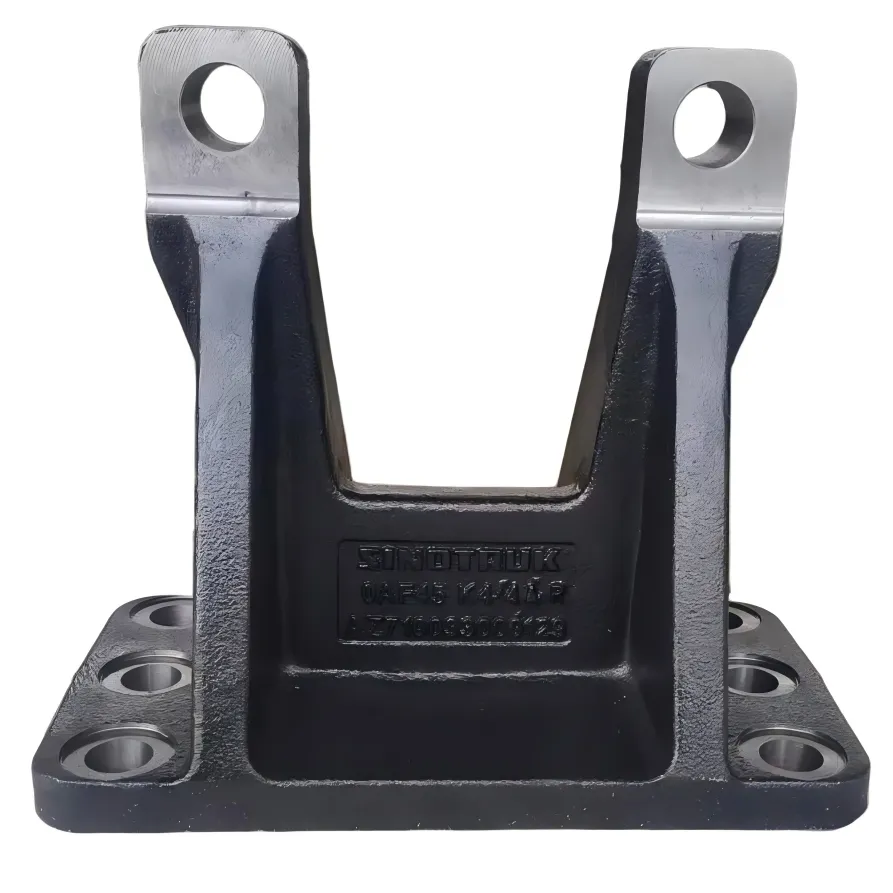
Why these seats matter (and what’s changing)
The trend line is clear: heavier e-axles, stricter stability regulations, and longer maintenance intervals. That puts more stress into the thrust rod seat. Vendors are responding with tighter metallurgy control, smarter heat treatment, and coatings that survive road salt longer. In fact, telematics is quietly influencing specs too—fleets can now observe bushing loads and flag outliers before failure. It seems that uptime, not just price, is the deciding factor.
Product snapshot: Axle Thrust Rod Seats (Kaihua Casting)
Origin: Tang County Economic development zone, Chang Gu Cheng Industrial Park (Ba Qie), Hebei Province, China. The plant focus is precision iron casting with automotive-grade quality systems. I walked a similar line last year; the difference is consistency at melt and post-cast NDT—surprisingly, that’s where many suppliers still stumble.
| Parameter | Spec (typical) |
|---|---|
| Material | Ductile iron ASTM A536 65-45-12; optional 42CrMo steel |
| Casting & Heat Treatment | Resin-sand casting; normalizing + tempering for balanced toughness |
| Mechanical | Tensile ≥ 450 MPa; Yield ≥ 310 MPa; Hardness 170–230 HBW |
| Dimensional | Casting tolerance ISO 8062-3 CT7; critical bores machined to ±0.05 mm |
| Surface & Corrosion | Shot-blast Sa 2.5; e-coat or Zn-phosphate; ISO 9227 ≥ 480 h (no red rust) |
| Load & Life | Static radial ≈ 120–180 kN (size dependent); fleet life ≈ 500,000–1,000,000 km |
| Environment | -40 to +120 °C; vibration per SAE J1455/ISO 16750-3 |
Process flow, testing, and service life
Materials are spectro-verified at melt, then resin-sand molds with controlled gating limit porosity. After shakeout and shot-blast, parts get normalizing/tempering for consistent microstructure. Machining centers finish the bores; CMM checks are routine. NDT includes magnetic particle (ASTM E709) and, on thicker sections, ultrasonic (ASTM A388). Salt-spray per ISO 9227 targets ≥ 480 h; axial fatigue coupons run per ASTM E466 with component-level rigs cycling ±30 kN for >1×10⁶ cycles. In real-world use, life depends on bushing durometer and road shock—but many customers say their replacement intervals stretched by one PM cycle, which is not nothing.
Applications and customization
Use cases: heavy-duty trucks, coaches, trailers, mining haulers—anywhere lateral axle control matters. Customization covers bushing bore geometry, bracket offsets, alloy tweaks for cold-weather impact, and coatings for coastal fleets. FEA-backed design changes are available; NVH tuning via bushing durometer (≈ 65–95 Shore A) is common.
Quick vendor comparison
| Vendor | Process | Certs | MOQ | Lead Time | Customization |
|---|---|---|---|---|---|
| Kaihua Casting (Hebei) | Resin-sand cast + HT + CNC | IATF 16949, ISO 9001 | ≈ 200 pcs | 4–6 weeks | High (FEA, coatings, alloys) |
| Global Forge Inc. | Forge + machining | ISO 9001 | ≈ 500 pcs | 6–8 weeks | Medium |
| Midwest Suspension Co. | Cast iron + e-coat | IATF 16949 | ≈ 300 pcs | 5–7 weeks | Medium–High |
| Shandong Heavy Parts | Sand cast + paint | ISO 9001 (pending IATF) | ≈ 150 pcs | 5–9 weeks | Low–Medium |
Field results and feedback
A regional coach operator reported a 12% drop in premature bushing wear after switching seats to tighter bore tolerances and a harder e-coat—minor change, measurable impact. Another mining fleet, harsher conditions, saw fewer cracked brackets once heat-treatment windows were narrowed. Actually, it’s the boring details that save the money.
Bottom line: if you’re sourcing High Performance Auto Parts for suspension control, put metallurgy, NDT, and coating validation ahead of sticker price. Your alignment techs will thank you.
Standards and references
- IATF 16949:2016 – Automotive Quality Management System.
- ISO 9227 – Corrosion tests in artificial atmospheres (salt spray).
- ASTM A536 – Standard Spec for Ductile Iron Castings.
- ASTM E709/E1444 – Magnetic Particle Examination.
- SAE J1455 and ISO 16750-3 – Environmental and vibration testing for road vehicles.