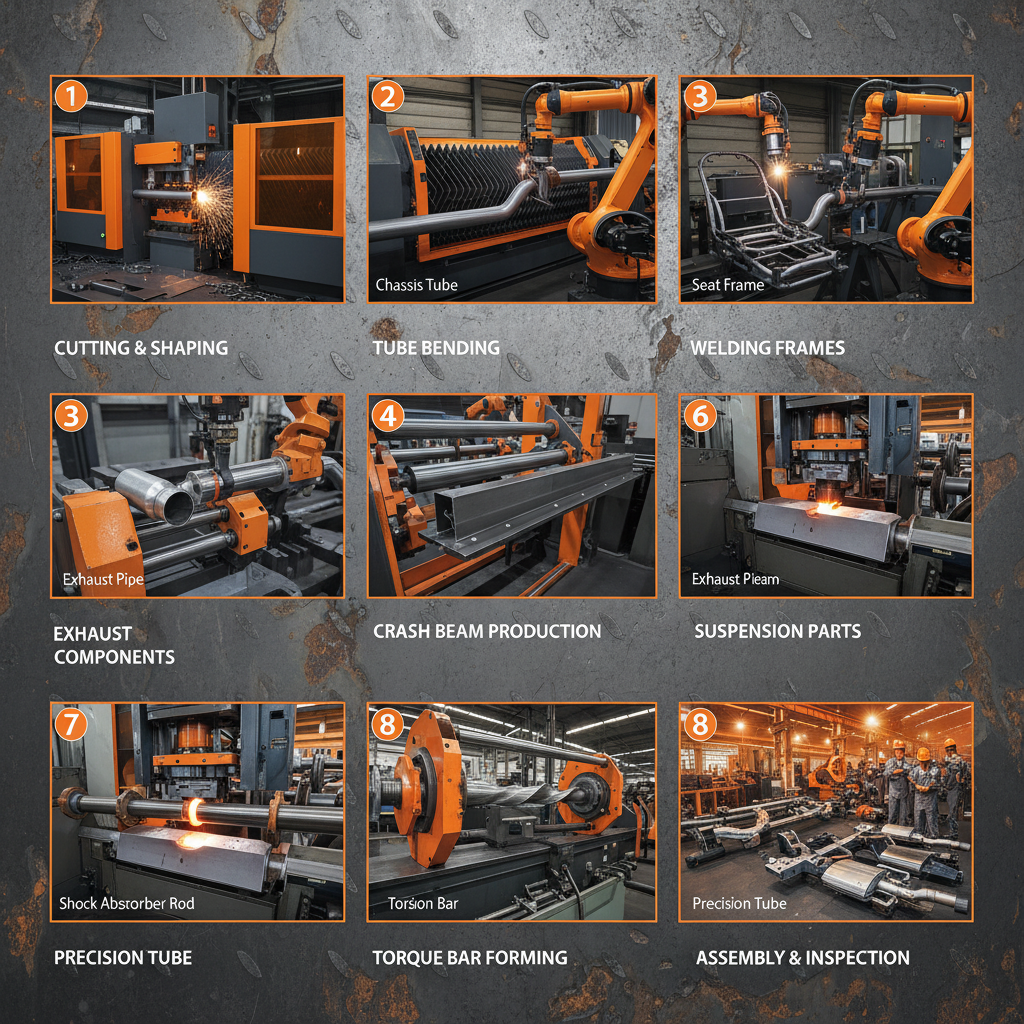
The global logistics network relies heavily on the resilience and efficiency of heavy-duty transport, where the quality of commercial truck parts serves as the backbone of supply chain stability. From long-haul freight to urban delivery, the structural integrity of these components directly impacts operational uptime and road safety, making the selection of precision-engineered parts a critical business decision for fleet managers worldwide.
In an era of increasing demand for rapid delivery and sustainable transport, the evolution of commercial truck parts has shifted toward materials that offer higher strength-to-weight ratios and extended service lives. This transition is not merely about replacing worn-out components but about optimizing the entire vehicle lifecycle to reduce total cost of ownership (TCO) while meeting stringent international emissions and safety standards.
Understanding the intricacies of these components—ranging from transmission systems to advanced braking hardware—allows operators to anticipate failures before they occur. By investing in high-grade commercial truck parts, companies can ensure that their assets remain productive, reducing the risk of costly roadside breakdowns and enhancing the overall reliability of the global trade infrastructure.
Global Industry Context of Commercial Truck Parts
The global demand for heavy-duty transport is inextricably linked to the availability of high-performance commercial truck parts. With the rise of e-commerce and the expansion of international trade corridors, the pressure on fleet operators to maintain 24/7 availability has never been higher. According to industry trends aligned with ISO quality standards, the failure of a single critical component in a drivetrain can lead to systemic delays affecting thousands of downstream consumers.
Consequently, the industry is seeing a move toward "Predictive Maintenance" (PdM), where the quality of parts is evaluated not just by their immediate fit, but by their long-term fatigue resistance. This shift addresses the critical challenge of unplanned downtime, which can cost logistics companies thousands of dollars per hour, underscoring the vital role that precision-cast and forged components play in the modern economy.
Defining Precision in Commercial Truck Parts
In simple technical terms, commercial truck parts refer to the specialized mechanical components—such as gears, axles, brake drums, and engine mounts—specifically designed to withstand the extreme loads and stresses of heavy-duty commercial vehicles. Unlike passenger vehicle parts, these are engineered for longevity, extreme temperature fluctuations, and constant high-torque environments.
Beyond the mechanical definition, these parts represent the "circulatory system" of global commerce. Whether it is a ductile iron housing for a transmission or a high-strength alloy for a brake system, these components ensure that food, medicine, and construction materials reach their destinations. The precision of these parts is often the difference between a vehicle that lasts a decade and one that requires constant, costly intervention.
Modern industry requirements now demand that these parts integrate seamlessly with electronic control units (ECUs). This intersection of heavy metallurgy and digital precision means that contemporary truck parts must maintain incredibly tight tolerances to ensure that sensor data remains accurate, further elevating the standard for manufacturing excellence in the automotive supply chain.
Core Factors Driving Component Durability
Material integrity is the first pillar of durability for commercial truck parts. The use of advanced ductile iron and forged steel ensures that components can absorb shock loads without fracturing. This is particularly crucial for suspension and drivetrain elements that face constant impact on uneven road surfaces.
Precision Engineering and Tolerance Control: The operational efficiency of commercial truck parts depends on how perfectly they fit together. Micro-deviations in a gear tooth or a bearing housing can lead to increased friction, heat buildup, and premature wear. By adhering to strict CNC machining standards, manufacturers can significantly extend the mean time between failures (MTBF).
Thermal Stability and Corrosion Resistance: Commercial vehicles operate in diverse climates, from freezing arctic routes to humid tropical zones. High-quality commercial truck parts utilize specialized coatings and heat-treatment processes to prevent oxidation and maintain structural stability under extreme thermal cycles, ensuring safety and reliability regardless of the environment.
Global Applications and Use Cases
The application of high-grade commercial truck parts varies significantly across different global sectors. In the mining and construction industries of Australia and Canada, components are subjected to abrasive dust and extreme torque, requiring parts with superior hardness and reinforced structural ribbing to prevent deformation under load.
In contrast, urban logistics in densely populated hubs like Singapore or New York prioritize fuel efficiency and noise reduction. Here, the focus is on lightweighting components without sacrificing strength, utilizing advanced alloys that reduce the unsprung weight of the vehicle, thereby improving braking distance and reducing urban emissions.
Performance Comparison of Commercial Truck Parts Materials
Strategic Advantages of High-Quality Parts
The primary advantage of investing in premium commercial truck parts is the dramatic reduction in operational risk. From a logical perspective, the cost of a high-quality component is offset by the elimination of frequent replacement cycles and the avoidance of catastrophic failures that can lead to accidents.
Beyond the financials, there is a significant emotional and social value: trust and safety. Fleet drivers feel a sense of dignity and security knowing their vehicle is equipped with reliable braking and steering components. This reliability fosters a culture of safety, reducing driver fatigue and ensuring that critical shipments—such as medical supplies during a crisis—reach their destination without compromise.
Future Trends in Trucking Component Innovation
The industry is currently witnessing a paradigm shift toward "Green Metallurgy." The next generation of commercial truck parts is being developed with a focus on recyclability and lower carbon footprints during production. This includes the use of scrap-metal integration in high-grade casting without compromising the mechanical properties of the part.
Digital transformation is also playing a key role through the implementation of "Smart Components." We are seeing the integration of embedded sensors within truck parts that can monitor stress and wear in real-time, transmitting data to the cloud to notify operators of a needed replacement before a failure occurs.
Furthermore, the rise of electric and hydrogen-powered commercial vehicles is redefining part requirements. The absence of a traditional internal combustion engine changes the weight distribution and torque profiles of the vehicle, leading to the design of new, specialized chassis and drivetrain components tailored for electric propulsion.
Overcoming Challenges in Parts Procurement
One of the most persistent challenges in the procurement of commercial truck parts is the prevalence of counterfeit or sub-standard components in the secondary market. These parts often look identical to OEM components but lack the necessary heat treatment, leading to sudden failures that jeopardize road safety.
To overcome this, industry experts recommend a transition toward transparent supply chains utilizing blockchain for part traceability. By verifying the origin of the raw materials and the certification of the casting process, fleet managers can ensure they are receiving parts that meet global safety standards.
Additionally, the challenge of long lead times for custom components can be addressed through additive manufacturing (3D printing) for prototyping and low-volume production. This allows for faster iterations and ensures that critical, hard-to-find parts for older fleets can be produced on demand, reducing vehicle downtime.
Comparative Analysis of Commercial Truck Parts Procurement Strategies
|
Procurement Method
|
Initial Cost
|
Longevity Score (1-10)
|
Risk Level
|
| OEM Genuine Parts |
High |
10 |
Very Low |
| Certified Aftermarket |
Medium |
8 |
Low |
| Budget Generic Parts |
Low |
4 |
High |
| Custom Forged Parts |
Very High |
9 |
Low |
| Remanufactured Parts |
Low-Medium |
6 |
Medium |
| 3D Printed Prototypes |
Medium |
5 |
Medium |
FAQS
OEM (Original Equipment Manufacturer) parts are made by the vehicle's original manufacturer and are designed to meet the exact specifications of the truck. Aftermarket parts are produced by third-party companies. While some aftermarket parts are of equal or superior quality to OEM, others may be budget-friendly alternatives with shorter lifespans. The key is to choose certified aftermarket parts that adhere to ISO or SAE standards to ensure safety and durability.
Inspection intervals depend on the usage intensity and the specific part. Critical safety components like brake pads and steering linkages should be inspected every 10,000 to 25,000 miles. However, for heavy-duty hauling in extreme environments, a monthly visual inspection and a quarterly professional diagnostic are recommended to prevent unplanned downtime and ensure the structural integrity of the vehicle's drivetrain.
Yes, in most heavy-duty applications, ductile iron is superior. Unlike standard gray cast iron, which is brittle, ductile iron has a nodular graphite structure that allows it to bend without breaking. This provides much higher impact resistance and tensile strength, making it ideal for components that face sudden shock loads, such as crankshafts, steering knuckles, and suspension brackets.
To verify quality, request material certification reports (MTRs) which detail the chemical composition and mechanical properties of the metal. Check for certifications such as ISO 9001 for quality management. Additionally, asking for a sample part for independent lab testing (e.g., hardness testing or X-ray inspection for casting defects) is a professional way to ensure the supplier meets your fleet's durability requirements.
Not necessarily. While aluminum and composites are lighter, they are engineered with different properties. The goal of lightweighting is to optimize the strength-to-weight ratio. When engineered correctly, these materials can offer excellent corrosion resistance and efficiency without sacrificing the necessary strength for the specific application, although they may require different maintenance protocols than traditional steel.
Poor-quality parts can significantly degrade fuel efficiency. For example, improperly machined gears or worn-out bearings increase internal friction, forcing the engine to work harder to maintain speed. Similarly, misaligned suspension components increase rolling resistance. High-precision parts ensure smooth power transmission and optimal aerodynamics, directly reducing fuel consumption and lowering operational costs.
Conclusion
The strategic selection and maintenance of commercial truck parts are fundamental to the success of any logistics or transport operation. From the use of high-strength ductile iron to the adoption of predictive maintenance and smart sensors, the quality of these components determines the balance between operational profitability and road safety. By focusing on material integrity, precision engineering, and transparent procurement, fleet operators can minimize downtime and maximize the lifecycle of their assets.
Looking forward, the industry must embrace the synergy of sustainable metallurgy and digital integration to meet the demands of a greener, faster global economy. Investing in premium components today is not just a maintenance requirement but a strategic investment in the resilience of the entire supply chain. To explore the highest standards in precision-engineered automotive components, visit our website: www.kaihuacasting.com