The global logistics network relies heavily on the seamless operation of heavy-duty vehicles, making the quality of truck parts and accessories a critical factor in economic stability. From the intricate gears of a transmission system to the robust housings of a brake system, every component must withstand extreme pressure and environmental stress to ensure the safe transport of goods across continents.
Understanding the nuances of high-performance components allows fleet managers and owners to reduce downtime and optimize operational costs. When we discuss truck parts and accessories, we are not just talking about metal and rubber, but about the engineering precision that prevents catastrophic road failures and enhances the overall lifespan of commercial assets.
In an era of increasing demand for "just-in-time" delivery, the reliance on durable, high-grade aftermarket and OEM parts has never been higher. This comprehensive guide explores the technical dimensions, global applications, and future innovations of truck parts and accessories to help stakeholders make informed procurement decisions.
Global Industry Context of Truck Parts
The commercial vehicle sector is the backbone of international trade, with the demand for truck parts and accessories growing in tandem with the expansion of global e-commerce. According to industry trends aligned with ISO standards, the shift toward heavier payloads and longer haulage distances has placed unprecedented stress on drivetrain and brake systems, necessitating a move toward more advanced materials like ductile iron and high-strength alloys.
One of the primary challenges facing the industry today is the balance between cost-efficiency and reliability. Many operators struggle with the "maintenance paradox," where choosing cheaper, low-grade accessories leads to higher long-term costs due to frequent breakdowns and safety risks. This has created a surging market for precision-engineered components that offer OEM-level quality at sustainable price points.
Defining Essential Truck Components
In simple terms, truck parts and accessories encompass every physical element required to keep a commercial vehicle operational, ranging from structural chassis components to interior ergonomic enhancements. While some parts are purely functional—such as brake discs or transmission gears—others are "accessories" that improve driver efficiency and vehicle utility, such as specialized lighting or cargo securing systems.
From a technical perspective, these components are categorized by their system: the power train, the braking system, the suspension, and the electrical framework. The synergy between these systems is what defines the vehicle's performance. For instance, a high-performance brake system is useless if the wheel hubs and axles cannot handle the torque generated during a sudden stop.
Beyond mere mechanics, these parts address humanitarian and economic needs by ensuring that food, medicine, and construction materials reach remote areas. The reliability of truck parts and accessories directly impacts the resilience of supply chains in developing nations, where rugged terrain demands components that can survive without frequent professional servicing.
Core Factors for Component Durability
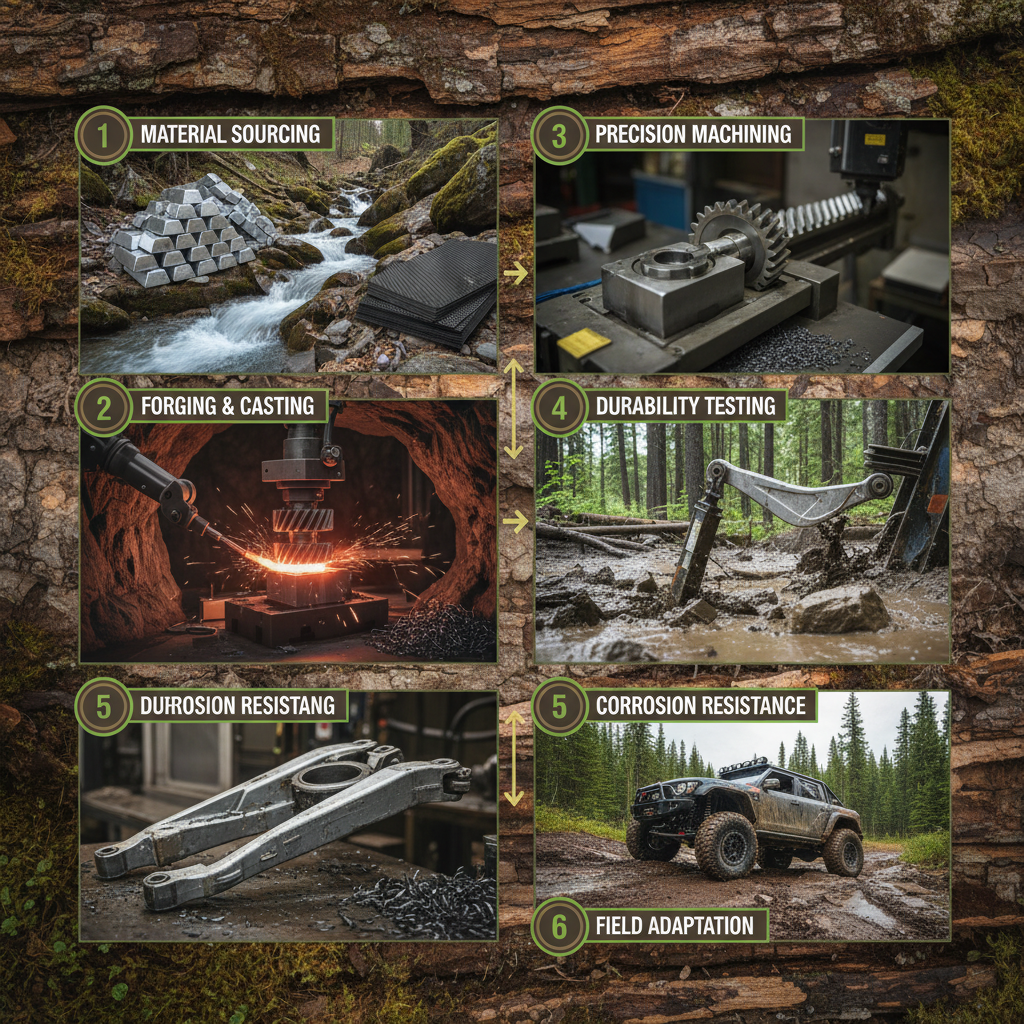
Material integrity is the first pillar of durability for any truck parts and accessories. The use of ductile iron for auto parts, for example, provides a crucial combination of strength and flexibility, preventing the brittle fractures that often occur in traditional cast iron under high-impact loads.
Precision machining and tolerance control are equally vital. When truck parts and accessories are manufactured with tight tolerances, friction is reduced, heat dissipation is improved, and the wear-and-tear cycle is significantly extended, which is essential for heavy-duty transmission components.
Finally, corrosion resistance ensures that parts remain functional in harsh environments. Whether it is road salt in winter or humidity in tropical regions, the application of advanced coatings and treated alloys to truck parts and accessories prevents premature degradation and maintains structural safety over millions of miles.
Performance Metrics of Transmission Parts
Evaluating the efficiency of different manufacturing methods is key to optimizing the performance of truck parts and accessories. By comparing precision casting, forging, and CNC machining, engineers can determine which process yields the highest fatigue strength and lowest failure rate for specific drivetrain components.
The following data illustrates the comparative performance ratings of various production approaches used in the creation of high-stress components, focusing on longevity and precision.
Performance Comparison of Truck Component Methods
Global Applications and Use Cases
The application of specialized truck parts and accessories varies wildly across different industrial sectors. In the construction machinery industry, components must prioritize impact resistance and raw strength to survive the stresses of off-road hauling and heavy loading. Conversely, in municipal engineering, the focus shifts toward longevity and emission-reducing parts to comply with strict urban environmental laws.
In remote industrial zones, such as mining sites in Australia or oil fields in Canada, the use of heavy-duty truck parts and accessories is a matter of operational survival. In these contexts, parts are often oversized and reinforced to minimize the risk of breakdown in areas where a tow truck might be hundreds of miles away, illustrating the critical link between component quality and business continuity.
Long-term Value and Safety Advantages
Investing in premium truck parts and accessories provides a logical financial advantage through the reduction of the Total Cost of Ownership (TCO). While the initial purchase price may be higher, the extension of service intervals and the prevention of secondary damage—where a failing small part destroys a major assembly—leads to significant cumulative savings.
Beyond the balance sheet, there is an emotional and ethical dimension: safety. A failure in a brake system or a steering knuckle can lead to catastrophic accidents. By utilizing certified, high-grade truck parts and accessories, companies ensure the dignity and safety of their drivers, fostering a culture of trust and professionalism within the workforce.
Furthermore, the reliability of these components contributes to environmental sustainability. Well-maintained vehicles with efficient transmission and engine parts consume less fuel and emit fewer pollutants, aligning corporate logistics goals with global green energy initiatives.
Future Trends in Truck Component Engineering
The future of truck parts and accessories is being shaped by the digital transformation of the automotive industry. The integration of "Smart Parts"—components embedded with sensors that can predict their own failure—is transitioning maintenance from a reactive to a predictive model, drastically reducing unplanned downtime.
Material science is also evolving, with a move toward lightweight composite materials that offer the strength of steel but at a fraction of the weight. This innovation in truck parts and accessories is essential for the success of electric trucks, where every kilogram saved translates directly into increased battery range and payload capacity.
Additionally, the rise of additive manufacturing (3D printing) allows for the creation of complex geometries that were previously impossible to cast. This enables the production of customized truck parts and accessories tailored to specific operating conditions, further optimizing efficiency.
Analysis of Future Component Material Trends
| Material Type |
Key Application |
Durability Score (1-10) |
Weight Reduction |
| Ductile Iron |
Brake Housings |
9 |
Low |
| Aluminum Alloy |
Wheel Rims |
7 |
High |
| Carbon Composites |
Chassis Brackets |
8 |
Very High |
| Titanium Alloys |
Engine Valves |
10 |
Medium |
| High-Strength Steel |
Axle Shafts |
9 |
Low |
| Ceramic Coatings |
Exhaust Components |
8 |
N/A |
FAQS
OEM (Original Equipment Manufacturer) parts are made by the same company that built the vehicle, ensuring a perfect fit and guaranteed compatibility. Aftermarket truck parts and accessories are produced by third-party companies. While some aftermarket parts are lower quality, premium options often exceed OEM specifications by using superior materials like ductile iron to improve durability and performance at a more competitive price point.
Replacement intervals depend on the load and environment, but generally, critical truck parts and accessories should be inspected every 10,000 to 25,000 miles. Predictive maintenance using sensors is becoming the standard, allowing operators to replace components based on actual wear rather than fixed schedules, which prevents sudden road failures and optimizes cost.
In many regions, using high-quality aftermarket truck parts and accessories does not automatically void a warranty unless the part specifically caused the failure of a warranted component. However, it is always advisable to check the manufacturer's terms or use certified parts that meet or exceed ISO and SAE standards to maintain warranty eligibility.
Ductile iron is preferred for truck parts and accessories such as brake components and steering knuckles because it combines the castability of gray iron with the strength and ductility of steel. This means the part can absorb energy and deform slightly under extreme stress rather than cracking, which is vital for safety in heavy-duty commercial vehicles.
When sourcing truck parts and accessories, look for certifications such as ISO 9001 for quality management and IATF 16949 for automotive-specific standards. Request material test reports (MTRs) to verify the chemical composition of the metals used and check for a proven track record of supplying to reputable fleet operators.
While structural truck parts and accessories like chassis mounts and body accessories remain compatible, drivetrain parts are entirely different. Electric trucks require specialized components for regenerative braking and battery housing, although the demand for lightweight, high-strength materials continues to be a common thread across both diesel and electric platforms.
Conclusion
The strategic selection of truck parts and accessories is far more than a procurement task; it is a critical investment in safety, efficiency, and long-term profitability. By focusing on material integrity, precision engineering, and the adoption of predictive maintenance, fleet operators can ensure their vehicles remain operational under the most grueling conditions while minimizing the total cost of ownership.
As the industry pivots toward electrification and smart logistics, the role of high-performance components will only grow in importance. We encourage stakeholders to prioritize quality over initial cost and embrace the innovations in material science to build a more resilient and sustainable transport network. Visit our website for professional solutions: www.kaihuacasting.com