


Important Car Accessories: Durable, Smart, All-in-One Picks
Why an Axle Brake Bottom Plate Still Matters in Modern Braking
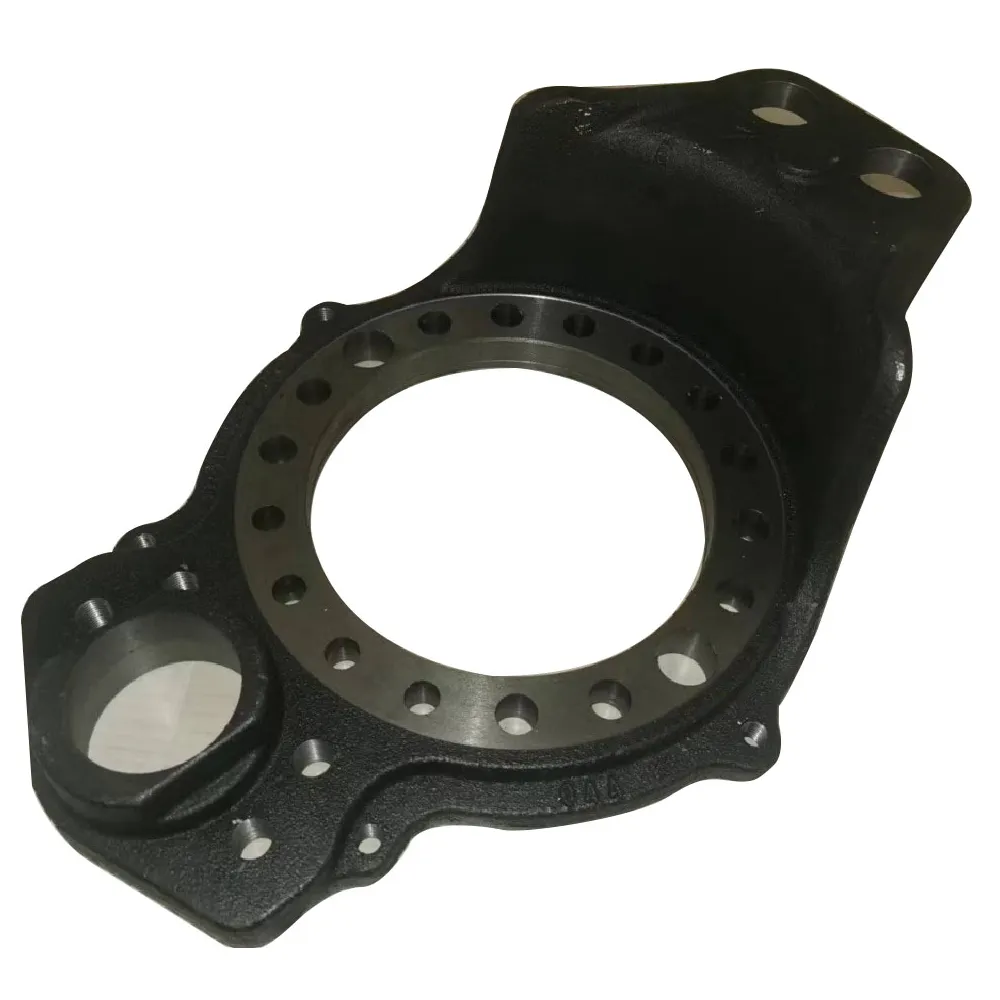
If you follow Important Car Accessories, you already know the humble axle brake bottom plate—also called a brake spider or anchor plate—quietly carries the load in drum brake systems. It’s the metal foundation that locates shoes, rollers, and springs so forces distribute evenly and predictably. Without it, nothing aligns; with it, stopping feels stable, repeatable. Simple... but not trivial.
Today’s spotlight is the Axle Brake Bottom Plate produced in Tang County Economic Development Zone, Chang Gu Cheng Industrial Park (Ba Qie), Hebei Province, China. I visited that cluster years ago; lots of casting talent there, and, to be honest, a healthy rivalry on tolerances. This particular product leans into robust metallurgy and tight machining—exactly what fleets ask for when downtime is not an option.
Industry trends (and why drum hardware still matters)
Yes, discs dominate cars. However, heavy-duty trucks, trailers, and buses still spec drum brakes for durability and cost per mile. The trend isn’t glamorous: stronger ductile irons, smarter coatings, and cleaner castings to cut NVH and extend shoe life. Regenerative braking on hybrid/EV buses even pairs well with drums—shifting thermal loads but keeping the spider as the alignment backbone. Many customers say the “feel” improves most when the anchor plate rigidity goes up.
Typical specifications
| Parameter | Typical Value | Notes |
|---|---|---|
| Material | Ductile Iron (ASTM A536 65-45-12) or Low-Alloy Steel | Material choice by axle rating and environment |
| Plate thickness | ≈ 8–14 mm | Varies by brake size (e.g., 15”×4”, 16.5”×7”) |
| Hardness | 180–230 HB | Real‑world use may vary with heat treatment |
| Flatness / Runout | ≤ 0.15 mm | CMM verified per control plan |
| Corrosion protection | E-coat or phosphate; 72–240 h NSS | ISO 9227 salt spray |
| Service life | ≥ 1,000,000 brake cycles | Bench fatigue + fleet validation |
Process flow and testing
- Materials: high-grade ductile iron or forged/plate steel.
- Methods: green-sand casting or precision stamping + CNC machining; heat treatment as required.
- Finishing: shot blasting, deburr, e-coat/phosphate, traceability marking.
- Testing standards: chemical analysis (spectrometer), hardness (HB), magnetic particle or dye penetrant, dimensional CMM, salt spray (ISO 9227), and lot PPAP under IATF 16949.
Where it’s used
Heavy trucks, city buses, semi-trailers, and off‑highway haulers. Also retrofit programs where fleets chase lower TCO by refreshing anchor plates along with shoes and drums. In fact, some operators report cleaner shoe wear after upgrading plate rigidity—surprisingly simple change, real results.
Vendor snapshot (illustrative)
| Vendor | Core Material | Certifications | Lead Time | Customization |
|---|---|---|---|---|
| Kaihua Casting (Hebei) | Ductile iron / low-alloy steel | IATF 16949, ISO 9001 | ≈ 25–35 days | Hole pattern, thickness, coating, marking |
| Global Foundry A | Cast iron | ISO 9001 | ≈ 30–45 days | Limited variants |
| Regional Stamping B | Stamped steel | IATF 16949 | ≈ 20–30 days | Thickness, plating |
Data above is indicative, based on public specs and buyer feedback; real-world availability may vary.
Case note
One municipal bus fleet swapped in heavier-gauge anchor plates during a mid-life brake refresh. Over 12 months they logged ≈ 18% reduction in uneven shoe wear and fewer readjustments—maintenance director told me, “it just tracks straighter.” Not flashy, but it pays back.
Buying checklist
- Match brake size and S‑cam geometry precisely (no “close enough”).
- Ask for PPAP, material certs, and salt-spray data.
- Consider e-coat if you see winter brine; phosphate is fine for milder climates.
- Look for flatness/runout data; it correlates with shoe wear.
In the grand scheme of Important Car Accessories, the anchor plate is that quiet part that makes the loud parts behave. As odd as it sounds, better metallurgy and tighter machining here can make your entire brake system feel newer.
For fleets standardizing spares, Important Car Accessories like this plate are worth a second look—especially when the vendor can tweak hole patterns, add coatings, and certify to IATF 16949 with full traceability.
Standards and references
- ASTM A536: Standard Specification for Ductile Iron Castings.
- IATF 16949: Automotive Quality Management System Requirements.
- FMVSS 121 / ECE R13: Commercial vehicle braking performance requirements.
- ISO 9227: Corrosion tests in artificial atmospheres — Salt spray tests.
P.S. If you’re comparing quotes, ask for flatness data and coating hours. It seems minor; it isn’t.