


Is the Air Chamber Bracket a Heavy-Duty, Rustproof Choice?
Air Chamber Bracket (Rear Axle): what fleets are really asking for in 2025
If you spend time with maintenance managers (I do, too often over lukewarm coffee), you’ll hear the same refrain: alignment, durability, and no-fuss installs. That’s exactly where an air chamber bracket earns its keep. The rear-axle unit from Kaihua Casting, built in Tang County Economic Development Zone, Chang Gu Cheng Industrial Park (Ba Qie), Hebei, China, is designed for heavy-duty brake chamber mounting with real-world abuse in mind.
Industry trends I’m seeing
- Higher axle loads and longer service intervals push brackets toward ductile iron and better coatings.
- Fleet standardization is rising—common hole patterns, easier torque access, and fewer shims.
- Validation is getting tougher: FMVSS 121 system-level alignment, SAE J1455 environmental, and salt-spray targets ≥720 h.
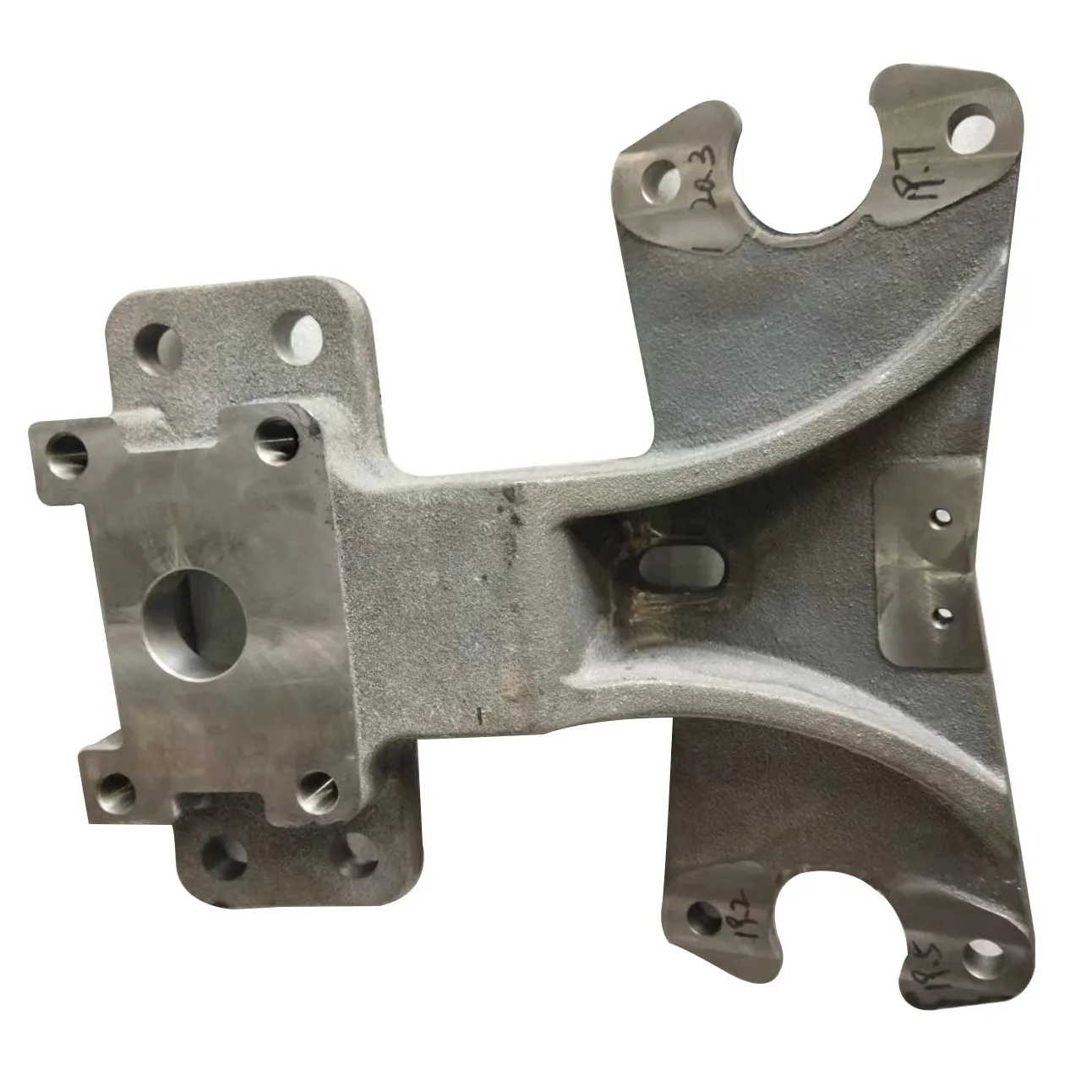
What the air chamber bracket does (and why it matters)
It stabilizes the brake chamber, keeps push-rod geometry true, and damps vibration so hardware doesn’t back out. In plain words: consistent brake response, fewer alignment-related faults, and longer lining life. Many customers say they notice fewer premature diaphragm issues once geometry is locked down. Not glamorous, but crucial.
Typical specs
| Material | Ductile iron (ASTM A536 65-45-12) or equivalent; optional low-alloy steel |
| Manufacturing | Precision sand casting + CNC machining; deburr and shot-blast |
| Finish | E-coat or powder coat; salt spray ≈720–1000 h (ASTM B117), real-world use may vary |
| Dimensions | Mount hole PCD ≈120–130 mm; thickness ≈10–16 mm; weight ≈2.8–4.5 kg |
| Mechanical | Static load >20 kN; fatigue >1.0×10⁶ cycles @ ±4 kN (lab) |
| Certifications | ISO 9001; IATF 16949 (supplier system) |
Process flow and testing
air chamber bracket manufacturing usually follows: pattern build → ductile iron melt control (Mg treatment, chemistry check) → sand casting → heat normalization (as needed) → CNC machining (datum faces, hole tolerances) → surface treatment → 100% visual + sample CMM checks → assembly fit test with chambers → corrosion and vibration validation. Benchmarks include FMVSS 121 system-level compatibility, SAE J1455 thermal/vibe exposure, and ASTM B117/ISO 9227 salt spray. Expected service life: 8–12 years depending on duty cycle and climate.
Where it’s used
- Class 6–8 trucks and tractors, intermodal chassis, bulk tankers
- Transit and coach buses, construction and mining haulers
- Trailers in corrosive regions (coastal, winter-salt operations)
Customization options
- Hole pattern/offsets, chamber angle, gusset geometry for stiffness
- Coatings: e-coat + powder top, Zn-rich primer, or HDG (project-based)
- Brand casting marks, traceability codes, and torque-guide embossing
Vendor snapshot (real-world differences)
| Vendor | Material/Finish | Certs | MOQ | Lead Time | Warranty |
|---|---|---|---|---|---|
| Kaihua Casting (Hebei) | ASTM A536; e-coat/powder | ISO 9001, IATF 16949 | ≈100 pcs | 4–6 weeks | 12–24 months |
| Supplier A (Import) | Mixed ductile; paint | ISO 9001 | ≈300 pcs | 8–10 weeks | 12 months |
| OEM Channel | Ductile; e-coat | IATF 16949 | Project-based | 6–12 weeks | 12 months |
Mini case study
A Southeast Asian tanker fleet swapped legacy brackets for the air chamber bracket with thicker gussets and e-coat + powder. After 12 months, they reported zero bracket fractures, 18% fewer chamber misalignment tickets, and noticeably cleaner torque readings at PM checks. Not a controlled lab trial, I admit—but the trend was clear.
What buyers should check
- Proof of FMVSS 121 system fitment and torque specs for your axle family
- Salt-spray data (ASTM B117) and a photo record of coating coverage
- Dimensional CMM sheet; fatigue test summary ≥1e6 cycles
Citations:
- FMVSS No. 121 — Air Brake Systems, NHTSA: https://www.ecfr.gov/current/title-49/subtitle-B/chapter-V/part-571/section-571.121
- ASTM B117 — Standard Practice for Operating Salt Spray: https://www.astm.org/b117
- SAE J1455 — Recommended Environmental Practices for Electronic Equipment: https://www.sae.org/standards/content/j1455_201710/
- ISO 9001 — Quality Management Systems: https://www.iso.org/standard/62085.html