


Steering Gear Housing: OEM-Grade, Precision-Cast, Heavy-Duty
Steering Gear Housing: the quiet hero shaping how a vehicle actually feels
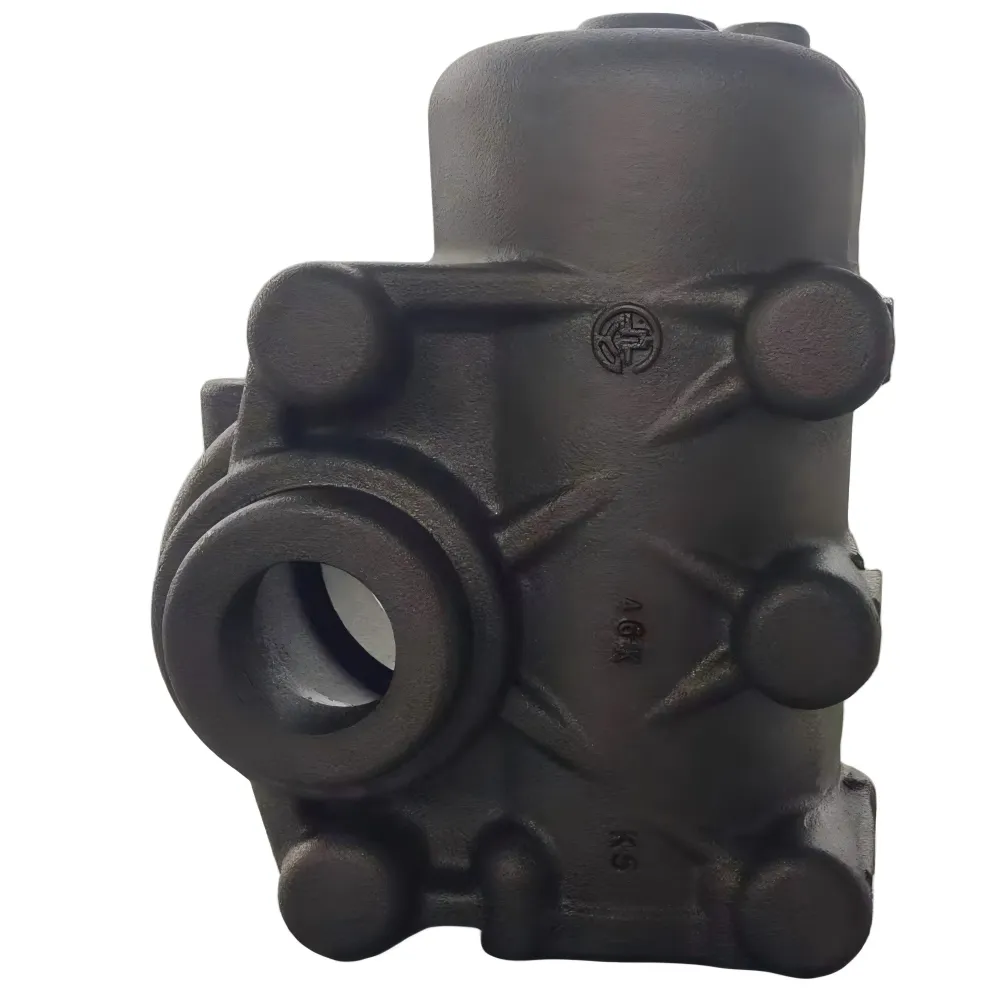
If you’ve ever wondered why some cars steer with a crisp, confidence-inspiring bite while others feel vague, the answer isn’t only in the rack or the assist unit. A lot of the magic lives in the Steering Gear Housing. To be honest, the housing has evolved from being a sturdy container to a system integrator that controls geometry, rigidity, serviceability—and even long-term NVH.
What it does (and why it matters)
The internal geometry sets mesh precision between pinion and rack; the outer faces define how the whole steering module ties into the chassis. In practice, small changes in wall thickness, boss location, or bearing-seat roundness can translate to on-center feel and returnability. Many customers say that once they moved to a stiffer Steering Gear Housing with tighter bore tolerances, the steering “woke up.” I’ve seen that too.
Industry trends
- Lightweighting via AlSi10Mg/A356-T6 and topology-optimized ribs.
- EV-ready housings with integrated sensor bosses and thermal management paths.
- HPDC with vacuum assist for porosity control; in-line leak test becoming standard.
- Design-for-assembly: better access for seal replacement and torque tool clearances.
Typical specifications (indicative)
| Material options | AlSi10Mg, A356-T6; ductile iron GGG40/60 for heavy-duty |
| Process | HPDC (≈1,600–2,500T), LPDC, gravity/sand for prototypes |
| Mass | ≈1.1–3.2 kg (real-world use may vary) |
| Critical bore tolerance | ±0.02–0.05 mm after CNC + honing |
| Leak test | 1.5× operating pressure; ≤10 sccm at test pressure |
| Corrosion | ≥240 h NSS (ASTM B117/ISO 9227) with e-coat/anodize |
| Service life | ≥1.0–1.5 million rack cycles bench-tested |
Process flow (how it’s made)
Alloys are melted and treated; HPDC with vacuum reduces porosity; heat treatment (T6 where applicable) stabilizes properties; CNC machining on multi-axis centers ensures flatness and concentricity; honing polishes bearing seats; surface finishing (shot blast, e-coat, anodize) improves corrosion resistance. NDT includes X-ray/CT and dye-penetrant, followed by pressure/leak testing. Dimensional CMM checks reference ISO 8062-3 casting tolerances. Honestly, the metrology step is where good programs win.
Applications and industries
- Passenger cars and SUVs (EPS racks, column-assist variants)
- Commercial trucks and buses (higher section modulus housings)
- Off-highway/ag equipment; UTV/ATV; specialty performance builds
Advantages customers report
- Sharper on-center feel thanks to stiffer Steering Gear Housing walls and cleaner bore geometry.
- Lower NVH—less rack rattle under impact, surprisingly noticeable on cobblestone tests.
- Weight savings of 10–25% vs older iron housings without losing durability.
Vendor landscape (quick comparison)
| Vendor | Core Process | Certs | Lead Time | Notes |
|---|---|---|---|---|
| Kaihua Casting (Tang County, Hebei, China) | HPDC/LPDC + CNC + CT | IATF 16949, ISO 9001, ISO 14001 | ≈4–8 weeks after PPAP | Strong porosity control; flexible MOQ |
| Regional Foundry B | Gravity casting + machining | ISO 9001 | 8–12 weeks | Good prototypes; slower ramp |
| Global Supplier C | HPDC (high tonnage) | IATF 16949 | 6–10 weeks | Excellent volume pricing |
Customization
Common tweaks include bespoke mounting ears, alternative seal counterbores, sensor/connector bosses for EPS, and localized ribbing to temper rack-torsion deflection. Around Chang Gu Cheng Industrial Park (Ba Qie), Hebei—where Kaihua operates—tooling changes are surprisingly quick thanks to on-site die shops.
Testing, standards, and data points
- Dimensional: CMM to ISO 8062-3; bore form error ≤0.01–0.03 mm typical.
- Metallurgy: X-ray per ASTM E155; CT sampling per PPAP plan.
- Corrosion: NSS per ASTM B117/ISO 9227; coating per ISO 12944 class C3–C4.
- Quality systems: IATF 16949/ISO 9001; environmental ISO 14001.
Case study (brief)
A European EV startup needed a lighter Steering Gear Housing without losing stiffness. Switching to vacuum-assisted HPDC AlSi10Mg and adding two subtle ribs cut mass by ~14% and improved rack support deflection by 11% in FEA. Customer feedback after fleet testing: “On-center precision improved; no leak failures after 300k cycles.” Honestly, that’s the sweet spot—light, tight, and durable.
Where to source
Kaihua Casting, based in Tang County Economic Development Zone, Chang Gu Cheng Industrial Park (Ba Qie), Hebei Province, China, offers serial production and pilot runs with quick PPAP. If you’re juggling weight, cost, and steering feel, it’s worth a conversation.
Authoritative citations
- ASTM B117: Standard Practice for Operating Salt Spray (Fog) Apparatus.
- ISO 8062-3: Geometrical product specifications (GPS) — Castings — Dimensional and geometrical tolerances.
- IATF 16949: Automotive Quality Management System Requirements.
- ISO 9227: Corrosion tests in artificial atmospheres — Salt spray tests.