


Why Choose Our Air Chamber Bracket—Heavy-Duty, OEM Fit?
air chamber bracket (Middle Bridge): field notes, specs, and why it matters
If you’ve ever chased down a rattle in a pneumatic line or watched an HVAC skid vibrate itself silly on a rooftop, you’ll appreciate a well-made air chamber bracket. This Middle Bridge design, produced in Tang County Economic Development Zone, Chang Gu Cheng Industrial Park (Ba Qie), Hebei, China, has been turning heads—not just for stability, but for the quiet confidence it brings to pneumatic systems, automotive assemblies, heavy machinery, and those oversized HVAC frames that love to shake. To be honest, the best feedback I hear from maintenance leads is simple: “we installed it and stopped thinking about it.”
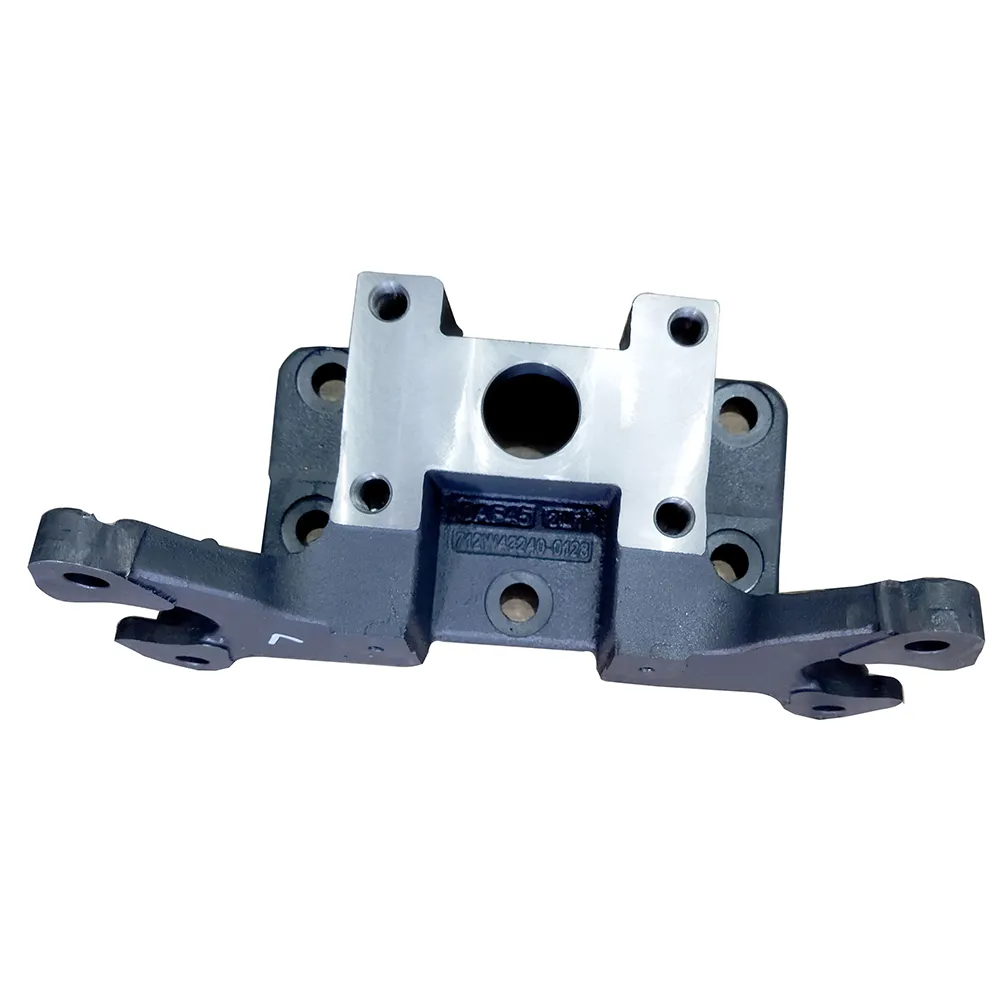
Where it fits (and why)
- Pneumatic manifolds and compressed-air receivers needing steady support and vibration damping.
- Automotive subassemblies in buses and off-road vehicles where NVH is under a microscope.
- HVAC rooftop units, chillers, and compressor frames—surprisingly prone to fatigue if unsupported.
- Heavy machinery frames that demand rigidity under cyclical loads.
Product snapshot (typical)
| Material | Ductile Iron ASTM A536 (≈ 65-45-12) or low-carbon steel per project |
| Process | Green-sand casting → CNC machining → Deburr → Surface finish (e-coat/powder) |
| Hardness | HB 170–230 (typical) |
| Load rating | Up to 3–5 kN static; dynamic capacity per design, real-world use may vary |
| Corrosion protection | Zinc-rich primer + powder coat; optional e-coat for complex geometries |
| Operating temp | −30°C to +120°C (coating dependent) |
| Compliance | ISO 9001; IATF 16949-ready processes; ISO 9227 salt-spray tested |
Process flow, testing, and life expectancy
Materials arrive with heat certificates, then melt/chemistry is verified. Castings are produced in controlled sand systems, normalized as needed, then CNC-machined on datum schemes aligned to the air path. QC runs CMM checks (critical bores/slots ±0.10 mm typical), magnetic particle inspection for high-stress radii, and coating thickness checks.
- Vibration fatigue: 1.0×10^6 cycles at ±5 g (lab), no visible cracks (sample-based).
- Salt spray: 240–480 h per ISO 9227 with zinc-rich primer stack-up.
- Tensile coupon validation for A536 per ASTM A536; hardness per HB scale.
- Expected service life: 5–10 years depending on load spectrum and environment.
Vendor comparison (quick take)
| Vendor | Certs | Lead time | QC & Testing | Customization |
|---|---|---|---|---|
| Kaihua Casting (Hebei) | ISO 9001; IATF 16949-oriented | ≈ 25–40 days (new tool), 15–25 (repeat) | CMM, MP, salt spray, vibration | Hole patterns, coatings, branding |
| Regional Foundry X | ISO 9001 | ≈ 35–55 days | Dimensional + hardness only | Limited patterns, basic paint |
| Trading House Y | Varies by supplier | ≈ 45–70 days | Third-party tests on request | Depends on upstream foundry |
Customization and real-world notes
- Mounting: slotted or stepped holes, pressed-in bushings for repeatability.
- Coatings: e-coat, powder (80–120 μm), or duplex systems for coastal installs.
- Traceability: cast-in date codes; QR labels for batch history—small thing, big help.
Case snapshots: an HVAC OEM reported 23% vibration reduction at the compressor skid and extended seal life by ~18 months. A bus manufacturer saw cabin noise cut by 12 dB on rough asphalt after swapping legacy mounts for a reinforced air chamber bracket design. It seems the geometry and coating stack matter more than people expect.
Industry trends
We’re seeing NVH‑driven geometry tweaks, denser FE modeling, and a steady move toward ductile iron grades with tighter porosity control. Also, more customers—surprisingly—ask for salt-spray data and IATF documentation even outside automotive. Fair enough.
References
- ASTM A536 – Standard Specification for Ductile Iron Castings.
- ISO 9227 – Corrosion tests in artificial atmospheres: Salt spray tests.
- IATF 16949 – Automotive Quality Management System Requirements.
- SAE J1455 – Recommended Environmental Practices for Vehicle Equipment.
- ISO 1940-1 – Balance quality requirements for rotors in a constant (rigid) state.